Small Kitchen Organization · THE GUIDE
Shallow Wall-Mounted Spice Ledge Behind the Cooktop
Adding a shallow wall-mounted ledge near the cooking zone can free up valuable counter space and keep frequently used dry seasonings within comfortable reach. However, positioning any storage shelf directly behind a cooktop requires strict adherence to appliance manufacturer clearance requirements, building fire codes, and safe reach ergonomics. Heat plumes, vaporized cooking oils, and open burner flames can quickly degrade seasonings and create dangerous reach-over burn hazards. Planning a shallow, low-profile ledge on an adjacent perimeter wall or a code-compliant backsplash zone allows you to maintain accessible ingredients without compromising kitchen safety.
Jump to the checklist ↓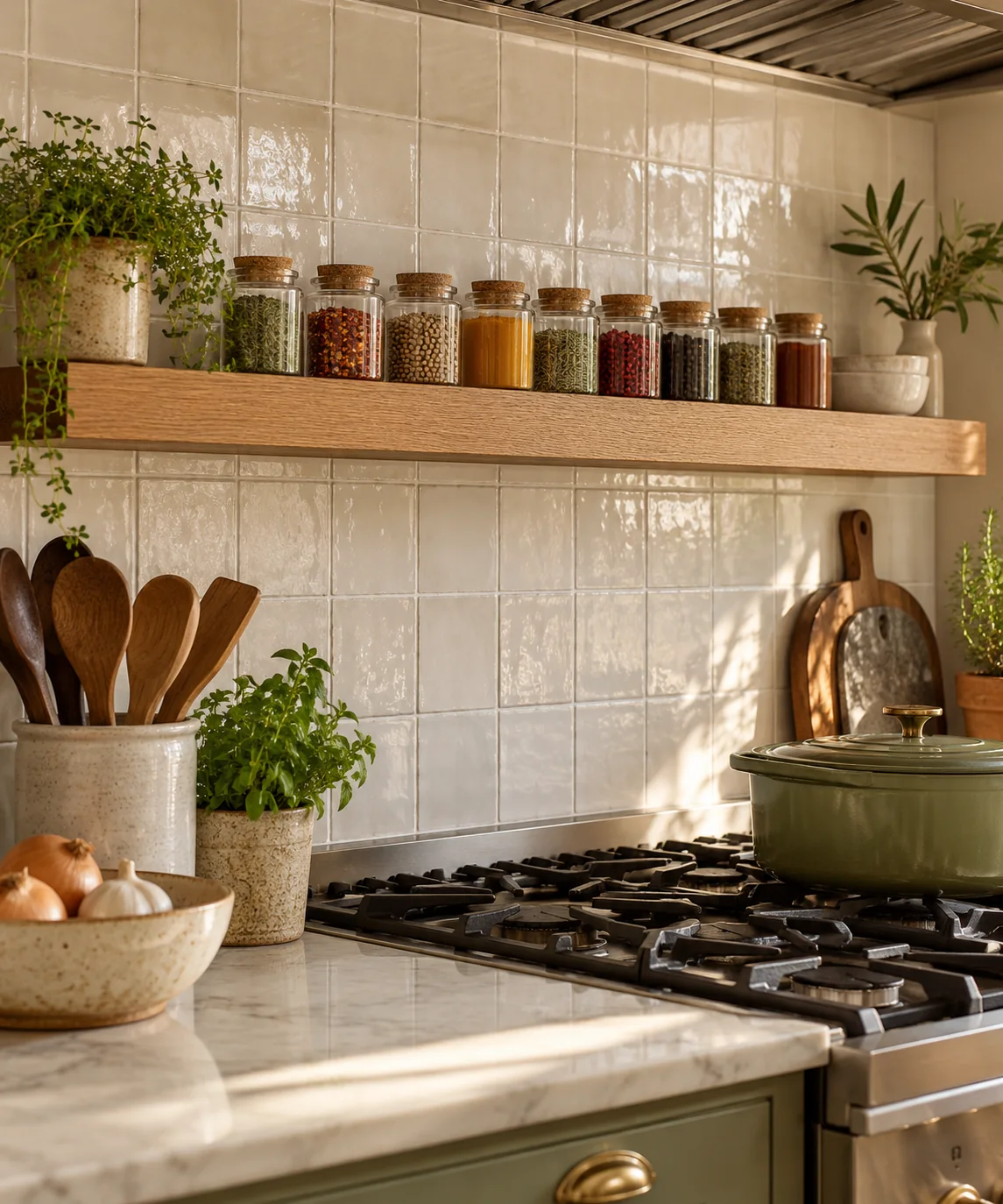
Consulting Cooktop Clearances and Manufacturer Guidelines
Before considering any wall-mounted storage near a stove, consult the specific installation manual for your cooktop and range hood. Manufacturers specify strict vertical and horizontal clearance-to-combustible boundaries above and around cooking surfaces to prevent fire hazards. Local building codes frequently prohibit placing projecting shelves within the vertical flame or burner envelope. Verify that any proposed ledge sits entirely outside required heat clearances and never obstructs the capture area of your exhaust hood.
Eliminating Reach-Over Burn Hazards
Reaching directly over active burners, simmering liquids, or hot cookware to retrieve a spice jar introduces significant burn and fire risks. Loose clothing can catch fire, and dropped items can splash hot oil or boiling water. Instead of positioning a ledge directly behind high-heat or rear burners, locate storage on an adjacent side wall or along a non-cooking counter section. This preserves clear line-of-sight and natural, unobstructed hand access without extending arms across active heating elements.
Protecting Ingredients from Heat and Vapor
The environment immediately surrounding a cooktop is exposed to fluctuating temperatures, high humidity from steam, and airborne cooking fats. Sustained heat causes ground spices and whole peppercorns to lose volatile aromatic oils, while moisture promotes caking and clumping. Store bulk spices, delicate dried herbs, and temperature-sensitive oils in closed cupboards away from heat sources. Keep only high-rotation essentials like coarse salt in sealed, non-porous glass or ceramic containers on open ledges.
Selecting Washable, Heat-Resistant Materials
A shelf positioned in the cooking perimeter must withstand frequent cleaning to remove accumulated airborne grease and cooking residue. Porous, unsealed timber can absorb oil splatters and prove difficult to sanitize over time. Non-combustible, easily washed materials such as stainless steel, powder-coated metal, or glazed ceramic offer smooth surfaces that wipe clean with warm water and mild detergent. Incorporating a raised front lip helps prevent jars from slipping if nearby counters vibrate during food prep.
Mounting Considerations and Structural Safety
Fastening storage onto kitchen walls or tiled backsplashes requires careful evaluation of underlying wall structures. Kitchen wall cavities often house high-voltage wiring, gas supply lines, or plumbing runs serving nearby fixtures. Rather than drilling blindly into tile faces or grout joints, verify wall conditions or consult qualified professionals. For rental properties or tile preservation, inspect manufacturer ratings for non-destructive, heat-resistant mounting hardware to ensure the shelf remains securely anchored under load.
YOUR STARTING POINT
A little checklist.
Original editorial guidance. Images are AI-generated concepts, not photographs of completed projects. Our sources and approach.
Questions to consider
Is it safe to mount a spice shelf directly above a gas cooktop?
Mounting shelves directly over active burners creates serious fire risks and requires reaching across open flames or hot cookware. Store seasonings on adjacent perimeter walls outside the cooktop's clearance zone.
How does cooking heat affect spices kept near the stove?
Repeated exposure to heat and cooking steam dries out essential oils in herbs and spices, accelerating flavor loss and causing clumping. Keep primary spice collections in cool, dark pantry spaces.
What materials work best for ledges near kitchen prep zones?
Smooth, non-porous materials like stainless steel, coated metal, or sealed ceramic resist grease absorption and tolerate frequent cleaning with warm water and mild dish soap.