Household Reset Routines · THE GUIDE
Shower Caddy Scrub and Bottle Depletion Check
Wire shower caddies inside compact stalls constantly endure warm moisture, shampoo runoff, and mineral scale, resulting in slippery residue across wire racks. Over time, accumulating half-empty bottles and forgotten product samples crowds the narrow basket, making everyday bathing awkward and cluttered. Performing a targeted caddy reset restores hygiene and optimizes the small shower footprint. By emptying the organizer, discarding expired remnants, scrubbing mineral buildup from wire joints, and organizing bottles by usage, you ensure the stall stays functional. A clean, streamlined shower caddy prevents grime accumulation while keeping essential grooming products organized and accessible.
Jump to the checklist ↓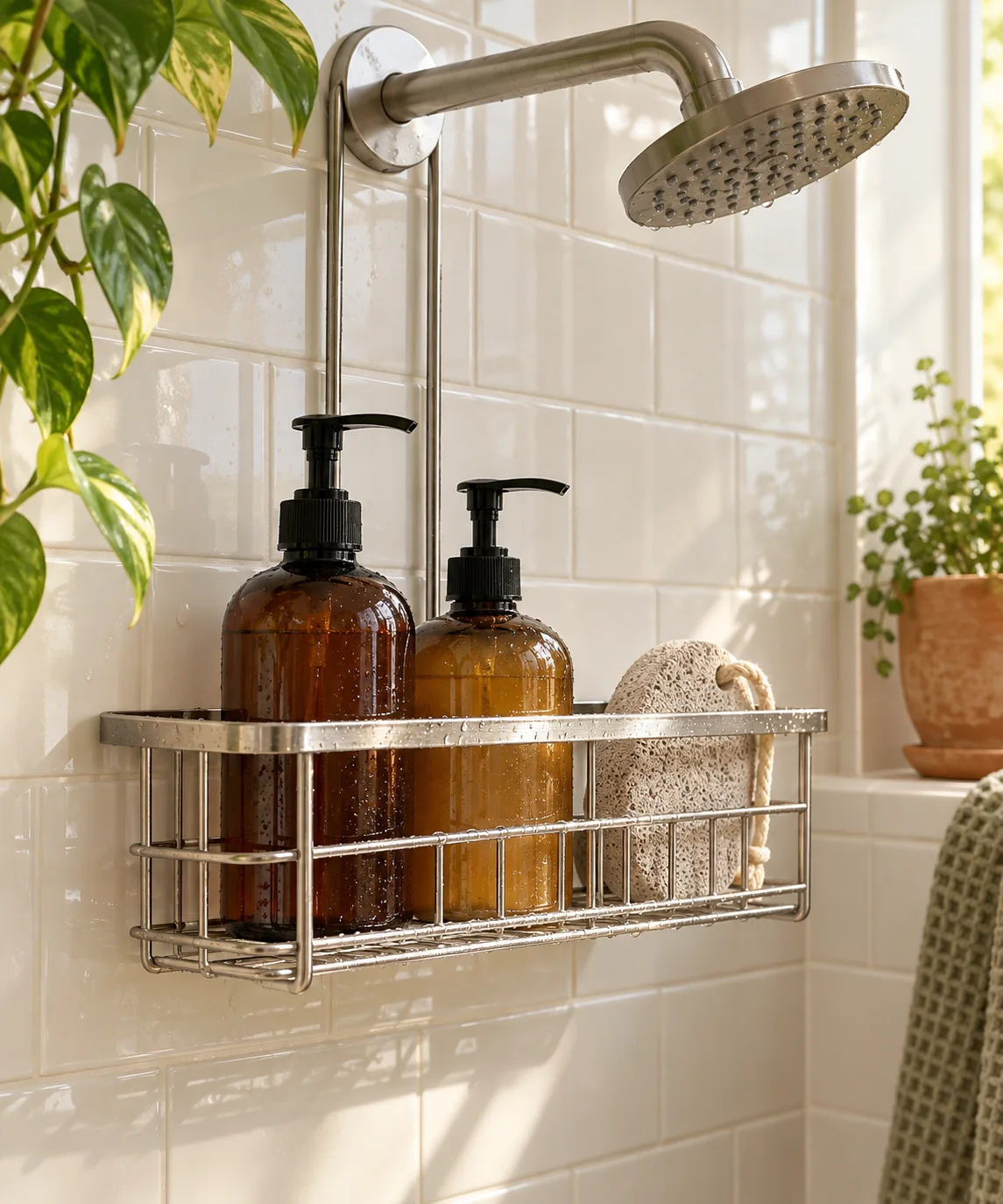
Complete Caddy Deconstruction and Clearing
Begin by removing all containers, bars, and accessories from the organizer before starting to clean. Set the items on a clean bathroom mat or basin counter outside the stall to sort them in good lighting. If the caddy hangs from the shower arm, carefully detach it and release any suction cups, taking care not to pull, twist, or pry against the pipe neck. Excessive force on the shower arm can strain the threaded plumbing fitting behind the wall board. Working on a detached caddy inside the stall floor makes it easier to inspect wire joints, underside welds, and rear stabilizing bars that remain out of view when hung.
Toiletries Depletion and Safety Audit
Inspect every removed container for product condition, expiration dates, and surface cleanliness. Avoid pouring remnants from different bottles together, as combining batches can introduce water or bacteria that compromise preservative systems. Instead, prioritize using up nearly depleted containers before opening new products, and rinse fully emptied plastic bottles for recycling. Safely dispose of cloudy liquids, separated emulsions, soggy soap slivers, or rusted razor heads. Wipe bottle exteriors, pump nozzles, and cap crevices with warm water to remove sticky residue. Trimming your collection down to active daily toiletries significantly reduces the weight suspended from the stall fittings.
Scrubbing Wire Welds and Mineral Scale
Wire organizers accumulate mineral scale, body wash residue, and pink airborne bacterial films around junctions and lower baskets. Dampen the frame and apply basic household dish soap or a mild bathroom surface cleaner using a narrow nylon detailing brush. Methodically scrub each horizontal wire, solder point, and hook, focusing on the underside corners where moisture pools and dries slowly. Rinse the unit thoroughly with clean warm water until suds and dislodged particles are gone. Check the metal framework for chipping vinyl, compromised plating, or emerging rust spots before placing the caddy back in service.
Stall Wall and Pipe Neck Inspection
Before reattaching the organizer, clean the tile surface and the exterior of the shower arm where suction pads or collars rest. Soap scum, hard water scale, and damp films on tile prevent suction cups from maintaining a reliable vacuum seal. Clean the area with a non-abrasive sponge, rinse, and dry completely with a clean cloth. Verify that the protective rubber or silicone collar on the caddy's top hook is intact, as bare metal contact can scratch plumbing finishes. Ensure the caddy hangs straight and rests flush against the wall without placing leverage or twisting tension on the shower pipe.
Balanced Reloading and Weight Management
Reattach the empty caddy and confirm that suction cups adhere firmly to the dry wall surface before adding weight. Arrange remaining toiletries with weight distribution in mind, placing heavier full containers on the lowest wire shelf and spacing them evenly. Never overload a hanging organizer with heavy bulk-sized bottles, which can exert bending stress on the shower arm and drop-ear elbow within the wall. Reserve upper tiers for lighter items like facial bars or small bottles, and place hanging accessories away from the direct water stream. If your grooming collection exceeds safe hanging capacity, consider freestanding corner shelves or tension poles to avoid plumbing strain.
YOUR STARTING POINT
A little checklist.
Original editorial guidance. Images are AI-generated concepts, not photographs of completed projects. Our sources and approach.
Questions to consider
How can I prevent a hanging shower caddy from sliding forward on the pipe?
Wipe mineral film and soap residue from the shower arm with a damp cloth and dry it completely. Check that the caddy's rubberized collar or notch is positioned securely behind the pipe curve. If the hook continues to shift, fit a properly sized silicone plumbing ring or grip sleeve around the pipe neck to create light friction without scratching the finish or applying mechanical leverage.
How often should a shower caddy be completely cleaned?
Scrub the wire rack and inspect toiletries every two to three weeks. Regular washing removes soap film, mineral crusts, and microbial residues before they harden into joints or degrade protective coatings, while also helping you clear out depleted bottles before clutter accumulates.
What should I do if a wire caddy begins to rust?
For small surface oxidation spots on coated metal, brush away the loose flakes with a non-scratch nylon pad and dry the area thoroughly. If rust penetrates deeply, causes pitting, or spreads along solder welds, replace the unit with durable materials such as high-grade stainless steel or anodized aluminum to prevent rust stains on shower tile.