Small Kitchen Organization · THE GUIDE
Side-of-Cabinet Magnetic Spice Tin Matrix
Upper kitchen cabinets frequently feature broad, blank outer gable ends facing countertops, representing underutilized storage territory in compact kitchens. Planning a magnetic spice tin matrix on this exterior panel shifts seasoning containers out of crowded drawers while keeping dried herbs within comfortable reach. Magnetic canisters rest against an attraction-grade steel baseplate, displaying spices in plain view. By planning grid spacing carefully, reviewing surface compatibility, and following spice preservation principles, you can support everyday cooking workflows while keeping preparation surfaces organized and clear.
Jump to the checklist ↓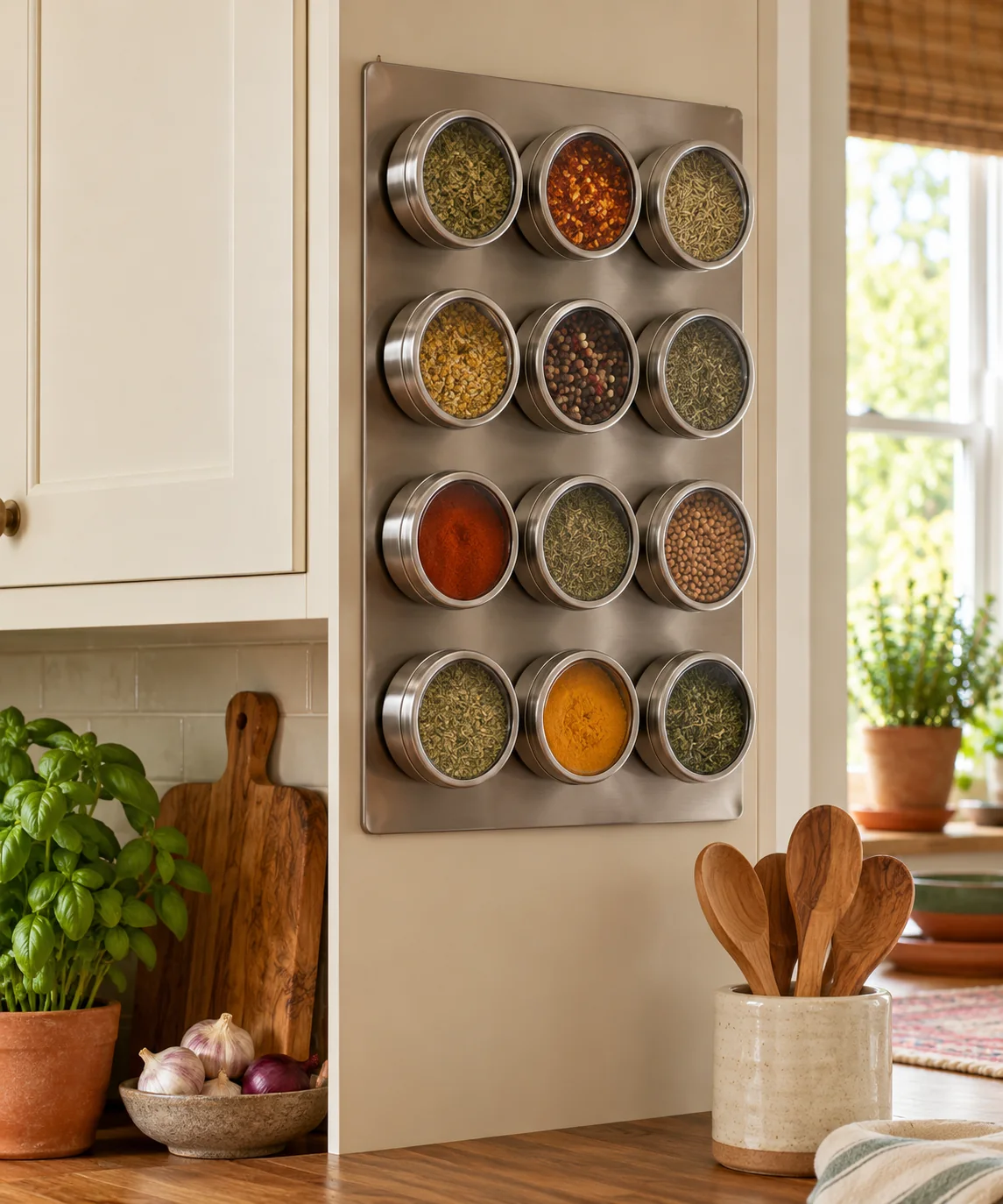
Evaluating Placement Away from Heat and Steam
Position a magnetic spice board on a cabinet panel situated well away from direct heat discharge, boiling steam, and range exhaust. Ambient temperature swings and airborne cooking grease degrade dried herbs rapidly and can compromise the grip of adhesive mountings or magnetic backings over time. Verify that the chosen exterior cabinet face leaves walkways and appliance doors unobstructed so projecting canisters are not brushed when passing by. Observing your natural reach from primary prep surfaces helps determine a comfortable layout that avoids strain during meal preparation.
Planning Matrix Grid Spacing and Tin Clearance
Map out a consistent grid layout before selecting or positioning any components. Standard round magnetic spice tins typically measure between 2.5 and 3 inches in diameter. Leaving adequate horizontal and vertical margins between canisters allows fingers to grasp rims securely without dislodging adjacent tins. Using low-tack painter's tape to mark container outlines on the cabinet panel allows you to assess proportions, reachability, and clearance before committing to a final arrangement.
Canister Selection and Light Exposure
Choose food-grade tinplate or stainless steel canisters equipped with dependable base magnets and tight-fitting lids. Canisters with clear acrylic lids offer immediate visibility of contents, but transparent tops expose delicate ground spices to ambient daylight and artificial illumination. Spices sensitive to light degradation, such as paprika, turmeric, and leafy herbs, maintain their aroma and essential oils longer in solid metal canisters or in areas shielded from direct sunlight and focused under-cabinet task lighting.
Surface Compatibility and Mounting Considerations
When considering a steel receptor board or magnetic panel for a cabinet gable end, review the cabinet manufacturer's care guidelines and the board's mounting requirements. Finished cabinetry often features delicate veneers, laminates, or lacquer coats that may peel, tear, or discolor when subjected to heavy-duty adhesive strips or screw fasteners. Check the combined weight of the board and filled canisters against the hardware manufacturer's published load ratings rather than assuming universal hold. Avoid thin magnetic tapes, which generally lack the magnetic pull required to keep filled canisters stable.
Decanting, Labeling, and Refill Management
Maintain an organized system by labeling the side or base of each tin with the spice name and decanting date using grease-resistant labels. Because compact magnetic tins generally hold limited volumes, decanting smaller quantities ensures steady inventory turnover before seasonings lose their potency. Use a small stainless steel funnel during refills to prevent fine powders from settling onto magnetic bases or rim threads, and wipe container exteriors periodically with a dry cloth to prevent grease accumulation.
YOUR STARTING POINT
A little checklist.
Original editorial guidance. Images are AI-generated concepts, not photographs of completed projects. Our sources and approach.
Questions to consider
Will magnetic tins slide down the board when filled with heavy spices?
Canister stability depends on magnet strength and the receptor board's ferrous content. Quality tins with rare-earth magnets hold well on attraction-grade ferritic steel panels. Avoid weak magnetic sheets, and check that the total weight of dense whole spices like peppercorns or salt does not exceed the magnet's grip.
How do I protect spices stored in clear-window tins from losing freshness?
Keep the matrix away from direct window light and high-intensity task fixtures. Fill windowed canisters only with amounts you plan to use within a few weeks, storing the remainder of your bulk spices in airtight containers inside a dark, cool pantry cupboard.
Can adhesive mounting strips be removed from cabinets without causing damage?
Adhesive performance varies significantly across cabinet materials. While adhesive strips are marketed for clean removal, they can strip thin wood veneers, peel paint, or delaminate thermofoil on kitchen cabinets. Consult cabinet care guidelines and test adhesives in an inconspicuous spot before relying on them.