Kitchen Herb Gardens · THE GUIDE
Single Long Trough Planter for Narrow Window Jambs
Crowding mismatched round pots along a narrow kitchen window ledge creates an unstable arrangement that clutters sill space and risks accidental tipping. Round pots leave unused gaps and can wobble when curtains move or window sashes operate. A single elongated trough planter fitted along the window stool streamlines the opening into a neat, continuous display. When planned to sit securely within the horizontal boundary framed by the window jambs, a shallow planter makes practical use of natural daylight for compact culinary herbs such as thyme, winter savory, and dwarf rosemary. Success depends on assessing actual sill depth, allowing unhindered window operation, and protecting the surrounding sill surface from standing moisture.
Jump to the checklist ↓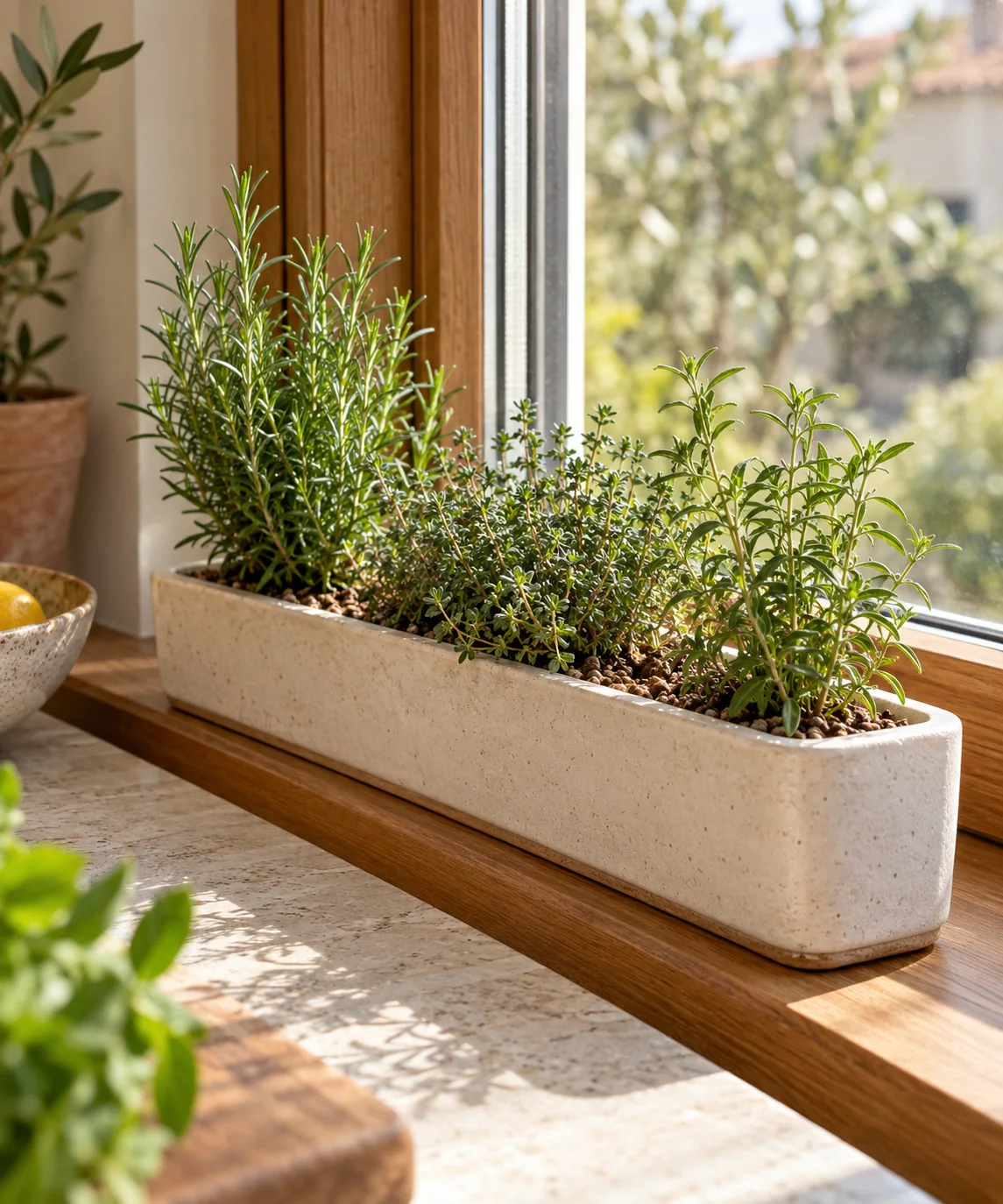
Assessing Window Openings and Sill Dimensions
Accurate measurement of the window area is necessary before choosing a trough planter. Measure the usable flat depth of the horizontal stool or sill between the vertical jambs, taking note of how sashes, latches, or sliding screens travel. Rather than relying on arbitrary clearance margins, ensure the base of the planter sits entirely on the flat woodwork without tipping over beveled edges. Confirm the container does not block window latches, interfere with casement crank handles, or impede designated emergency escape routes.
Herbal Compatibility and Root Space Planning
Herbs with shared moisture and light requirements thrive best when grouped in a shared container. Mediterranean herbs such as French thyme, winter savory, and compact rosemary cultivars share a preference for fast-draining substrate and strong daylight. In narrow troughs, avoid adding artificial slate or plastic root dividers, which restrict total soil volume and create localized water barriers. Instead, space plants evenly along the trough so roots can spread naturally through the shared substrate while their canopies remain well ventilated.
Drainage Management in Shallow Containers
Shallow containers hold a limited soil volume that requires careful moisture regulation. Look for troughs equipped with open drainage holes and a dedicated, watertight catch saucer that matches the planter base. Avoid filling the bottom of the container with gravel or loose stones, which shortens the usable root zone and concentrates saturated potting mix directly above the stone layer. Fill the entire depth with an open, porous potting medium containing pumice or perlite to maintain adequate aeration throughout the root profile.
Managing Unilateral Natural Light Exposure
Natural light through a window is typically directional, reaching only the side of the foliage facing the exterior glass. In an elongated indoor trough, plants can gradually lean toward the light source and develop sparse interior growth over time. Rotating the planter end-for-end on a regular schedule encourages more balanced light distribution across all sides of the foliage. This routine rotation helps prevent stems from stretching excessively against the window glass where moisture condensation or temperature extremes can cause leaf spotting.
Protecting Millwork and Sill Finishes
Ceramic, metal, and composite planters can cause condensation or trap moisture against finished wood ledges, leading to peeling paint, water stains, or veneer damage. Place non-abrasive silicone, cork, or rubber bumper pads under the saucer to elevate it slightly above the wood stool. This small separation promotes air circulation beneath the tray and prevents scratches when the planter is moved. Regularly lift the saucer to inspect the sill surface beneath, ensuring the woodwork remains clean, dry, and undamaged.
YOUR STARTING POINT
A little checklist.
Original editorial guidance. Images are AI-generated concepts, not photographs of completed projects. Our sources and approach.
Questions to consider
Can moisture-loving herbs like basil share a trough with Mediterranean herbs?
Basil requires significantly more frequent watering and a richer potting mix than woody Mediterranean herbs like rosemary and thyme. Housing them together in a single trough usually results in either under-watered basil or over-watered Mediterranean herbs prone to root decline.
How should pruning be managed in a compact windowsill trough?
Regular harvesting of growing tips keeps herbs compact and encourages bushy lateral stems. Frequent light trimming prevents woody herbs from outgrowing the restricted root volume of a slim container and keeps foliage from pressing against window glass.
How can herbs be protected from cold drafts near window glass in winter?
During periods of freezing weather, slide the planter slightly away from direct contact with cold panes. If outdoor temperatures drop severely, move the container to a nearby bright surface away from drafty sash seams until temperatures moderate.