Kitchen Herb Gardens · THE GUIDE
Sink Backsplash Splash-Protected Herb Ledge
Positioning potted culinary herbs near the kitchen sink offers convenient access for routine care, but daily washing tasks can expose nearby leaves to stray water and soap droplets. A freestanding tempered-glass or acrylic riser panel provides a reversible physical shield between the basin and your containers while elevating pots above standing counter moisture. This arrangement works best along a windowsill or deep backsplash ledge that receives reliable natural sunlight. By choosing stable, non-slip supports and containers with dedicated catch trays, you can establish an organized herb display that remains simple to clean and adjust during everyday kitchen prep.
Jump to the checklist ↓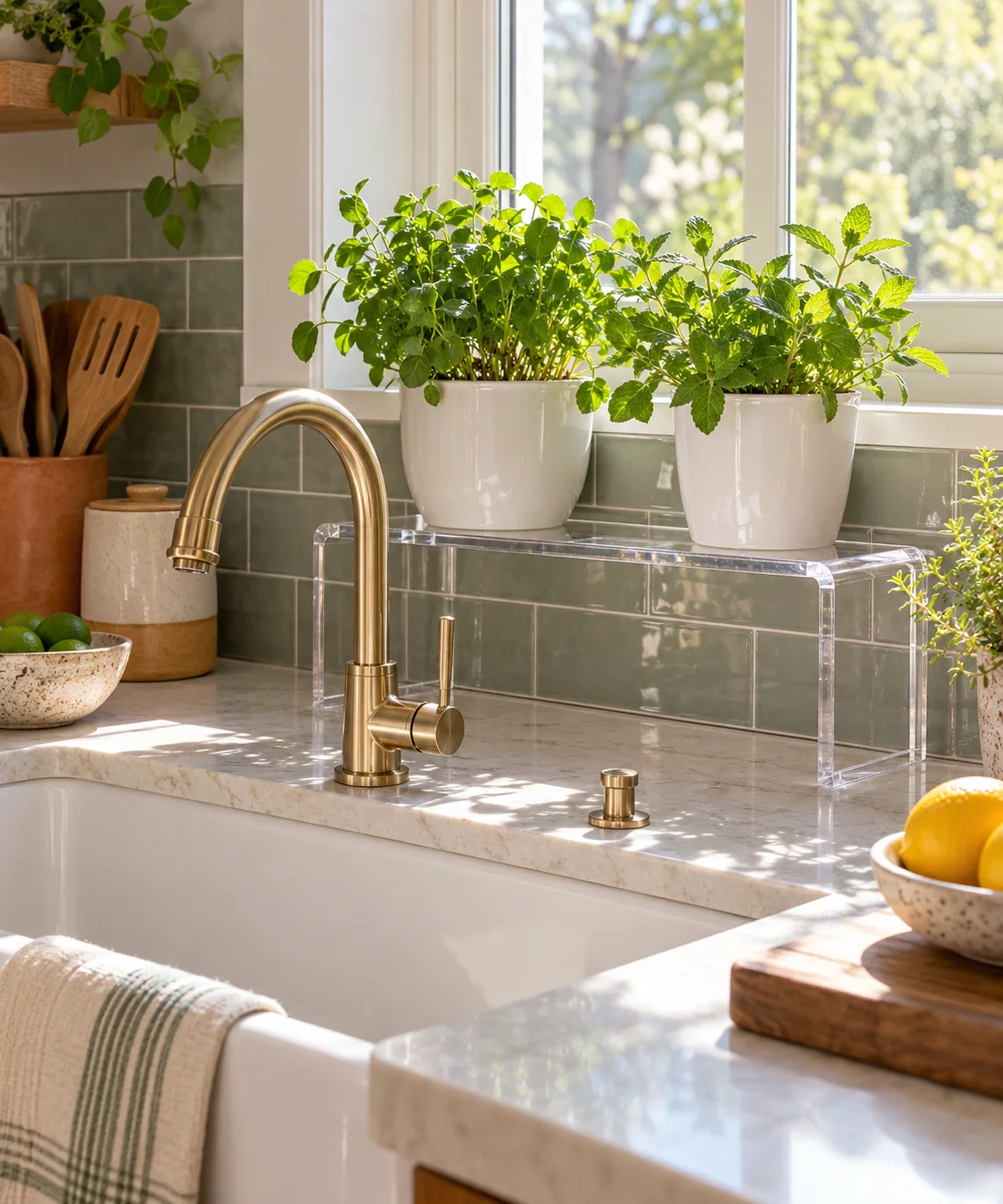
Measuring Clearances and Faucet Arc
Before placing a riser shelf, observe the full range of movement of your faucet spout, sprayer hose, and handle controls. The shelf should sit far enough behind the fixture to allow unrestricted handle operation and unhindered spout swivel, taking into account the space needed to wash bulky cookware. Measure the counter or window sill depth to ensure all riser supports rest completely flat on a secure, level surface without tipping. Choosing a riser elevation that holds container bases clear of pooled counter water helps protect the pots while keeping herbs within comfortable reach for harvesting.
Managing Splash Exposure Around the Basin
Routine dishwashing generates fine droplets of soapy water and grease residues that can coat herb foliage and leave dulling films on plant tissue. A freestanding panel made from clear tempered glass or dense acrylic serves as a wipeable vertical barrier between the basin and the foliage. While transparent materials allow ambient light through to the plants, smooth glass surfaces generally tolerate frequent wiping with damp cloths better than soft plastics, which can develop fine surface abrasions over time. Orient the solid barrier toward the sink to intercept splashes before they reach potting mix and leaves.
Selecting Containers and Saucers
Convenient water access makes kitchen herb care straightforward, but proper moisture management remains essential. Porous planters such as unglazed terracotta can weep moisture onto supporting surfaces, potentially causing mineral rings or moisture marks on glass and countertops. Glazed ceramics, non-porous composites, or sturdy plastic nursery containers paired with impermeable catch saucers help protect underlying surfaces. Ensure containers include functional bottom drainage holes so excess moisture drains away from the root system into a tray that can be emptied after watering.
Light Needs and Placement Verification
Culinary herbs kept indoors require strong, consistent daylight to sustain healthy growth. Windows shaded by deep exterior eaves, neighboring walls, or unfavorable exposures may not deliver the light intensity needed to prevent stems from stretching and thinning. Before arranging multiple containers along the sink ledge, set a single test plant on the surface for a couple of weeks. Monitor leaf color, stem rigidity, and new growth to verify that the spot provides sufficient natural light for compact, steady development.
Routine Maintenance and Cleaning Flow
Maintaining cleanliness in a food prep area requires easy access to all surfaces around the sink. Periodically wipe the splash riser with a soft microfiber cloth and warm water or mild dish soap to remove water spots and airborne cooking residues before they accumulate. Because the riser is freestanding, you can temporarily shift it away from the sink when scrubbing large baking sheets or pots to minimize accidental knocks. When irrigating, lift each pot to apply water directly to the root zone rather than using the sink sprayer, which helps keep water off foliage and prevents pooling beneath the shelf supports.
YOUR STARTING POINT
A little checklist.
Original editorial guidance. Images are AI-generated concepts, not photographs of completed projects. Our sources and approach.
Questions to consider
Which culinary herbs adapt well to sink-adjacent placement?
Herbs that tolerate moderate humidity, such as mint, parsley, and chives, generally perform well near a sink window if sunlight is adequate. Arid-climate herbs like rosemary and thyme can also succeed if they receive abundant direct sun, good airflow, and well-draining soil.
How can I safely clean water spots off a transparent riser?
Wipe the panel using a soft microfiber cloth dampened with warm water and a small amount of mild dish soap, or apply a diluted white vinegar solution for light mineral film. Avoid abrasive scouring pads and harsh powders that can scratch glass or acrylic surfaces.
What are the primary differences between glass and acrylic for this setup?
Tempered glass resists hairline scratches from frequent wiping and maintains clarity under regular kitchen cleaning, though it is heavier. Acrylic is lighter and more impact-resistant, but its surface scratches more easily and can cloud if cleaned with abrasive pads or harsh detergents.