Kitchen Herb Gardens · THE GUIDE
Slate-Marked Indoor Herb Nursery Crate
Starting culinary herbs from seed indoors often leaves small nursery pots scattered across limited kitchen counters. Gathering these pots into a shallow wooden crate creates an organized, portable seedling station that brings rustic charm to prep zones. Natural slate markers provide an erasable, reusable labeling method that withstands routine watering mist without disintegrating like paper tags. When planned with internal water protection and proper pot spacing, this organized crate setup simplifies care routines, tracks germination timelines accurately, and allows quick transport to sunny kitchen windowsills.
Jump to the checklist ↓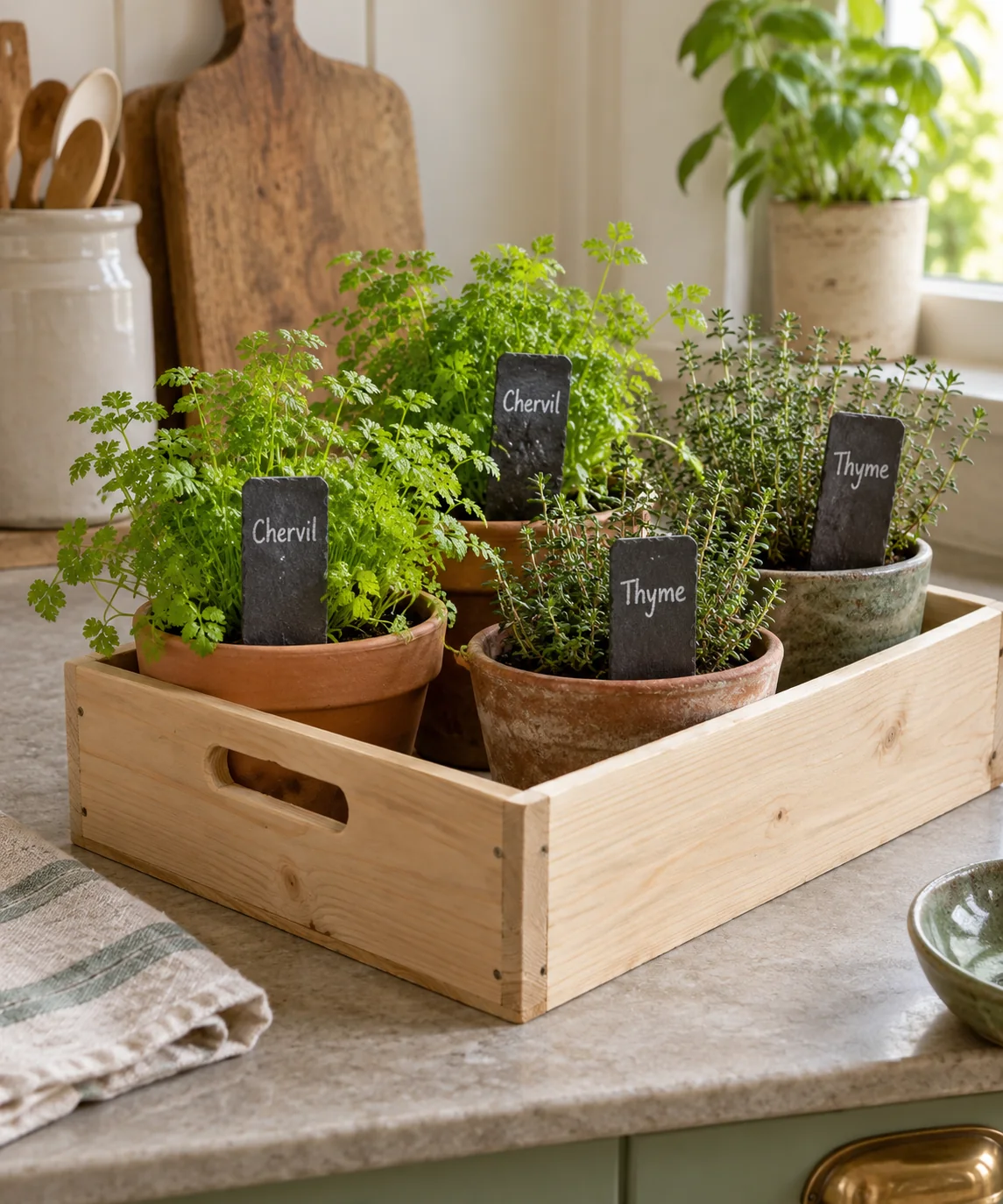
Selecting Crate Proportions and Weight
Select a shallow wooden crate with side walls under three inches tall. High crate walls cast shadows over young sprouts, causing weak, elongated stems as seedlings stretch for illumination. Untreated pine or reclaimed wood provides solid containment without excessive weight. Loaded with moist pots and slate markers, the crate must remain light enough to carry easily. Aim for twelve to fourteen inches in length for manageable movement along bright countertops.
Lining Wood to Prevent Counter Moisture
Raw wood crates absorb drainage water quickly, leading to wood rot, mold, and damaged kitchen surfaces. Never set nursery containers directly on bare crate bottoms. Line the crate interior with a heavy-duty plastic liner or insert a low-profile plastic tray. This protective barrier catches stray moisture. Add small rubber bumpers beneath the wooden crate to create an air gap, preventing condensation from discoloring stone counters or butcher-block surfaces.
Erasable Slate Stake Mechanics
Slate plant stakes offer lasting durability compared to wooden sticks that decay in damp soil. Use cleaved slate markers measuring four to six inches tall. Write sowing dates and herb names using standard chalk or erasable chalk pencils, which resist daily water misting but erase easily with a damp cloth when replanting. Insert stakes firmly along pot rims to avoid disturbing developing root systems of emerging culinary herbs.
Managing Light, Temperature, and Airflow
Culinary herb seedlings require strong light once seeds germinate; dim kitchen corners cause spindly growth. Transport the crate daily to your sunniest south-facing windowsill to give plants six hours of direct sun. Maintain half an inch of space between individual pots inside the crate. Adequate spacing promotes healthy air movement around foliage, reducing the risk of damping-off disease that thrives in crowded, humid seedling environments.
Bottom-Watering Within the Nursery Crate
Pouring water from cups can dislodge delicate herb seeds and compact potting soil. Instead, use the crate liner for controlled bottom-watering. Pour half an inch of water into the waterproof bottom tray, letting pots draw moisture upward through drainage holes for twenty minutes. Empty any leftover water from the tray promptly. Letting seedling pots sit permanently in pooled water suffocates tender young roots and stunts early development.
YOUR STARTING POINT
A little checklist.
Original editorial guidance. Images are AI-generated concepts, not photographs of completed projects. Our sources and approach.
Questions to consider
Will writing on slate stakes wash away when misting herb seeds?
Chalk and chalk pencils grip the fine texture of natural slate and easily withstand daily moisture misting. The writing remains clearly legible until you deliberately wipe it away with a damp sponge during replanting.
Why are low crate walls necessary for starting herb seeds indoors?
Tall crate sides block incoming natural light from reaching emerging sprouts. Seedlings starved of low-angle light become leggy and weak as they stretch toward the sun, making them fragile and prone to collapsing later.
Can I keep the wooden crate permanently on wooden butcher-block counters?
Yes, provided the crate contains an impermeable plastic liner and rubber feet underneath. Direct wood-to-wood contact without an air gap traps moisture, causing water stains, discoloration, and potential warping on butcher-block kitchen countertops over time.