Patio Seating Ideas · THE GUIDE
Slender Railing-Flush Bench for Narrow Balconies
Narrow balconies often feel unusable when standard outdoor chairs obstruct essential movement. Typical patio armchairs require 75 to 90 centimeters of depth, severely restricting circulation on balconies measuring barely one meter across. Selecting a low, shallow, freestanding cedar bench positioned thoughtfully along the perimeter provides functional seating while preserving a workable walking path. Before introducing any furniture to an elevated balcony, review property management rules and local building guidelines regarding permissible floor loads and required guardrail clearances. Prioritizing freestanding designs and verifying site regulations ensures the space remains accessible, code-compliant, and comfortable.
Jump to the checklist ↓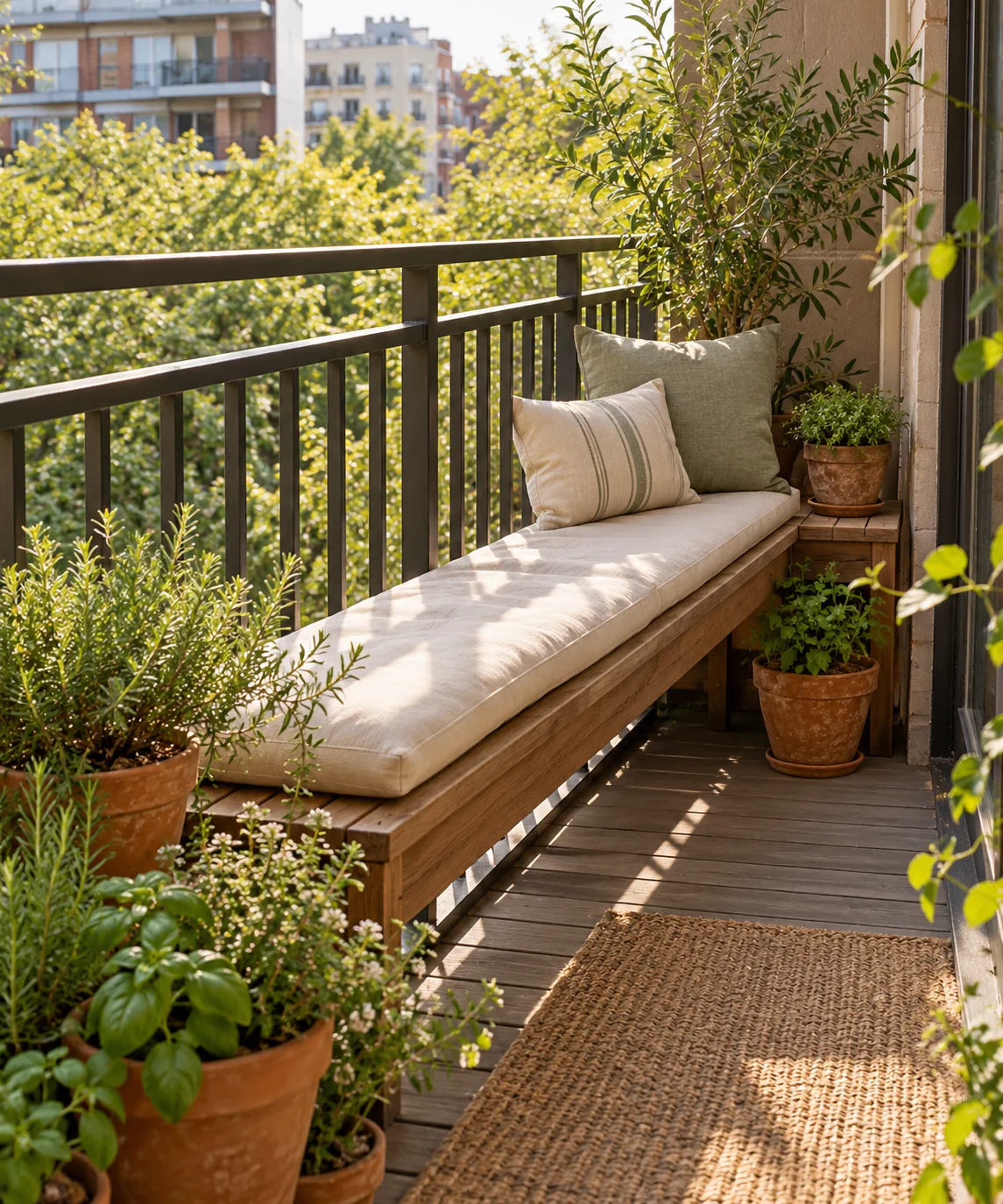
Walkway Clearance and Circulation Planning
Navigating a narrow balcony safely requires a dedicated linear passage of at least 60 to 70 centimeters to comfortably transport laundry baskets, watering cans, or maintenance tools. When balcony depth is constrained, bulky lounge chairs quickly block access to doors and outer edges. A freestanding bench with a shallow seat depth of approximately 30 to 35 centimeters preserves practical circulation. Test your proposed layout before purchasing furniture by marking the footprint on the deck using painter's tape or cardboard panels. Confirm that walking routes to drainage outlets and emergency exit doors remain completely unobstructed.
Seat Geometry and Perimeter Guardrail Safety
Balcony safety barriers are engineered to prevent falls and must never be subjected to unintended lateral loads. Avoid leaning seat pads, cushions, or body weight directly against railing balusters, glass infill, or handrails. Additionally, placing seating adjacent to perimeter barriers can inadvertently reduce the effective guardrail height by providing an intermediate step. Check local building codes and property regulations to ensure furniture placement does not compromise mandatory barrier heights. Choose low-profile, self-supporting benches with sturdy, independent leg structures that sit squarely on the decking without contacting or attaching to the railing assembly.
Timber Selection and Natural Surface Upkeep
Exterior-grade softwoods such as Western red cedar perform well in exposed outdoor environments due to natural extractives that resist fungal decay. Over time, sunlight and rain weather untreated cedar to a silvery gray finish. To slow surface moisture absorption and reduce checking without creating a peeling film, apply a breathable exterior penetrating timber oil formulated for softwoods. Clean the slats periodically using a soft nylon brush and a mild solution of warm water and liquid dish soap. Avoid high-pressure washing or chlorine bleach, which can damage surface wood fibers and corrode nearby metal balcony components.
Arranging Planters and Peripheral Floor Accents
Small balconies demand careful floor zoning to prevent clutter and tripping hazards. If placing potted culinary herbs such as rosemary or thyme near the bench, position containers in areas that receive adequate direct sunlight without infringing on the walking path. Check property weight allowances before grouping multiple containers, as wet potting soil can add substantial weight. Use lightweight plastic or resin pots set inside saucers equipped with small risers to prevent pooling water from staining deck finishes. Keep the zone directly in front of doorway thresholds entirely clear.
Managing Cushions and Exposure Protection
Thin, firm bench cushions improve seating ergonomics while maintaining a low profile, but outdoor textiles still accumulate environmental grime and moisture if left exposed. Choose cushions with outdoor foam cores wrapped in solution-dyed acrylic covers, fastened directly to the bench legs using integrated fabric ties. During sustained downpours or over winter months, store cushions indoors in a dry closet or ventilated storage box. Leaving wet cushions on timber slats impedes air circulation, slows drying times, and increases the likelihood of mildew growth on both fabric and wood.
YOUR STARTING POINT
A little checklist.
Original editorial guidance. Images are AI-generated concepts, not photographs of completed projects. Our sources and approach.
Questions to consider
How narrow can a balcony bench be while remaining practical?
A seat depth between 30 and 35 centimeters accommodates short periods of casual sitting without protruding excessively into narrow walkways. Pairing this shallow seat with an upright posture allows feet to rest flat on the decking, maintaining comfort while conserving valuable floor space.
Can furniture be placed directly against a balcony railing?
Furniture placement near railings must comply with local safety codes and building policies. Elevated seating placed against a railing can act as a stepping platform, reducing effective guardrail height. In addition, furniture must be freestanding and never rely on railing components or balusters for structural back support.
How should balcony floor load limits be verified?
Consult your building management, landlord, or the original architectural specifications for approved live load capacities. Balcony load ratings vary substantially based on construction age, structural framing, and maintenance history, so never estimate load safety independently.