Small Kitchen Organization · THE GUIDE
Slender Rolling Cart for the Refrigerator Gap
A narrow crevice beside a refrigerator often collects dust, yet a five-to-six-inch void can serve as valuable pantry overflow when planned carefully. Sliding storage units on casters transform this dead boundary into an accessible pull-out rack for dry pantry staples, oils, and cooking vinegars. Because kitchen appliances generate external heat during compressor cycles, utilizing this sliver of floor space requires attention to appliance clearance, ambient airflow, and shelf weight limits. Evaluating your floor levelness and nearby baseboards ensures the cart glides forward predictably without striking drywall or interfering with cabinet door swings.
Jump to the checklist ↓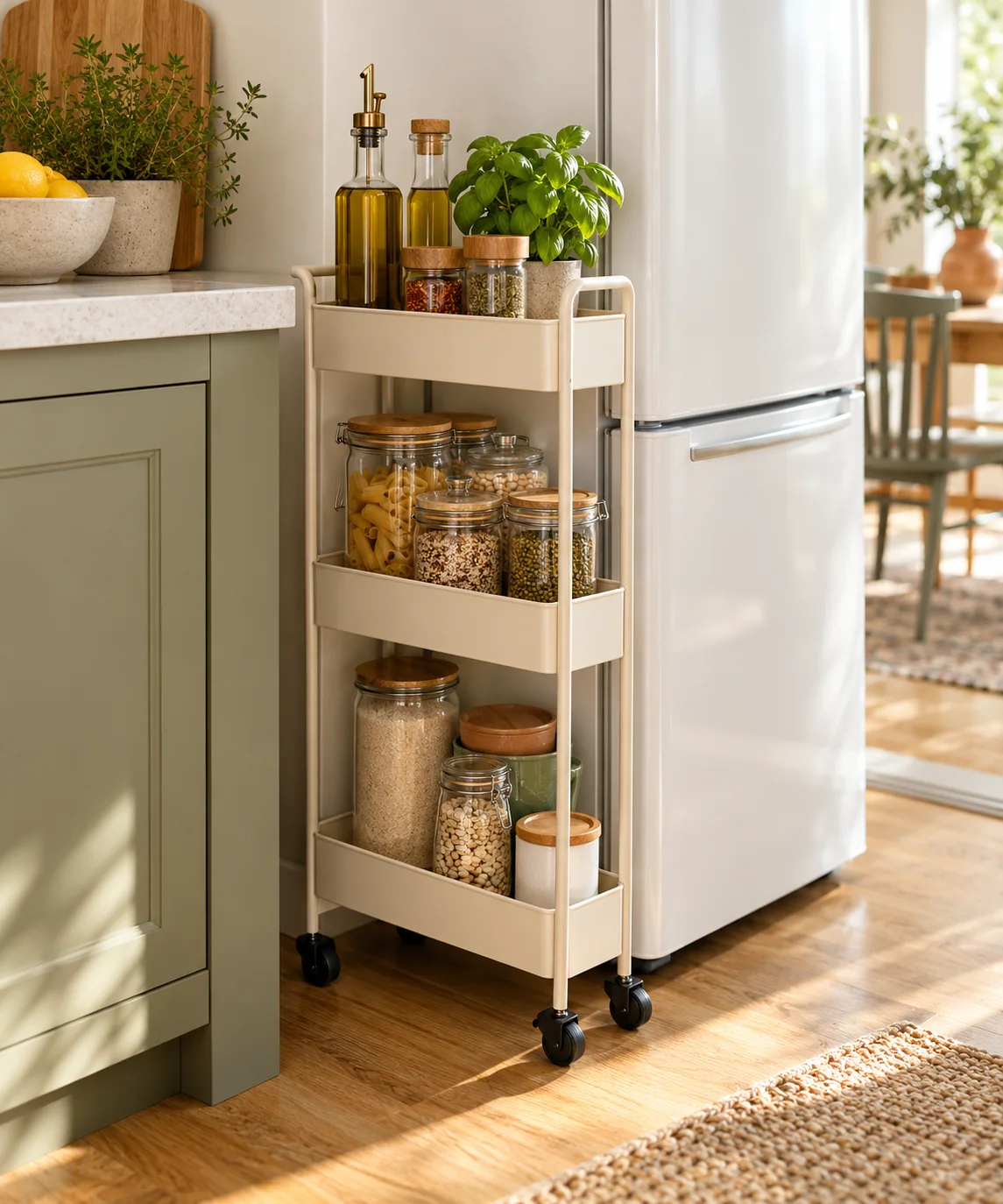
Checking Manufacturer Venting Requirements
Before placing any storage unit alongside a refrigerator, consult the appliance user manual for specific side, top, and rear clearance specifications. Refrigerator engineering differs considerably across models: some dissipate heat through external side-wall condenser tubing, while others intake and exhaust air solely through a front base grille or rear lower compartment. If your refrigerator walls become warm to the touch during cooling cycles, maintaining unobstructed air flow is vital to preserve operational efficiency. Measure the gap at multiple vertical points—top, center, and baseboard level—to account for out-of-plumb walls, floor settling, or protruding electrical outlets before selecting a cart width.
Caster Configurations and Floor Surfaces
In tight alcoves between appliances and cabinetry, caster type dictates how predictably the cart glides forward and back. Fixed inline casters restrict movement to a single axis, preventing the cart from fishtailing into painted refrigerator panels or adjacent cabinetry. Soft rubber or thermoplastic polyurethane wheels roll over linoleum, luxury vinyl tile, or finished hardwood with less surface friction than hard, brittle plastic wheels. Check that mounting plates and axle pins sit flush beneath the lower shelf frame to prevent protruding metal fasteners from catching on low baseboard trim.
Weight Distribution and Center of Gravity
Because a five-to-six-inch cart features an exceptionally narrow track width, loading practices directly affect lateral balance. Concentrate the densest containers on the lowest shelf tier, reserving this base for items like glass bottles of vinegar, cooking oils, or tinned goods. Use the middle and upper tiers strictly for lighter dry staples, such as spice tins, dried grains in lightweight plastic containers, or paper goods. Overloading top tiers elevates the center of gravity, increasing the risk of lateral tipping when pulling the unit across floor thresholds or tile grout joints.
Perimeter Guardrails and Spill Management
A functional gap cart requires structural perimeter lips or wire retainers on all tiers, ideally measuring at least two inches in height. Without supportive edges, tall and slender condiment containers easily wobble and tumble sideways when rolling momentum changes. Adding removable silicone or ribbed polymer liners to each shelf tray dampens rattling sounds as jars shift and keeps minor oil drips or vinegar leaks confined to the cart rather than seeping down onto the floor beneath the appliance.
Operational Pull Limits and Dust Maintenance
Because freestanding gap carts lack mechanical drawer glides or stop brackets, pull them out using two hands to guide the frame along its centerline. Establish a practical pull limit so household members do not extend the cart beyond two-thirds of its length without manual support. Periodically roll the cart entirely out of the gap to vacuum accumulated lint, pet hair, and airborne cooking residue from the floor and appliance side panel, as static air pockets and appliance fans naturally draw dust into unsealed crevices.
YOUR STARTING POINT
A little checklist.
Original editorial guidance. Images are AI-generated concepts, not photographs of completed projects. Our sources and approach.
Questions to consider
Can food items spoil faster if stored next to a refrigerator?
Certain refrigerator designs radiate warmth through their side panels while the compressor operates. If exterior appliance walls feel noticeably warm, avoid placing heat-sensitive oils or raw spices against those surfaces, opting instead for shelf-stable canned goods and dry grains.
How can I prevent the cart from rubbing against baseboards or walls?
Allow a clearance buffer of at least one-half to three-quarters of an inch beyond the cart's outer frame. Applying thin adhesive felt pads or silicone bumper strips to the outer edges of the cart provides a protective cushion if the frame drifts.
Why are fixed inline casters preferred over swivel wheels for narrow gaps?
Swivel casters pivot unpredictably in confined openings, frequently wedging the cart sideways against the wall or appliance. Fixed inline casters restrict motion strictly to forward and backward paths, facilitating smooth extraction without binding.