Container Vegetable Gardens · THE GUIDE
Slender Steel Plant Ladder for Hot Pepper Cultivars
Hot pepper varieties typically thrive in prolonged warmth, direct sunlight, and well-drained root zones. On compact patios or exterior landings, grouping individual containers across the floor can crowd footpaths and limit light exposure across developing foliage. A freestanding steel plant ladder uses vertical space to organize separate containers toward available natural light. Elevating containers onto stepped tiers can improve air circulation and keep root systems independent for tailored watering, pest observation, and seasonal repositioning, provided weight limits and stability are managed responsibly.
Jump to the checklist ↓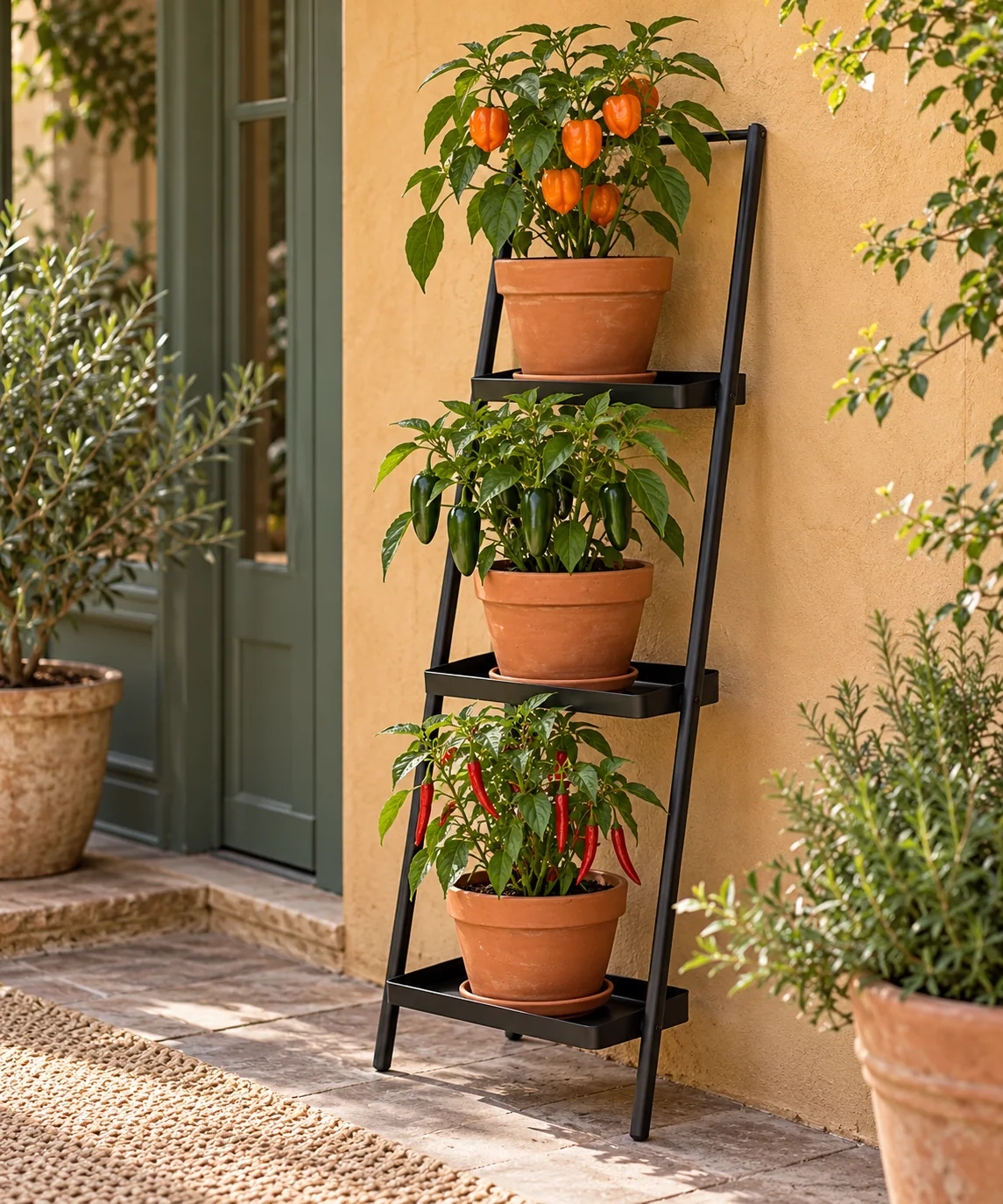
Selecting and Siting the Vertical Frame
Choose a freestanding steel plant stand with a wide, self-supporting base footprint that rests level on solid decking or paving. Check manufacturer load specifications for the entire frame and individual shelves before purchasing. Avoid leaning or single-pole designs that lack independent balance. Position the stand along an exterior wall that receives consistent sun exposure during the growing season. Ensure the footprint leaves ample clearance for normal foot traffic, screen doors, and emergency access pathways according to local building rules.
Container Sizing and Weight Distribution
Vertical stands have strict weight limits that require sensible pot selection. Compact pepper cultivars can be housed in individual small containers sized to fit within shelf boundaries without overhang. Porous or lightweight composite containers help keep individual unit weights manageable, but overall soil and water mass accumulates quickly. Always arrange the heaviest pots on the lowest tier to maintain a lower center of gravity, placing smaller, lighter containers on upper rungs while confirming the total load remains well within manufacturer ratings.
Managing Sunlight Exposure and Heat
While peppers prefer warm conditions, elevated containers dry out quickly in direct sun and reflective heat from nearby walls. Slotted metal shelves allow ambient air to move around pot bases and let irrigation drainage escape, but bare steel can become hot in strong afternoon sun. Position pots so foliage does not press directly against hot metal or masonry surfaces, which can lead to localized leaf scorch. Monitor soil moisture closely as elevated containers generally experience faster evaporation than ground-level pots.
Managing Vertical Drainage and Runoff
Tiered arrangements require thoughtful watering practices to avoid excess drainage dripping onto foliage situated below. Unfiltered runoff cascading between levels can spread fungal issues or wash soil debris across lower leaves. Fit each pot with an individual drip tray or saucer, or offset shelf positions so drainage clears lower foliage entirely. Empty standing water from saucers after saturation to avoid keeping root zones waterlogged in fluctuating outdoor conditions.
Wind Monitoring and Off-Season Storage
Elevated vertical plant stands present increased wind resistance as plants mature and leaf canopies fill out. In exposed patio areas, strong gusts can destabilize tall frames. Monitor local weather forecasts, and lower containers from higher tiers to ground level whenever high winds or severe storms are anticipated. At the close of the growing season, remove pots, wipe down metal surfaces with a damp cloth to clear dirt and mineral deposits, and store the dry frame in a sheltered area.
YOUR STARTING POINT
A little checklist.
Original editorial guidance. Images are AI-generated concepts, not photographs of completed projects. Our sources and approach.
Questions to consider
Can hot peppers be grown on a plant stand in partial shade?
Peppers grown in partial shade generally produce fewer blooms and slower ripening compared to those in full sun. While vegetative growth may continue, yield is often noticeably reduced depending on the cultivar and local temperature.
How can patio flooring be protected from metal stand feet?
Install manufacturer-approved protective rubber or silicone feet caps on the base of the frame. These pads help protect tile or deck finishes from scratches and assist in reducing surface sliding on smooth paving.
Why do lower leaves on tiered pepper plants sometimes yellow?
Yellowing lower foliage is commonly caused by shade cast from upper tiers, natural aging of older leaves, or inconsistent moisture. Check that upper foliage does not block light from reaching lower tiers and ensure drainage is draining freely.