Small Bathroom Storage · THE GUIDE
Slide a Slim Wheeled Cart Between the Vanity and the Toilet
The narrow floor space between a bathroom vanity cabinet and the toilet often goes unused, gathering dust while surrounding cupboards reach capacity. A slim wheeled cart designed for tight spaces can turn this awkward gap into a convenient slide-out storage station for extra paper goods, guest towels, and everyday toiletries. Utilizing mobile vertical shelving helps keep supplies organized and close at hand without requiring permanent cabinetry additions. Successful placement depends on measuring all potential obstructions carefully and loading the unit to suit its tall, narrow frame.
Jump to the checklist ↓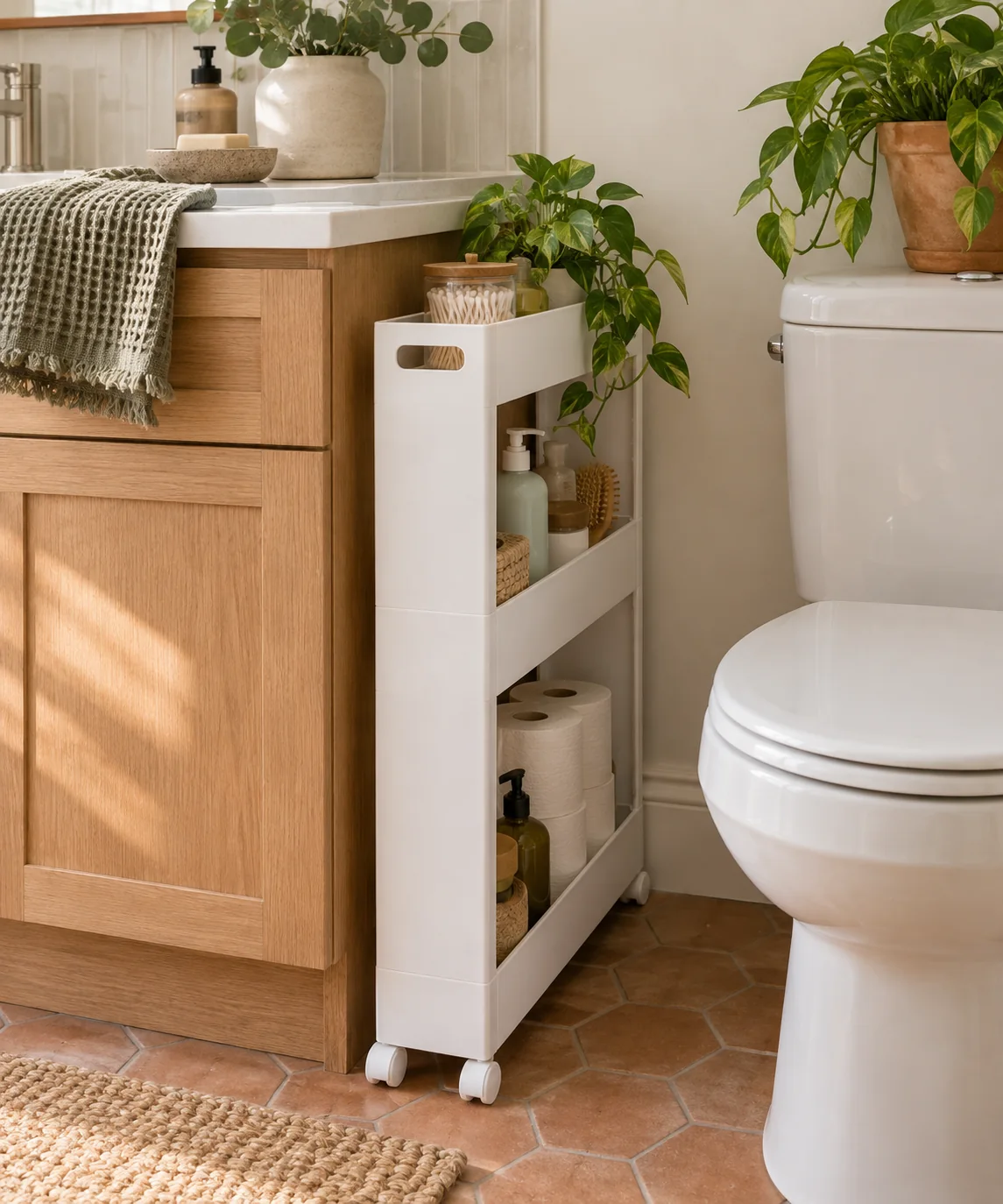
Measuring Obstructions and Clearances
Before purchasing a rolling cart, measure the full gap from front to back at multiple points, as bathroom walls and fixtures are rarely perfectly square. Account for protruding baseboards, floor trim, heating vents, and the toilet tank curvature, all of which can narrow the usable path. Pay particular attention to the toilet water supply line and shut-off valve near the floor. The cart must roll in and out smoothly without brushing or catching against flexible supply hoses or valve handles, which could risk loosening plumbing connections over time.
Managing Balance and Load Stability
Because ultra-narrow carts have a high height-to-width ratio, they can be inherently prone to tipping if pulled quickly or loaded unevenly. Placing heavier supplies—such as liquid soap backups or full refill bottles—on the lowest shelf helps lower the overall center of gravity. Middle and upper shelves are better suited for lightweight items like tissues, cotton pads, or spare toilet paper. While strategic loading improves handling, always roll narrow carts slowly to avoid tipping when wheels transition across floor joints.
Material Suitability in Damp Zones
Proximity to both the toilet and the vanity sink exposes the cart to ambient moisture, cleaning sprays, and routine splashes. Materials such as molded polypropylene or properly coated steel resist corrosion and are easy to wipe clean. Avoid unsealed wood or particleboard units in tight bathroom gaps, as lingering humidity and limited airflow behind fixtures can degrade pressed materials. Smooth surfaces simplify regular dusting and sanitation in these narrow, hard-to-reach floor sections.
Navigating Tile Grout and Flooring Surfaces
Small caster wheels common on slim utility carts can hitch or track unevenly when rolling across wide or deep grout lines. Rubberized or larger swivel casters generally offer smoother travel across ceramic tile and natural stone than small, rigid plastic wheels. Test the cart along its planned roll path when empty to confirm that it travels in a straight line without rubbing the vanity side panel or clipping the toilet base. Guiding the cart deliberately from its top handle helps maintain control.
Organizing Inventory to Prevent Spills
Tight shelf tiers can lead to fallen items if products are crowded or poorly arranged. Storing items in single rows or placing small drop-in bins on each shelf prevents loose containers from toppling as the unit moves. Avoid packing shelves to the point where items rub against adjacent fixtures when the cart is extended. Limiting stock to immediate backup quantities keeps shelves orderly and makes inventory checks easy at a glance.
YOUR STARTING POINT
A little checklist.
Original editorial guidance. Images are AI-generated concepts, not photographs of completed projects. Our sources and approach.
Questions to consider
How much clearance is needed to fit a rolling cart next to a toilet?
Clearance requirements depend on the specific cart dimensions and room layout. Always measure the narrowest point between baseboards, the vanity side, and the toilet fixtures, allowing sufficient room so the cart does not scrape surfaces or bump plumbing.
How can I protect stored paper products from bathroom humidity?
Keep spare toilet paper and facial tissues in moisture-resistant bins, canisters, or their original wrappers to help shield them from steam and minor water splashes.
What should I do if the cart catches on tile grout lines?
Pull the cart slowly and evenly from its primary handle, and consider models with larger or rubberized caster wheels that bridge grout depressions more smoothly than small, rigid plastic wheels.