Small Kitchen Organization · THE GUIDE
Sliding Under-Cabinet Drawer for Foil and Parchment Boxes
Standard kitchen storage boxes for aluminum foil, parchment paper, and plastic cling wrap are notoriously unwieldy. Their elongated, rectangular dimensions rarely stack neatly on standard cabinet shelves, leading to toppling piles and jammed cupboard doors. Installing a sliding under-shelf wire or acrylic drawer utilizes the unassigned vertical head space hanging below interior cupboard shelves. This modification creates a dedicated horizontal slide-out bay that keeps essential wraps visible, organized, and easily accessible. By measuring vertical clearances and shelf weight limitations beforehand, homeowners can reclaim lower shelf surfaces for dinnerware or bulk ingredients without making irreversible cabinet alterations.
Jump to the checklist ↓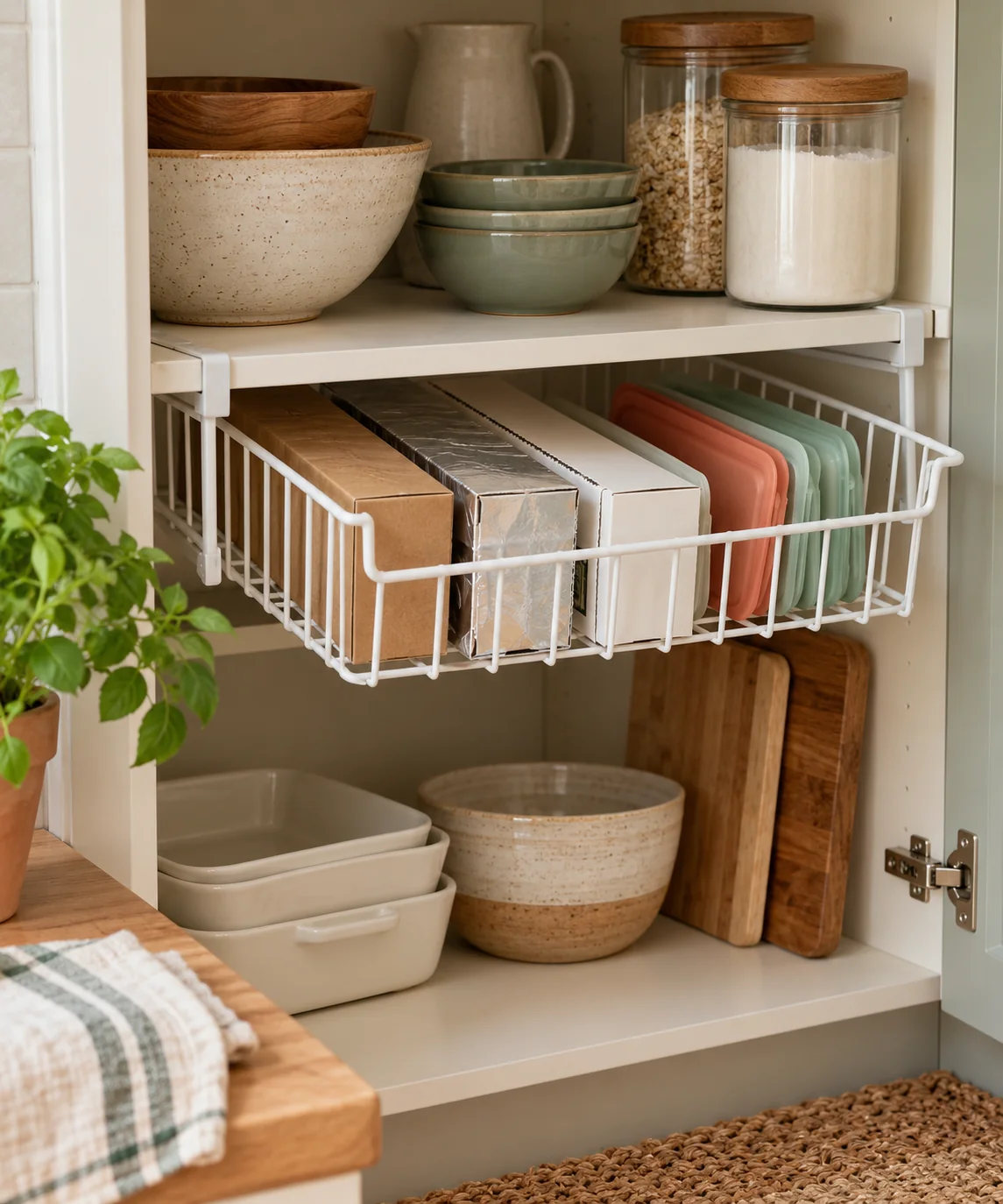
Measuring Shelf Depths and Overhead Airspace
Before selecting an under-shelf glide drawer, measure the internal depth of your pantry cabinet from the back panel to the closed door face. Standard wrap cartons range from twelve to fifteen inches long, requiring adequate internal clearance so cabinet doors close flush. Measure the vertical gap between existing shelves as well. The sliding assembly generally occupies three to four inches of height, leaving the lower flat shelf free for mixing bowls or plates only if proper vertical clearance exists.
Choosing Glide Mechanisms and Hanging Styles
Under-shelf drawers typically mount with padded slip-on brackets that slide over an existing shelf edge or use low-profile tension adhesive tracks. Wire basket versions allow air circulation and easy viewing of box labels from underneath, whereas solid acrylic trays prevent small accessories from slipping through. Ensure the mounting brackets fit your exact shelf thickness, which commonly ranges between five-eighths and three-quarters of an inch, preventing wobbling or cabinet finish damage when fully loaded.
Organizing Wrap Boxes for Smooth Dispensing
Arrange boxes with their integrated cutting edges facing upward or outward to avoid snagging when sliding the drawer forward. Position high-turnover rolls, such as everyday parchment paper or heavy-duty foil, along the outer edge for quick grasping. Reserve the inner channel for specialized rolls like wax paper or vacuum-sealer rolls. Keep boxes intact rather than decanting into rigid dispensers unless the secondary container dimensions precisely match your slide-out basket internal width.
Testing Structural Support and Shelf Deflection
Cabinet shelves manufactured from particleboard or medium-density fiberboard can sag under concentrated midpoint loads. Check that adding the drawer and several full rolls does not exceed the shelf manufacturer's weight rating. Position the hanging brackets near the outer cabinet sidewalls where shelf pins provide structural reinforcement rather than in the unsupported center. Test the drawer motion gently while loaded to verify smooth gliding without tipping the support shelf above.
Long-Term Maintenance and Box Management
Cardboard packaging for foils and wraps naturally sheds fine paper dust and tear-away metal debris over time. Remove all boxes quarterly to vacuum or wipe down the glide drawer tracks with a dry microfiber duster. If wire tracks become stiff, wipe guide runners with a drop of food-grade silicone lubricant on a rag. Monitor cardboard box condition, replacing crushed packages that could catch on the upper shelf during pull-out operations.
YOUR STARTING POINT
A little checklist.
Original editorial guidance. Images are AI-generated concepts, not photographs of completed projects. Our sources and approach.
Questions to consider
Will under-shelf brackets prevent cabinet doors from closing completely?
Thin stamped-metal brackets typically measure less than two millimeters thick and clear standard door bumpers. However, verify the interior setback; if shelves sit flush against doors, brackets will impede closing unless pushed inward.
Can extra-wide commercial foil boxes fit in these drawers?
Standard under-cabinet gliding drawers accommodate standard twelve-inch consumer boxes. Commercial eighteen-inch rolls require deeper industrial pantry racks or dedicated utility drawers, as they exceed standard residential twelve-to-fourteen-inch upper cabinet depths.
Do sliding under-shelf organizers require drilling into cabinetry?
Most consumer under-shelf glide units slip directly over existing shelves using friction-fit prongs without screws. Non-permanent adhesive shims can stabilize brackets if the shelf is slightly thinner than the bracket channel opening.