Patio Seating Ideas · THE GUIDE
Sliding-Under Ottoman Lounger for Narrow Townhouse Patios
Narrow townhouse patios frequently serve dual functions: daily footpaths between indoor rooms and garden gates, alongside relaxation zones. Traditional chaise lounges lock valuable square footage into a static layout, forcing awkward detours. A nested seating setup featuring a club chair with a fully retractable slide-under ottoman solves this clearance bottleneck. When pushed completely inward, the footprint drops by almost half, restoring open circulation routes for carrying laundry or moving garden tools. When leisure calls, pulling the footrest outward provides leg support without permanently compromising the terrace's primary walking corridors.
Jump to the checklist ↓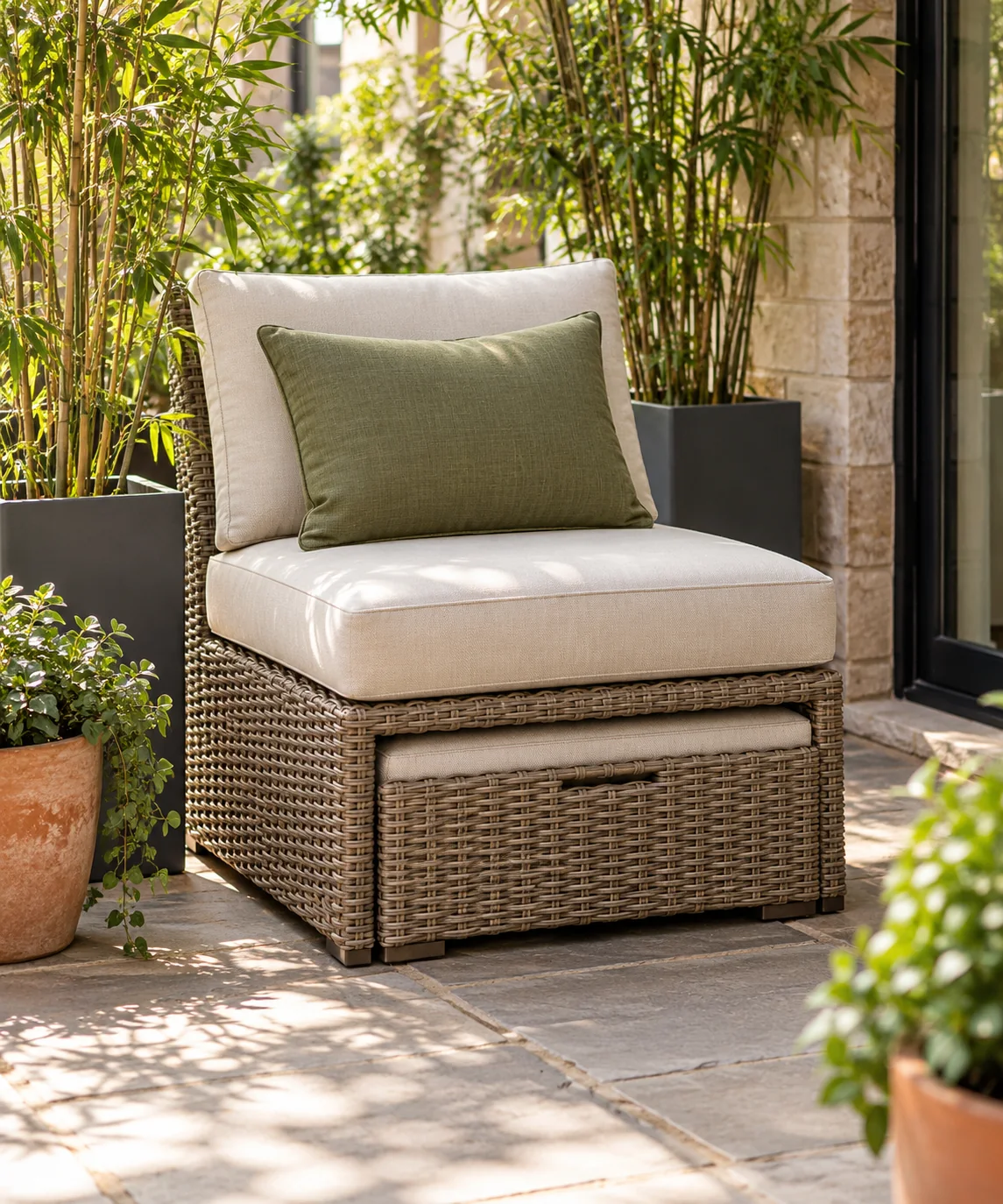
Clearance Math and Walking Corridors
Measure your available patio width before shopping. A standard townhouse patio spanning six to eight feet wide requires at least thirty inches of unobstructed walking clearance for comfortable passage. An extended lounge chair often claims over sixty inches in depth, leaving virtually no room to maneuver around. A nested unit measures approximately thirty-two inches deep when stowed, keeping the transit line clear during working hours. When deployed, the combined length extends to roughly fifty-four inches, occupying circulation space only during intentional resting periods.
Caster and Glide Selection for Pavers
Smooth deployment depends on the mechanism beneath the ottoman. Polyurethane casters or wide nylon glides function best on exterior paved surfaces, preventing scraping against concrete pavers or natural flagstone. Avoid narrow metal feet or cheap plastic wheels that catch in wide grout joints or collect outdoor grit. If your patio has rough or uneven stone surfaces, test moving a small rolling crate across the pavers first. Smooth rolling action ensures you will actually slide the footrest back under after each use rather than abandoning it extended.
Cushion Storage and Height Alignment
Nesting systems require intentional cushion management. Ensure the ottoman's top cushion can remain attached while sliding under the seat, or designate a dry storage chest nearby for the pad. Some models design the ottoman frame lower so the upholstered pad fits under the chair's front apron with an inch of clearance. If the cushion must be removed before stowing, check that the bare ottoman frame does not puddle rainwater. Slatted aluminum or synthetic wicker surfaces allow moisture to drain through cleanly without trapping debris inside.
Staging a Reversible Test Footprint
Before purchasing a nested set, simulate both configurations using painter's tape on your patio stones. Outline the stowed thirty-two by thirty-inch profile, and then tape out the fully extended fifty-four-inch footprint. Walk past the outline while carrying common household items, such as a recycling bin or watering can, to verify natural elbow room. This trial prevents buying furniture that technically fits the architectural boundaries but obstructs daily egress patterns or makes stepping through exterior doors feel cramped and awkward.
Routine Debris and Rust Prevention
The recess beneath an outdoor chair naturally collects windblown leaves, pollen, and patio dust. Inspect the cavity monthly, rolling the ottoman completely out to sweep the ground plane clean. For metal frames, inspect the lower slide tracks or caster axles for trapped sand that could grind down the finish and expose base metal to moisture. An occasional rinse with plain water and light drying prevents buildup, maintaining smooth sliding operation across multiple seasons without scraping your paving materials.
YOUR STARTING POINT
A little checklist.
Original editorial guidance. Images are AI-generated concepts, not photographs of completed projects. Our sources and approach.
Questions to consider
Can nested ottomans be used as secondary seating?
Yes, sturdy slide-under ottomans double as standalone stools when hosting guests. Ensure the manufacturer specifies a direct weight capacity for the footrest, as some lightweight models are intended solely for resting feet rather than supporting a seated adult.
Will outdoor rain cause water to pool beneath the stowed ottoman?
Trapped water depends on drainage design. Choose slatted frames or open woven wicker that allow rain to flow through to the patio floor. Periodically slide the ottoman out after heavy storms so sunlight can evaporate residual moisture underneath.
Are sliding ottomans compatible with outdoor area rugs?
Low-pile flatweave outdoor rugs work well if the ottoman uses broad glides or smooth casters. Avoid thick tufted rugs, as the leading edge will catch on the ottoman wheels during retraction, bunching up fabric and causing frustrating jams.