Patio Seating Ideas · THE GUIDE
Slim Backless Wall-Mount Perch for High-Traffic Patio Doors
High-traffic patio thresholds frequently become congested when transitioning between outdoor garden areas and indoor living spaces. A slim, backless perch positioned alongside an exterior wall offers an efficient, low-profile spot for changing garden footwear without obstructing door access. Because patio entries vary widely in exterior cladding, threshold clearances, and structural backing, planning this seating zone requires balancing space-saving dimensions with substrate safety. Opting for floor-supported low-profile benches or consulting professional guidance for secure wall mountings ensures entry corridors remain open, durable, and practical for daily use.
Jump to the checklist ↓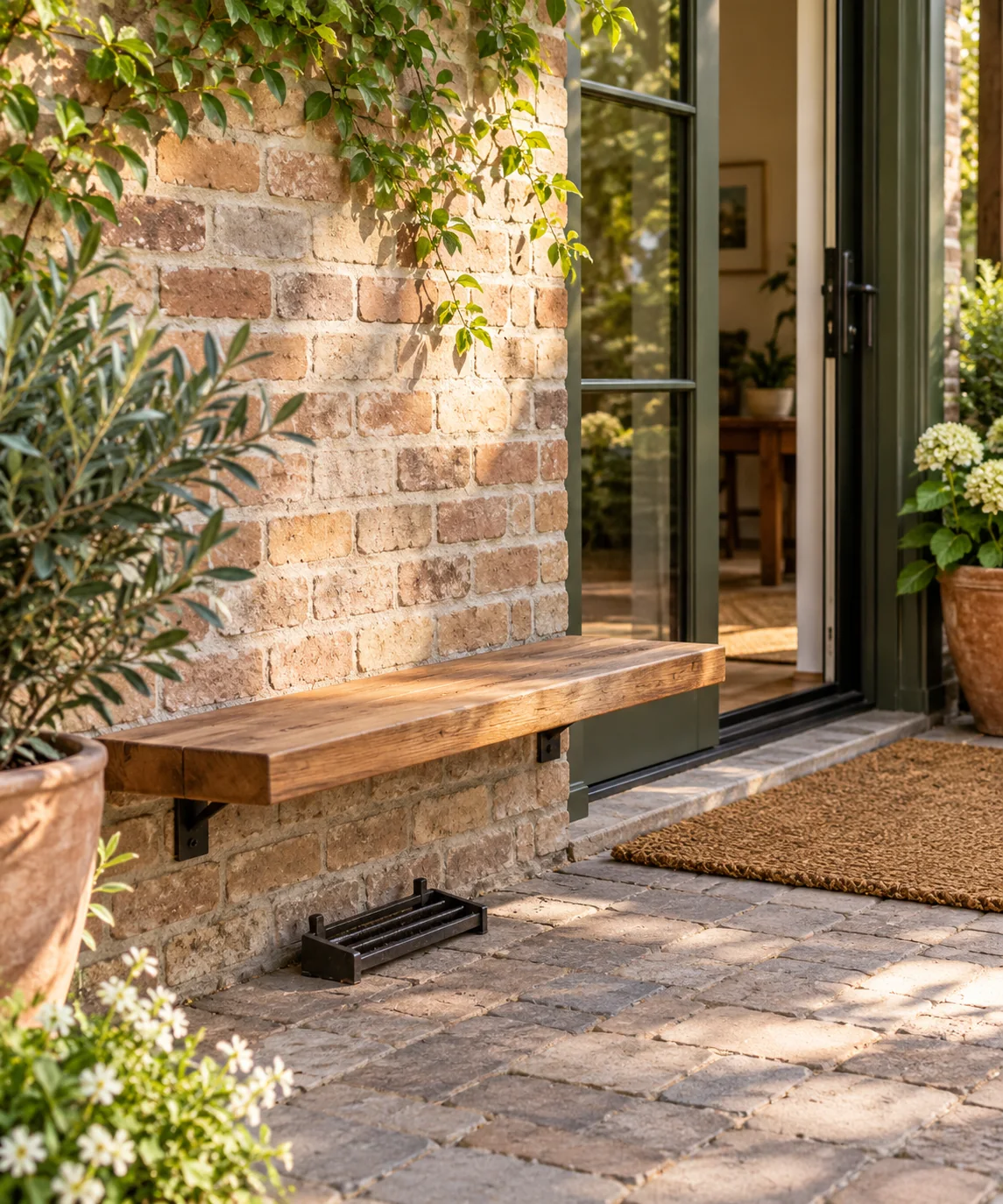
Mapping Door Swings and Transit Zones
Before designating an entryway seating area, examine the complete operating arc of exterior doors and screen panels. Open doors fully and observe clearance along the patio surface. Any seating bench or perch should sit comfortably outside this active swing zone to avoid blocking exits or creating knee-strike hazards. Observing daily traffic patterns also helps identify whether nearby exterior features—such as hose reels, outdoor electrical outlets, or downspouts—interfere with the proposed seating location.
Evaluating Substrate and Mounting Considerations
Wall-mounted seating introduces dynamic downward and pulling forces onto exterior structures. Many residential exteriors feature non-structural claddings, such as brick veneer, vinyl siding, or exterior insulation systems, which cannot support human live loads directly and risk water intrusion if penetrated. Before considering any wall attachment, consult structural guidance or building professionals to verify wall framing capacity and flashing requirements. For many homes, a narrow, floor-standing bench designed to sit flush against the wall provides the same compact utility without penetrating the building envelope.
Bench Proportions and Entryway Clearance
For quick tasks like removing work boots or slipping into garden clogs, a shallow bench depth offers sufficient support while conserving precious patio width. Keep the seat proportions compact so the walkway remains navigable for carrying tools or groceries. Maintaining standard seating height allows comfortable ergonomics for most adults while leaving room underneath for shoe trays. Measure your threshold carefully to ensure the bench profile stays below low window sills or decorative trim.
Ground Footwear Storage and Surface Grip
Utilizing the floor space directly below a low-profile perch helps contain outdoor grit at the perimeter. Positioning a dedicated boot tray or heavy-bristle scraper beneath the seat lets users clean soles immediately upon sitting. Ensure the patio pavers beneath the seating area provide adequate slip resistance, especially in rainy or freezing conditions. A low-profile exterior rubber mat can improve underfoot traction and protect pavers from concentrated dirt accumulation.
Material Selection and Weather Resilience
Entryway furniture sits directly in the path of outdoor weather, dirt, and frequent daily contact. Exterior-grade timbers like teak, cedar, or thermally modified wood withstand moisture exposure when treated with breathable exterior decking finishes. Avoid film-forming varnishes that crack and peel under intense sunlight or moisture cycles. Inspect hardware, joints, and floor contact points regularly, tightening any loose connectors and keeping the timber clear of damp garden debris.
YOUR STARTING POINT
A little checklist.
Original editorial guidance. Images are AI-generated concepts, not photographs of completed projects. Our sources and approach.
Questions to consider
Can a wall-mount bench be installed directly into exterior brick or siding?
Exterior brick veneer and light siding are not designed to hold live seating loads and drilling through them can compromise the home's weather-resistant barrier. Consult a licensed contractor or structural professional to evaluate solid framing support, or choose a narrow floor-supported bench that rests against the wall without structural penetrations.
What seat depth works best for an entryway changing bench?
A shallow depth between ten and fourteen inches typically provides adequate surface area for brief boot changes while keeping patio corridors open. Measure available clearance to ensure the bench does not crowd entry thresholds or block exterior utilities.
How do you keep exterior entryway seating clean and slip-resistant?
Position a non-slip drainage mat beneath the bench to catch mud and provide secure footing in wet weather. Regularly sweep fallen leaves from around the seat base and reapply an exterior penetrating oil to prevent timber surfaces from becoming slick with algae.