Pantry Organization · THE GUIDE
Slot Baking Sheets and Cutting Boards into Vertical Tension Dividers
Storing flat kitchenware horizontally creates disorganized stacks where bottom items are difficult to retrieve without shifting heavy cookware. Creating vertical channels allows sheet pans, cooling racks, and lightweight cutting boards to stand upright for direct access. Spring tension rods placed between fixed cabinet decks provide temporary, reversible division without drilling screw holes into cabinet walls. However, tension dividers must only be used between structurally rigid, permanently mounted surfaces rather than loose adjustable shelves. Planning divider spacing around your specific cookware ensures functional access without overloading cabinet frames.
Jump to the checklist ↓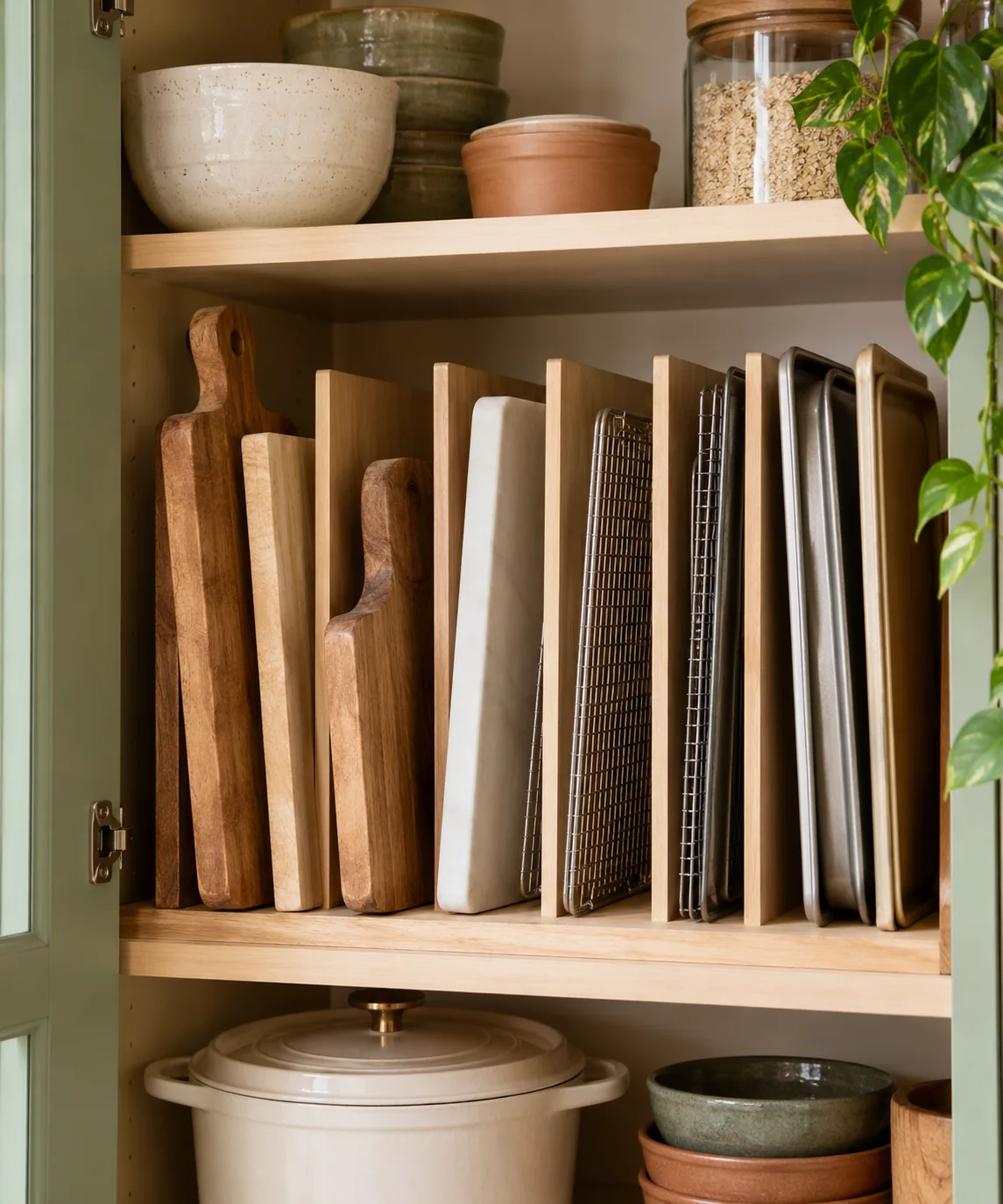
Verifying Cabinet and Shelf Suitability
Before planning vertical tension storage, confirm that upper and lower cabinet surfaces are fixed structural panels or firmly attached fixed shelves. Spring tension rods exert continuous outward force. Installing them against adjustable shelves resting on loose plastic or metal shelf pins can unseat the shelf, push it off its supports, or create upward deflection. Reserve vertical tension dividers for solid, non-movable cabinet decks, and check cabinet manufacturer weight and structure ratings before converting the space.
Assessing Cookware Dimensions and Clearances
Review the height, depth, and thickness of each pan or board you intend to store. The cabinet opening must provide sufficient headroom so you can lift items over any front face frame or cabinet lip without colliding with the top panel. Group items by thickness, setting wider intervals for deep muffin tins or thick cutting boards and closer spacing for thin sheet pans. Dry-fit your largest pan inside the cabinet space to verify that the cabinet door closes completely without pressing against cookware edges.
Selecting Appropriate Hardware and Footing
Select tension rods equipped with pliable rubber or silicone end pads that grip cabinet finishes without marring veneer. Lightweight decorative curtain rods may lack internal spring tension or rigidity, flexing under lateral weight. For deeper base cabinets, installing two rods in tandem—one toward the back and one toward the front—creates a balanced channel that prevents rectangular pans from pivoting sideways. Verify that rods can be adjusted securely without exceeding their recommended working extension.
Distributing Weight and Managing Heavier Boards
Lateral pressure from heavy kitchenware can dislodge spring-loaded tension rods. Place heavy wooden butcher blocks or large stone prep slabs flat on lower base shelves rather than leaning them against tension dividers. Use tension slots primarily for lightweight aluminum baking sheets, cooling grids, and thin composite prep boards. Position the heaviest permitted boards against the interior cabinet sidewall where lateral support is rigid, minimizing the force placed on individual tension rods.
Monitoring Rod Alignment and Cabinet Upkeep
Spring tension naturally decreases over time due to temperature fluctuations, cabinet door vibrations, and repeated item contact. Routinely test the stability of each rod by applying gentle lateral pressure. If a rod shifts easily or shows signs of angle slippage, loosen it, adjust the tension mechanism to restore firm engagement, and reposition it plumb. Keep shelf surfaces clean of flour, oil, or food dust that could reduce the friction grip of the rubber feet against the cabinet finish.
YOUR STARTING POINT
A little checklist.
Original editorial guidance. Images are AI-generated concepts, not photographs of completed projects. Our sources and approach.
Questions to consider
Can vertical tension rods be installed on adjustable cabinet shelves?
No. Spring tension rods apply outward pressure that can push adjustable shelves upward and off their support pins, creating a collapse risk. Tension rods should only be installed between fixed cabinet bases and permanent structural shelves.
How do you prevent pans from pushing tension rods out of place?
Store lightweight items like aluminum baking sheets and wire racks rather than heavy boards. Installing two parallel rods per divider channel distributes contact force, and keeping items aligned vertically prevents wedging pressure against the rods.
Will rubber tension rod caps damage cabinet finishes?
Most non-marking rubber or silicone end caps protect finished wood and laminate when installed correctly. Avoid dragging compressed rods across cabinet surfaces during positioning, and clean the contact spots periodically to prevent dust from wearing the finish.