Pantry Organization · THE GUIDE
Smooth Wire Shelving Surface Imperfections with Custom Clear Liners
Builder-grade wire shelving is common in home pantries, but the gaps between metal rungs frequently cause skinny bottles, spice jars, and small food packages to wobble and tip over. Thin cardboard boxes can sag between wires, creating uneven rows and frustrating spills. Installing food-grade semi-rigid plastic shelf liners provides a flat, continuous surface that stabilizes pantry items. Translucent liners bridge the spacing gaps while allowing existing ambient light to filter down through lower pantry levels. This simple, non-permanent enhancement converts irregular wire grids into stable, easy-to-clean platforms for everyday grocery storage.
Jump to the checklist ↓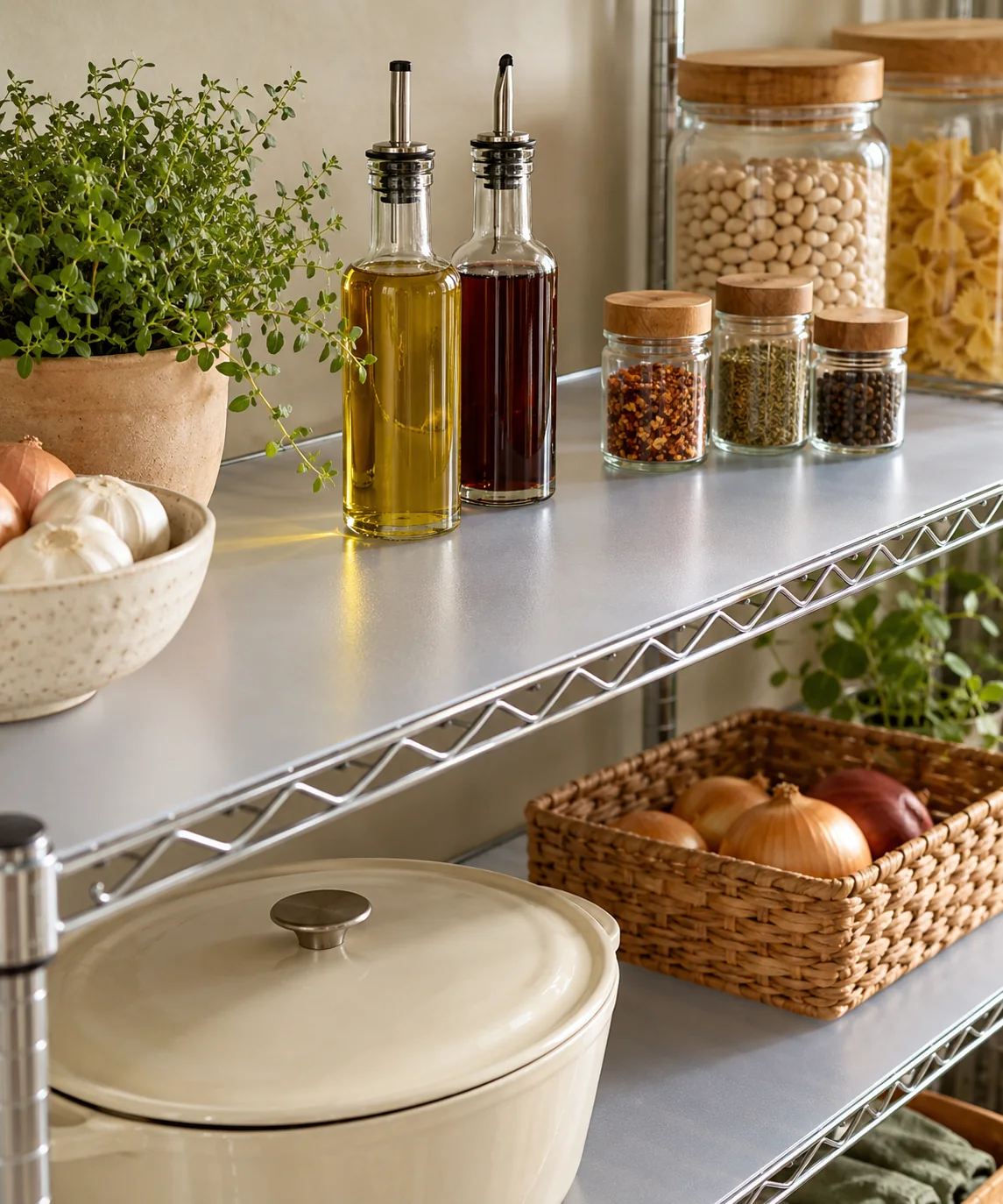
Selecting Food-Contact-Safe Liner Materials
Focus on food-grade polypropylene (PP) or high-density polyethylene (HDPE) rather than general-purpose PVC sheeting, which can contain additives not intended for direct food proximity. Semi-rigid sheets bridge standard wire spacing while maintaining enough flexibility to lie flat without permanent curling. Clear or translucent finishes permit overhead light to pass through lower tiers without creating deep shadows, maintaining visibility throughout the pantry space while softening the utilitarian look of bare metal rungs.
Measuring Wire Runs and Lip Profiles
Measure the usable width and depth of each shelf deck, paying close attention to rolled front lips and rear bracket attachments before purchasing or cutting sheets. Factory wire shelves often feature raised front wire ledges that hold items back; determining whether you want the liner to sit inside this border or extend over the front rim dictates your cutting lines. For units with upright vertical corner posts, measure post diameter and notch offsets to ensure the sheet lays flat without binding against vertical uprights.
Cutting and Flattening Sheet Material
Lay the plastic sheet across a flat, protected cutting surface. Use a metal straightedge and a fresh utility knife to score shallow guide grooves across the material before cutting through completely, or use heavy-duty shears to avoid cracking brittle plastics. If materials arrive tightly rolled in packaging, unroll them on a flat floor or weigh them flat beneath flat boards for several hours to relax the material memory. Avoid applying heat guns or open heat sources that can warp or shrink thin plastic polymers unevenly.
Preventing Liner Movement on Wire Rungs
Unsecured smooth liners can slide when pulling stored containers forward. To keep liners in position without permanent modification, place small food-safe silicone grip tabs or non-adhesive friction pads between the wire deck and the underside of the liner. Avoid using permanent adhesives or drilling holes through liners, which can damage vinyl shelf coatings or make regular cleaning cumbersome. Proper positioning ensures containers slide smoothly across the top without dragging the liner forward.
Sanitation and Regular Maintenance
Solid liners catch small spills, loose grains, and condensation before liquids reach items stored below. For light upkeep, wipe the plastic clean with warm water and mild dish soap using a non-abrasive sponge directly on the shelf. When major sticky spills occur, lift the lightweight liner off the wire rungs entirely to wash it in a utility sink or basin. Allow both the liner and the wire shelf to dry completely before reassembly to prevent trapped moisture between the plastic and metal surfaces.
YOUR STARTING POINT
A little checklist.
Original editorial guidance. Images are AI-generated concepts, not photographs of completed projects. Our sources and approach.
Questions to consider
Do clear liners reduce visibility on lower pantry shelves?
Translucent and transparent plastic liners allow light to pass through to lower shelves. While textured or frosted surfaces slightly diffuse the light, they still maintain significantly better lower-shelf illumination than opaque wood or solid metal inserts.
How do you remove persistent curl from packaged plastic liners?
Reverse-rolling the material loosely or pressing the sheets under flat, evenly distributed weight at room temperature helps relax the memory of the plastic. Avoid high heat, which can warp or distort the edges permanently.
Are clear shelf liners safe around unwrapped pantry goods?
Sheets labeled food-grade polypropylene (PP) or high-density polyethylene (HDPE) are suitable for pantry environments. Verify manufacturer product documentation for food-contact suitability if produce or unpackaged dry goods will rest directly against the surface.