Indoor Plant Styling · THE GUIDE
Soften Sharp Furniture Corners with a Woven Basket Planter
Sharp right angles on freestanding wardrobes and tall cabinetry often draw harsh visual boundaries across living spaces. When a tall storage unit sits near a doorway or main walkway, its rigid edge can make the entire room feel uninviting and angular. Nestling a substantial leafy plant inside a rounded seagrass basket beside that perimeter edge blurs the hard vertical joint without structural remodeling. The organic curves, rich weave, and arching foliage create an easy transitional buffer. This layout balances geometric cabinet lines, softens bedroom traffic paths, and adds living texture right where furniture mass feels heaviest.
Jump to the checklist ↓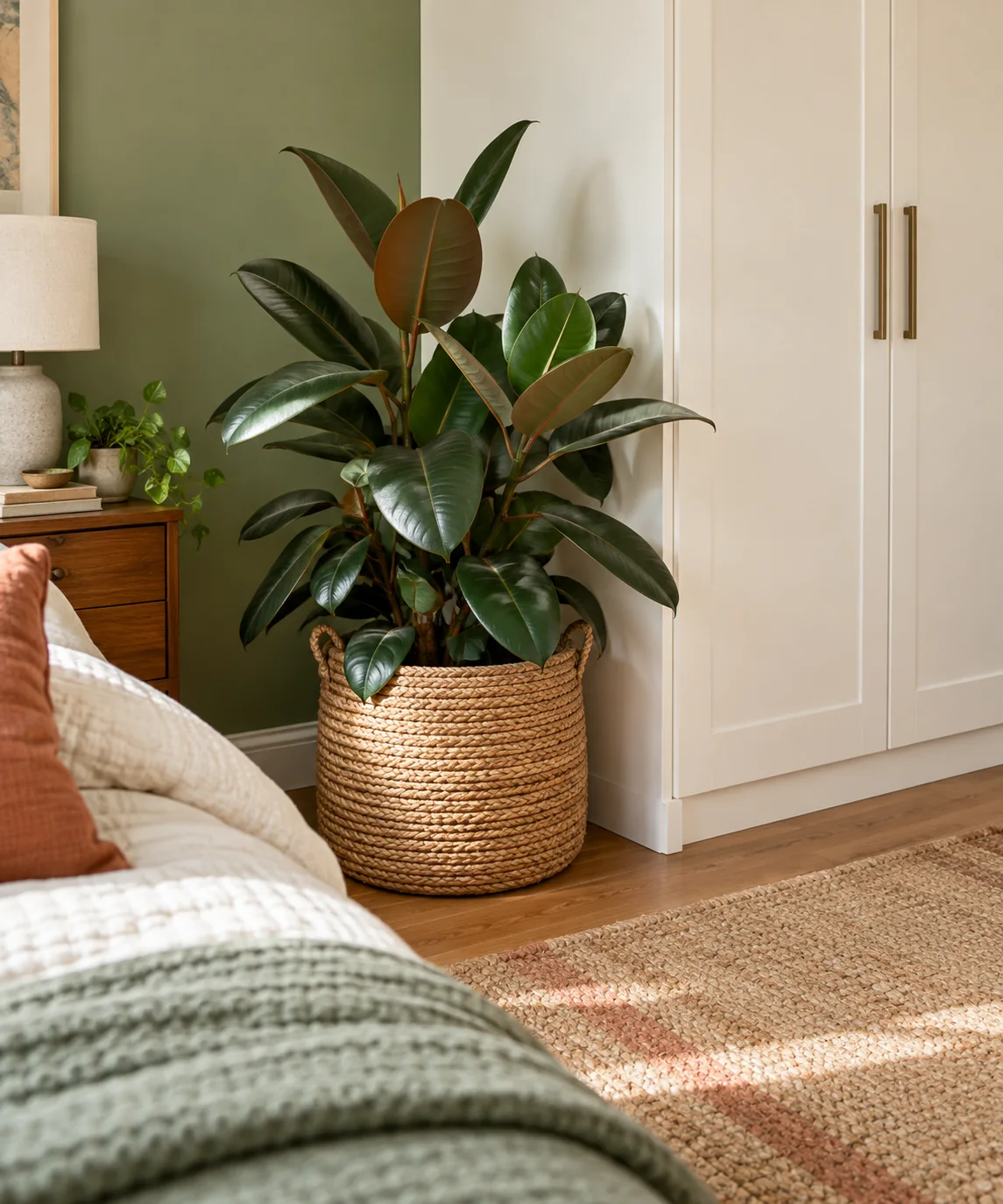
Assessing Clearances and Foot Traffic
Before placing a floor planter next to a wardrobe or tall storage cabinet, verify that nearby cabinet doors and low drawers open fully without striking the container. Observe how household members navigate the surrounding hallway or bedroom walkway to ensure the planter does not narrow the primary travel path or create a tripping hazard in low light. A simple spatial mockup, such as placing a bucket or empty box in the intended footprint for a day, allows you to evaluate daily movement before committing to a permanent arrangement. If anyone brushes against the container while retrieving clothes or walking by, relocate the planter farther along the wall or choose a more compact container.
Selecting the Basket and Internal Liner
Woven seagrass, jute, and rattan add natural texture that softens rigid cabinet lines, but organic fibers degrade rapidly when exposed to trapped dampness. Select a basket featuring a broad, flat base that sits firmly on the floor without tipping when nudged. To safeguard both the basket and the subfloor, never add potting soil directly into the woven shell. Keep your specimen potted inside a standard plastic nursery pot equipped with drainage holes, and position that inner pot inside a heavy-duty, watertight saucer or liner placed inside the basket base. This arrangement catches residual drainage and prevents moisture from damaging the weave.
Choosing Foliage Structure
The form of your chosen houseplant should visually counterbalance the stark vertical corner without sprawling uncontrollably into the walkway. Upright cultivars with broad foliage, such as ficus varieties or sturdy indoor aroids, provide substantial vertical presence to soften hard furniture corners without occupying excessive horizontal floor space. Avoid overly wide or brittle specimens whose stems will snap if brushed during wardrobe access. Verify that mature stems remain within your safe clearance zone so the plant can grow without interfering with drawer operation or foot movement.
Managing Lighting and Rotation
Tall furniture units cast substantial directional shadows, often leaving the side facing away from windows in deep shade. Before finalizing your placement, check how many hours of natural daylight reach that specific floor position across the day to ensure it matches the light needs of your plant. Rotate the woven container ninety degrees every couple of weeks as part of regular watering routines. This gentle adjustment promotes balanced canopy growth and prevents the plant from leaning lopsidedly outward toward ambient light sources.
Routine Maintenance and Practical Safeguards
Maintaining a large container plant hidden inside a deep decorative basket requires proactive water management. Because decorative baskets conceal the drainage saucer beneath the nursery pot, excess irrigation can collect undetected and lead to root rot. Inspect the inner saucer twenty to thirty minutes after watering, extracting any standing water with a bulb syringe or lifting the inner pot to empty the tray. Periodically inspect the floor beneath the basket to ensure condensation has not gathered on hardwood or carpet, and consider adding non-scratch protective feet beneath the basket to encourage airflow.
YOUR STARTING POINT
A little checklist.
Original editorial guidance. Images are AI-generated concepts, not photographs of completed projects. Our sources and approach.
Questions to consider
How do I prevent water from ruining the woven basket?
Always keep your plant in its nursery pot resting on an impermeable plastic tray inside the basket. Never water directly into the weave, and promptly remove standing runoff after watering.
What should I do if the plant tilts toward the light?
Tall furniture creates partial shade on one side. Rotate the basket a quarter turn every two weeks. This regular adjustment keeps the canopy symmetrical and prevents stems from leaning excessively forward.
Can I place a basket planter on carpeted floors?
Yes, but place a rigid clear plastic saucer or plant trivet directly under the basket. This elevates natural fibers slightly above carpet pile, ensuring airflow and preventing condensed moisture buildup.