Entryway Organization · THE GUIDE
Sort Daily Mail With a Three-Tier Wall-Mounted Sorter
Daily correspondence, unsolicited flyers, and utility invoices often form disorderly stacks on entryway consoles, obscuring keys and creating an immediate impression of household chaos. A horizontal table surface invites passive dumping because paperwork requires no initial decision. Installing a vertical three-tier wall-mounted sorter converts this chaotic resting point into an active, structured intake station. By categorizing physical mail the moment it crosses the threshold, you preserve valuable table space, keep urgent correspondence visible, and prevent overlooked bills from disappearing beneath grocery circulars and promotional postcards.
Jump to the checklist ↓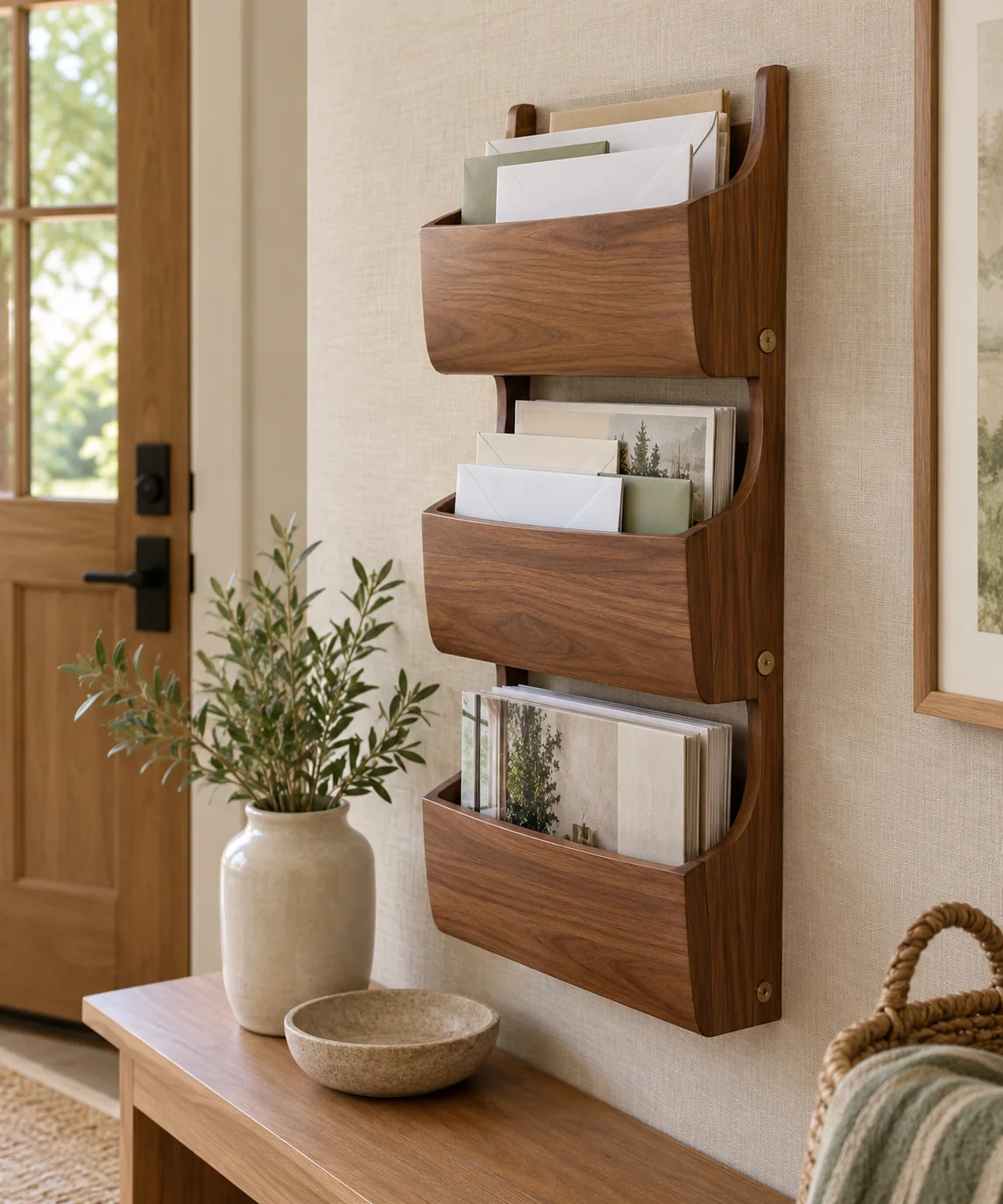
Establishing a Three-Tier Taxonomy
A three-tier organizer succeeds only if every slot possesses a definitive, mutually understood purpose. Assign the top tier to immediate action items requiring attention within forty-eight hours, such as bills, notices, and time-sensitive school forms. Designate the middle tier for reading material and reference documents, including magazines and municipal updates. Reserve the bottom tier strictly for outgoing envelopes and stamped mail, ensuring items destined for the postal box are clearly isolated and impossible to overlook when exiting.
Ergonomic Drop-Zone Placement
Position the sorter directly adjacent to your natural entry landing pad, at comfortable eye level between fifty-four and sixty inches from the floor. This placement allows you to read envelope return addresses without removing mail from the pockets. Avoid placing the unit behind doors or low to the ground where checking it becomes physically awkward. Ensure the sorter sits clear of moving coat hems to prevent loose papers from being swept out by entering family members.
Selecting Slot Dimensions and Visibility
Choose an organizer featuring open-front or tiered slots where the top third of a standard business envelope remains visible. Fully enclosed, opaque pockets hide documents, which encourages forgotten buildup. The pockets should measure at least ten inches wide to accommodate standard unfolded letters and magazines horizontally. Restrict pocket depth to approximately one and a half to two inches; deep bins simply invite bulk hoarding rather than disciplined daily sorting and rapid turnaround.
Threshold Triage and Paper Elimination
The wall sorter should hold only valid, actionable mail, not recycled paper waste. Perform initial triage directly beside your recycling bin before loading the pockets. Strip away plastic sleeves, discard promotional flyers, and shred unsolicited solicitations immediately upon walking through the door. Only sorted, envelope-free bills and relevant correspondence should enter the top slot. Halting junk mail at the threshold prevents the sorter from overflowing into adjacent entryway areas.
Implementing a Weekly Clearing Cadence
Even the best sorting structure collapses if paperwork sits indefinitely. Schedule a recurring five-minute clearing session once per week, ideally on the day administrative chores occur. Empty the middle reading tier completely by moving periodicals to designated reading spots or filing useful documents into long-term home records. Dust inside the pockets with a dry microfiber cloth during this weekly clearing to prevent paper dust and lint from gathering in the bottom seams.
YOUR STARTING POINT
A little checklist.
Original editorial guidance. Images are AI-generated concepts, not photographs of completed projects. Our sources and approach.
Questions to consider
Where should outgoing mail be placed?
Reserve the bottom tier exclusively for outgoing correspondence. Placing it at the bottom keeps outgoing items distinct from incoming notices, making them quick to grab alongside your keys on your way out.
How should oversized parcels and thick catalogues be handled?
Do not force oversized publications into wall sorters; doing so crushes envelopes behind them. Place thick catalogues directly into personal reading areas or recycle them immediately if digital editions are available.
What prevents small receipts from slipping out of sight?
Clip small receipts or business cards together with a binder clip or attach them to standard index cards before filing. This raises their top edge into view above the pocket lip.