Pantry Organization · THE GUIDE
Sort Spices by Culinary Frequency Rather Than Alphabetical Order
Alphabetical spice storage often breaks down during fast-paced cooking because jars must be hunted down by letter rather than natural cooking habits. Organizing seasoning containers by frequency of use establishes an intuitive hierarchy that speeds up meal preparation while keeping shelves orderly. Placing primary staples like kosher salt, black pepper, ground cumin, and dried oregano on reachable front trays eliminates constant shifting of less common spices. Specialty seasonings, whole seeds, and occasional baking spices can migrate to higher or back tiers. This system adapts to your cooking patterns without requiring rigid indexing or constant re-sorting.
Jump to the checklist ↓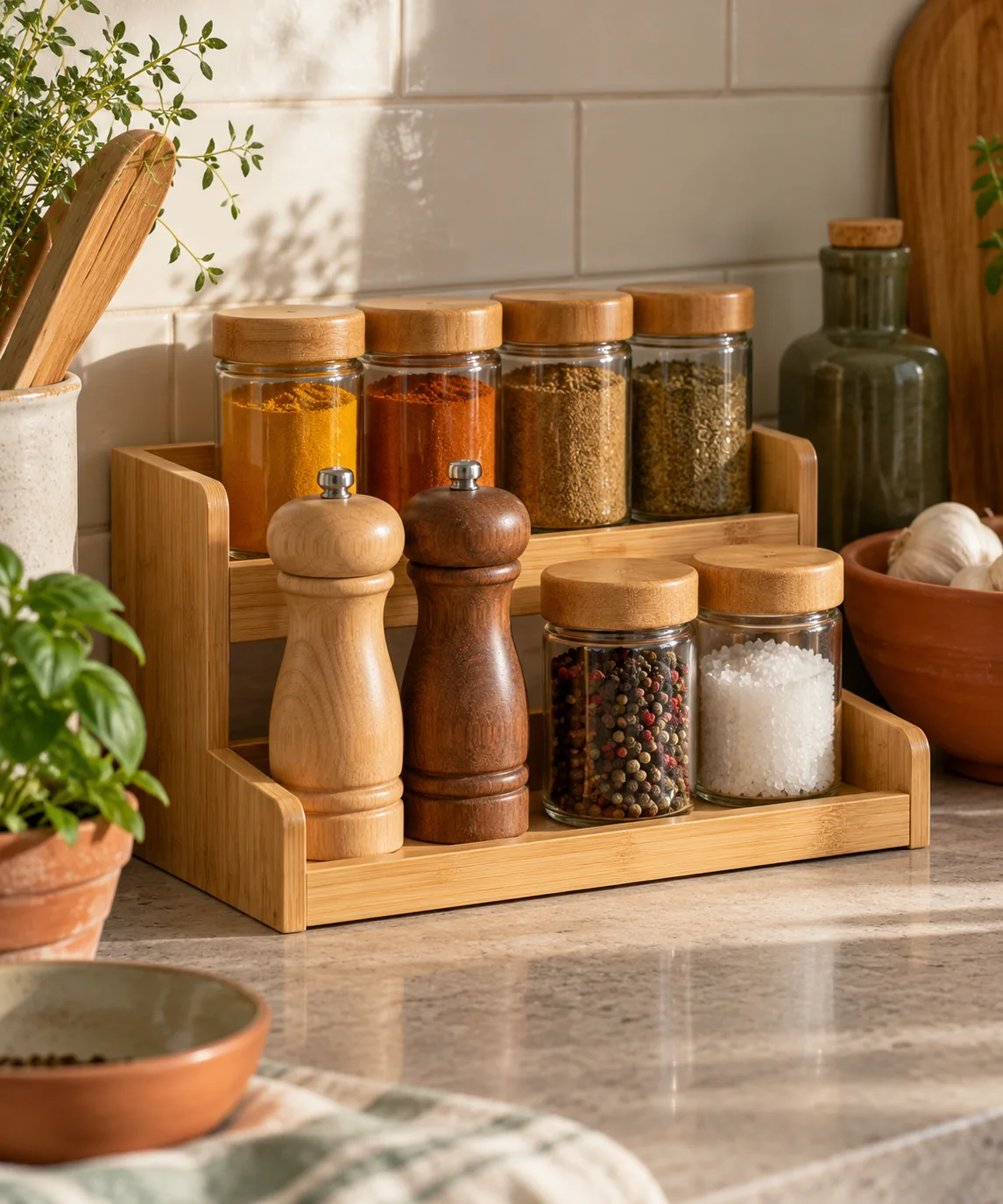
Identify Your Daily Core Rotation
Begin by observing which seasonings you reach for across typical weekly meals instead of theoretical recipes. For many households, kosher salt, coarse black pepper, garlic powder, ground cumin, and dried oregano form the primary rotation. Pull these four to six jars out entirely and allocate them the most accessible real estate, such as the bottom step of a tiered riser or the front edge of a pull-out drawer. Keep these containers immediately visible to avoid rummaging with greasy or damp hands while cooking.
Assign Upper Tiers to Secondary Blends
Place secondary items like smoked paprika, ground coriander, onion flakes, and everyday chili powders on the middle elevation of your rack. These ingredients enhance dishes several times a week but do not belong in the immediate primary reach zone. Elevating them behind the core items preserves clear sightlines to labels without crowding the lowest tray. Group them loosely by profile—such as earthy herbs together and mild pepper powders together—to make locating specific flavors rapid without needing alphabetical rigidity.
Reserve Back Zones for Specialty Elements
Upper tiers, deep shelf corners, and rear tray positions are ideal for single-purpose seasonings, whole spices, and regional blends like garam masala, star anise, or sumac. Because you access these jars only for specific recipes, placing them behind core seasonings causes minimal daily friction. Store whole seeds such as cumin or mustard seeds in taller containers toward the back, where their height makes labels visible over shorter front jars, preventing small ground spice tins from becoming lost behind large containers.
Test Workflow Using Reversible Trays
Before committing to fixed container sizes or uniform glass jars, test the frequency layout using shallow rimmed trays or your existing tiered risers for two weeks. Notice which jars drift toward the front naturally and which items remain untouched. If you discover ground turmeric is used three times a week while oregano sits idle, swap their tiers immediately. The strength of frequency sorting lies in its adaptability to your household cooking habits rather than adherence to an arbitrary naming convention.
Maintain Tier Discipline and Seasonal Swaps
Frequency patterns occasionally shift between summer grilling and winter braising. Set aside five minutes every few months to adjust tier positions based on your current menu. In autumn, ground cinnamon, nutmeg, and allspice can move from deep storage up to the secondary tier, while warm-weather spice rubs move back. Return jars to their designated tier immediately after meal cleanup to prevent everyday staples from migrating into specialty rows, keeping the shelf layout functional without requiring a full reorganization.
YOUR STARTING POINT
A little checklist.
Original editorial guidance. Images are AI-generated concepts, not photographs of completed projects. Our sources and approach.
Questions to consider
How do I handle duplicate backup jars of everyday spices?
Store large refill containers or backup duplicates in a secondary pantry basket rather than on the active working rack. Keep only one working shaker or small jar of each seasoning on the tiered riser to prevent visual clutter.
What if two household cooks use entirely different spices?
Split the lowest front tier horizontally into two zones, allocating three front slots for each cook's staple ingredients. This shared arrangement preserves quick access for both routines without forcing one cook's daily spices onto a distant upper tier.
Should whole spices be kept in the same rack as ground spices?
Yes, but place whole spices on the rear tier or in a dedicated side bin. Ground spices release flavor rapidly and see frequent use, while whole spices generally require toasting or grinding and belong in secondary storage.