Rental-Friendly Decor · THE GUIDE
Sort Wardrobe Overflow in Open Modular Cube Storage Bins
Many rental apartments lack built-in dressers, leaving tenants with overflowing closets and limited flat drawer space for knitwear and accessories. Heavy solid-wood bureaus are difficult to transport between moves and often crowd compact bedroom layouts. Freestanding modular cube storage units paired with fabric pull-out bins offer an adaptable, lightweight alternative. By balancing open display cubbies with concealed bins, you can organize bulky winter sweaters, casual tees, scarves, and off-season linens efficiently. This modular approach preserves precious square footage, protects delicate textiles from hanger distortion, and adapts effortlessly to future apartment floor plans.
Jump to the checklist ↓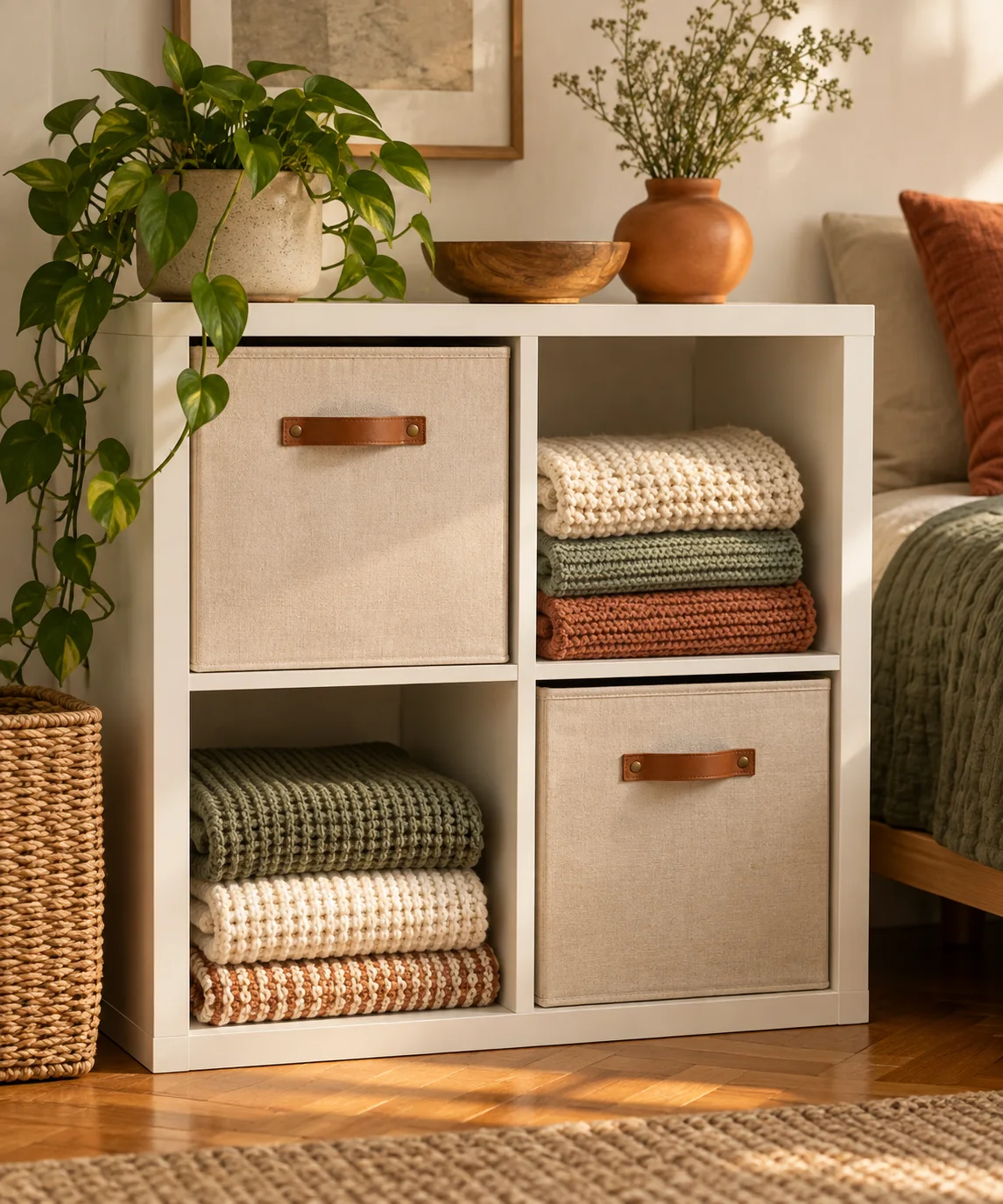
Designing Balanced Open and Closed Storage
A mix of open compartments and concealed bins creates visual balance while protecting everyday apparel. Use open cubes for neatly folded sweaters, heavier denim, or rigid organizing trays that benefit from passive air circulation. Insert opaque fabric or canvas bins into alternate compartments to contain smaller personal accessories, undergarments, athletic apparel, and mismatched socks. This alternating configuration prevents a freestanding shelving unit from appearing visually heavy in compact bedrooms, while shielding personal items from ambient dust and keeping daily clutter concealed behind uniform pull-out panels.
Folding Techniques to Maximize Cube Depth
Standard modular cube compartments typically measure between 11 and 13 inches in width, height, and depth, requiring deliberate garment folding. Rather than stacking knitwear into tall, leaning columns that tip when browsed, fold sweaters into consistent rectangular packages aligned with the shelf depth. For fabric bins, vertical file-folding allows t-shirts, thermal layers, and loungewear to rest upright like folders in a drawer. This arrangement enables quick identification of individual garments without disarranging surrounding stacks. On open shelves, limit stacks to three or four items to minimize fabric compression.
Protecting Delicate Knitwear from Fabric Wear
Suspending heavy wool or cashmere sweaters from traditional hangers stretches shoulder seams and distorts collars over time. Storing knitwear flat inside cube compartments supports fiber elasticity across seasons. Inspect interior cube surfaces and cam-lock hardware for rough edges or exposed metal fasteners that could snag yarn, smoothing them with felt liners or clean shelf paper where necessary. In humid environments or older properties with fluctuating temperatures, breathable cotton inserts and periodic ventilation help reduce stale air buildup, though active moth or pest concerns require thorough cleaning and sealed containment rather than passive repellents.
Managing Weight Distribution and Furniture Stability
Position modular cube shelving along solid interior walls, ensuring the footprint does not block egress paths, radiators, or airflow around heating vents. Distribute storage weight intentionally by placing heavy items, such as winter blankets, denim, and dense knits, exclusively on the bottom shelf tier. Keep lighter accessories, scarves, and lightweight tops on upper tiers to reduce top-heavy tipping risks. Always review manufacturer guidelines regarding maximum shelf load ratings and mandatory anti-tip wall brackets, particularly in homes with children or pets, rather than assuming floor levelness alone ensures stability.
Long-Term Adaptability Across Rental Moves
A notable advantage of modular cube storage is its adaptability to varying rental layouts. A horizontal two-by-two or single-row configuration can fit beneath a low windowsill, inside a reach-in closet, or along an entryway hallway where vertical space is constrained. When preparing for a future move, fabric bins fold flat for compact packing, and individual laminate carcasses can be transported assembled or broken down according to manufacturer instructions. Choosing durable, standard-sized units ensures replacement bins and modular add-on sections remain compatible across future apartment moves.
YOUR STARTING POINT
A little checklist.
Original editorial guidance. Images are AI-generated concepts, not photographs of completed projects. Our sources and approach.
Questions to consider
How many sweaters can fit comfortably in a single storage cube?
In a typical 13-inch modular cube, you can comfortably stack three to four folded medium-weight sweaters. Stacking beyond that height can cause piles to lean, crush underlying knit fibers, and make pulling lower garments out difficult without disturbing the entire stack.
What material is best for pull-out storage bins?
Breathable canvas or non-woven fabric bins with sturdy cardboard or polypropylene inserts work best for clothing storage. They allow moderate air circulation, protect delicate knits from catching on rough corners, and slide smoothly across shelf surfaces without marring laminate finishes.
Do low modular cube units still require wall anchoring?
Manufacturer assembly instructions typically specify anti-tip wall anchors for modular shelving regardless of height, particularly in homes with young children or pets who might climb or pull on extended bins. While horizontal low-profile units have a lower center of gravity, check both the manufacturer hardware specifications and your property lease agreements regarding approved wall attachment methods before leaving any storage unit freestanding.