Laundry Space Organization · THE GUIDE
Sort Wool Dryer Balls in a Stoneware Croc
Wool dryer balls often roll away, collect stray lint from open shelving, or remain buried inside freshly dried laundry loads. Dedicating a wide-mouth stoneware crock on an adjacent countertop or laundry shelf creates a designated landing zone that streamlines loading and unloading between cycles. Unlike lightweight plastic tubs that easily tip when reached for in a rush, a weighty ceramic vessel provides a stable, open-top receptacle. Organizing dryer balls in an open ceramic container keeps them accessible, promotes natural airflow around felted wool fibers, and avoids cluttering utility drawers. Evaluating placement stability, vessel dimensions, and routine cleaning ensures the container remains practical and safe in active laundry spaces.
Jump to the checklist ↓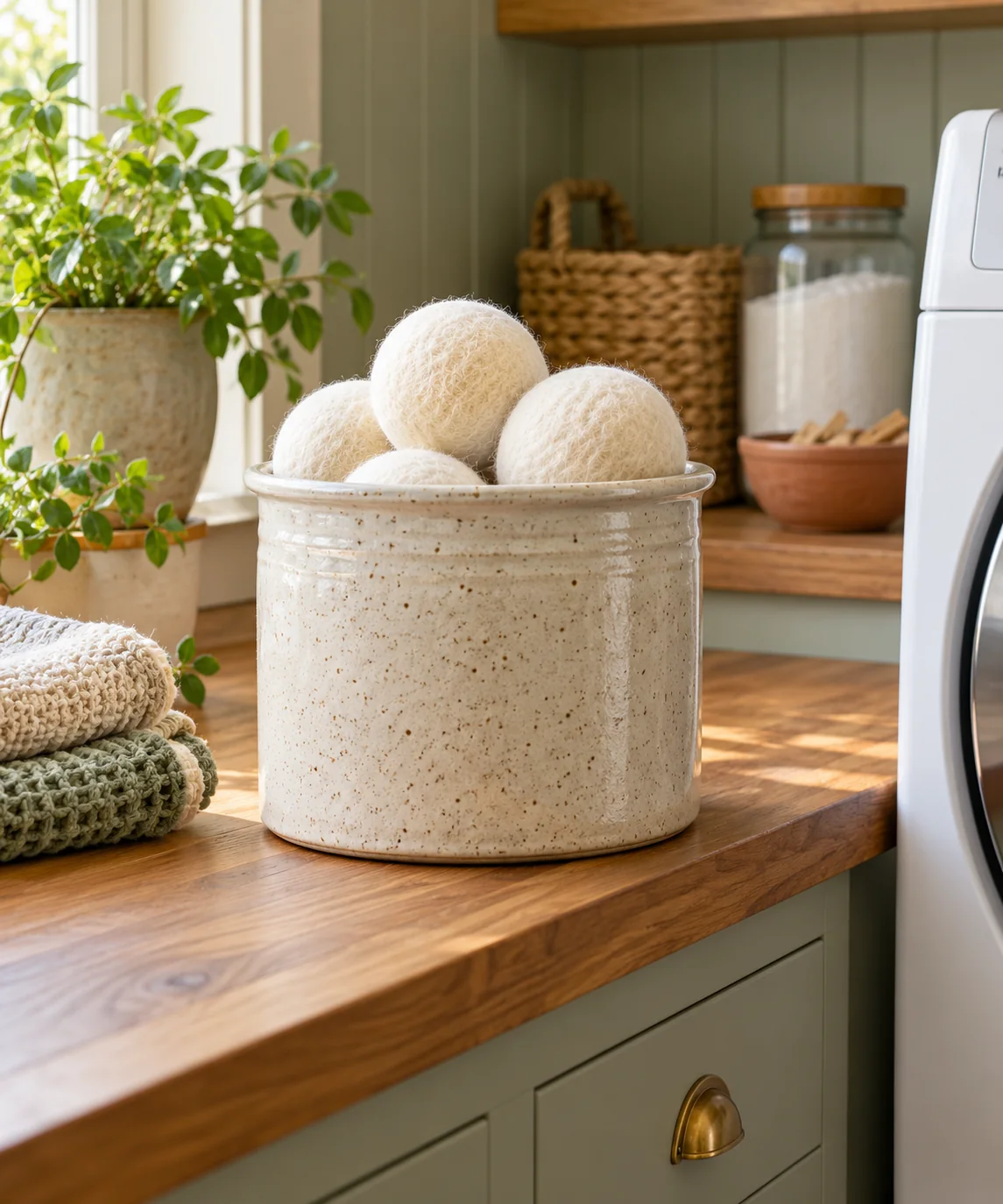
Container Sizing and Capacity Planning
The ideal container size depends on the number and diameter of dryer balls your household routinely uses. A standard set of four to six wool balls fits comfortably in a wide-mouth crock that allows you to reach in and grasp multiple balls at once without catching your fingers on the rim. Overly deep vessels can cause balls at the bottom to remain unused, while narrow-necked jars make quick retrieval awkward. Choose a container with a broad, weighted base so it remains upright during hurried laundry transfers, and check that the interior finish is smooth to prevent snagging felted fibers.
Stable Placement Away from Appliance Vibration
Washing machines and tumble dryers generate noticeable mechanical vibration, particularly during high-speed spin cycles. Placing a rigid, heavy ceramic vessel directly onto a machine top can result in the container gradually migrating toward the edge, scratching the appliance enamel, or falling onto the floor. Instead, position the crock on an adjacent stationary countertop, nearby shelf, or wall-mounted utility ledge. Ensure the location sits outside the full swing radius of appliance doors and overhead cabinet fronts so everyday movements will not bump or dislodge the ceramic piece.
Material Breathability and Moisture Considerations
Wool dryer balls absorb residual humidity during drying cycles and require ambient airflow to dry out fully between laundry loads. Non-porous, airtight containers with sealing lids can trap residual dampness within dense felt cores, leading to musty odors. An open-top stoneware crock allows unhindered air circulation around stored balls while shielding them from direct floor dust or lint settling on adjacent surfaces. Keep the storage crock away from sink splash zones and open detergent containers to avoid accidental spills onto the wool.
Evaluating Household Habits with Existing Containers
Before purchasing a dedicated ceramic crock, observe your family's routine using an everyday kitchen vessel, such as an unused utensil holder or wide ceramic bowl. Place the container in your planned laundry zone for a few cycles to verify that its position is genuinely convenient when unloading the dryer drum. Take note of whether family members reliably return the balls to the holder or leave them inside the machine. This informal observation confirms whether an open countertop vessel suits your habits and identifies the optimal container height for your specific workspace.
Cleaning Routine and Ceramic Care
Utility areas produce fine lint, airborne moisture, and detergent residue that settle onto open containers over time. Wash the stoneware crock periodically using warm water and mild dish soap, rinsing thoroughly to remove any accumulated grime. Ensure the interior of the vessel is completely dry before restocking it with wool balls, as lingering moisture at the bottom can transfer back into the wool. Inspect the base of the crock periodically for rough ceramic edges, applying self-adhesive felt or rubber pads to protect finished countertops from abrasion.
YOUR STARTING POINT
A little checklist.
Original editorial guidance. Images are AI-generated concepts, not photographs of completed projects. Our sources and approach.
Questions to consider
Can I store essential oil bottles inside the crock with wool dryer balls?
It is safer to store essential oils separately in a secure cabinet. Undiluted oils can leak, damage ceramic finishes, or concentrate excessively on individual dryer balls, which poses an uneven application risk or staining hazard when heated inside a dryer drum.
Is it safe to place a stoneware crock directly on top of a dryer?
Placing ceramic vessels on appliance tops is not recommended because mechanical vibration from spin cycles can cause heavy items to migrate and fall. Place the crock on an adjacent stationary surface, or add secure non-slip padding if surface options are limited.
How often should the storage crock be cleaned?
Wiping or washing the crock every few weeks keeps lint and dust from building up inside the vessel. Always ensure the container is entirely dry before replacing the dryer balls to prevent moisture from transferring into the felted wool.