Household Reset Routines · THE GUIDE
Spice Drawer Audit and Tiered Label Alignment
Shallow kitchen drawers often become cluttered catchalls where duplicate spice jars hide behind one another. When containers remain partially obscured, households often buy duplicate cinnamon, cumin, or paprika simply because existing jars cannot be seen at a glance. Conducting a routine audit and reorganizing onto stepped wooden inserts establishes clean sightlines across every label. This reset standardizes jar orientations, checks shelf-life vitality, and frees up surrounding pantry shelves. With an orderly layout, inventory checks take only seconds before shopping trips, keeping shallow pull-outs functioning efficiently.
Jump to the checklist ↓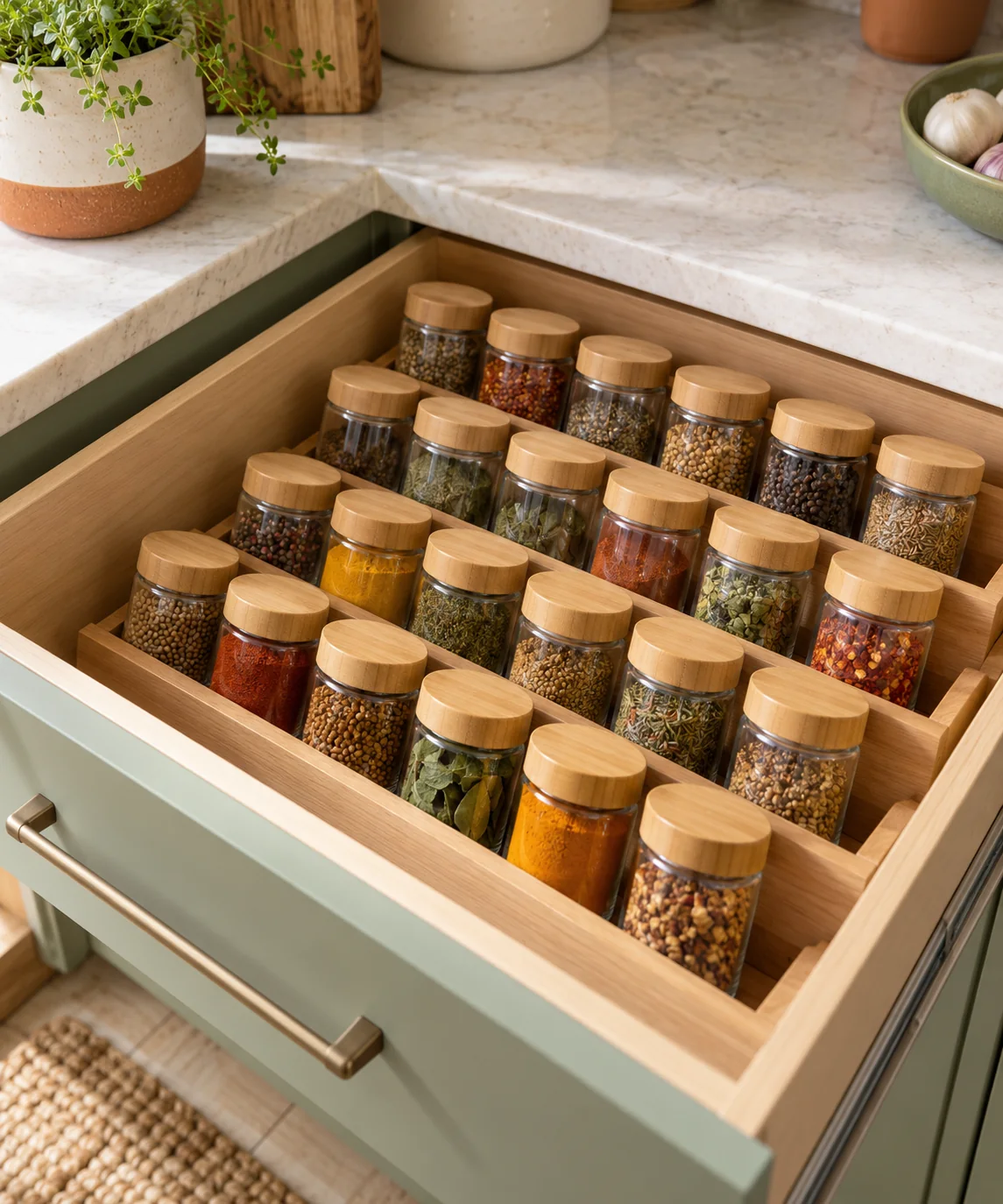
Emptying and Checking Drawer Clearances
Begin by clearing the entire drawer onto a clean counter. Measure the interior height, width, and usable depth of the drawer box before selecting or positioning any organizers. Because drawer box depths and cabinet frame clearances vary widely across kitchen builds, test your tallest intended spice container on the riser inside the drawer to confirm it clears the upper frame as the drawer slides shut. Wipe away fine powders or dust from the drawer base using a lightly dampened microfiber cloth, then let the interior dry completely. Verifying the full travel clearance prevents bottles from snagging against the cabinet face during daily use.
Consolidating Duplicates and Assessing Freshness
Group matching seasonings together to identify unintentional duplicates. If you find two partially filled jars of the same seasoning, such as ground coriander or bay leaves, consolidate them into a single container provided both retain an active aroma. Ground spices gradually lose their aromatic oils over time; rub a small pinch between your fingers to check for a distinct scent rather than relying solely on printed packaging dates. Compost or discard scentless grounds that lack character, keeping only aromatic inventory so narrow stepped rows remain reserved for ingredients that contribute genuine flavor.
Standardizing Label Placement on Tiers
Uniform visibility prevents ingredients in rear tiers from being overlooked. When transferring seasonings into matching glass jars, affix printed or handwritten labels consistently on each container, centered either on the lid top or on the upper cylinder of the jar body. When jars recline on angled wooden risers, labels positioned on the upper half remain legible from a standing position above the open drawer. Positioning text upright and facing outward ensures contents are immediately readable at a glance without having to pick up or rotate individual jars.
Establishing Functional Frequency Zones
Arrange spices by cooking habits rather than strict alphabetical order unless maintaining an especially large collection. Position high-frequency items like black pepper, coarse salt, garlic powder, and red pepper flakes along the front tier closest to the handle. Mid-tier positions suit weekly meal seasonings, while specialty blends, baking spices, and whole seeds occupy the back tier. This layout minimizes hand travel across the organizer and reduces the chance of accidentally knocking adjacent glass bottles while reaching for routine items during active meal preparation.
Routine Maintenance and Overfill Prevention
Maintain drawer order by keeping reserve stock in a separate location. When buying bulk refills or economy pouches, transfer only enough to fill the tiered jar and store the remaining bags in an airtight bin in an upper pantry rather than crowding the drawer. Periodically wipe across the stepped tiers with a dry cloth to collect loose flecks of turmeric, salt, or dried herbs before residue settles into corners. Quick visual scans before grocery trips make low supplies obvious and help avoid purchasing unnecessary duplicates.
YOUR STARTING POINT
A little checklist.
Original editorial guidance. Images are AI-generated concepts, not photographs of completed projects. Our sources and approach.
Questions to consider
How do I prevent jars from rattling when opening the drawer?
Place a thin, non-adhesive silicone drawer liner underneath the wooden tiered insert. The silicone grips both the drawer floor and the organizer base, eliminating shifting and reducing glass vibration during rapid drawer movements.
Can I mix round and square spice jars on tiered risers?
Yes, but square jars offer superior stability on angled wooden steps because flat edges prevent rolling. If mixing shapes, group round jars along a single tier to maintain visually consistent rows.
What should I do with oversized specialty spice containers?
Keep oversized tins or bulk peppercorn grinders on a dedicated pantry shelf or lazy Susan. Forcing oversized containers into shallow tiered drawers blocks clearances and compromises the alignment of standard jars.