Small Bathroom Storage · THE GUIDE
Stack Modular Open Wooden Crates for a Customizable Shelf Unit
Awkward bathroom alcoves and irregular recesses often challenge standard prefabricated furniture footprints. Arranging modular open wooden crates creates customizable storage compartments that adapt to tight floor layouts. Keeping crate configurations low and oriented to the floor provides accessible cubbies for rolled linens, woven baskets, and dry grooming goods. By selecting suitable surface finishes and respecting basic stability boundaries, modular wooden units offer flexible, reconfigurable organization without requiring permanent modifications to bathroom cabinetry.
Jump to the checklist ↓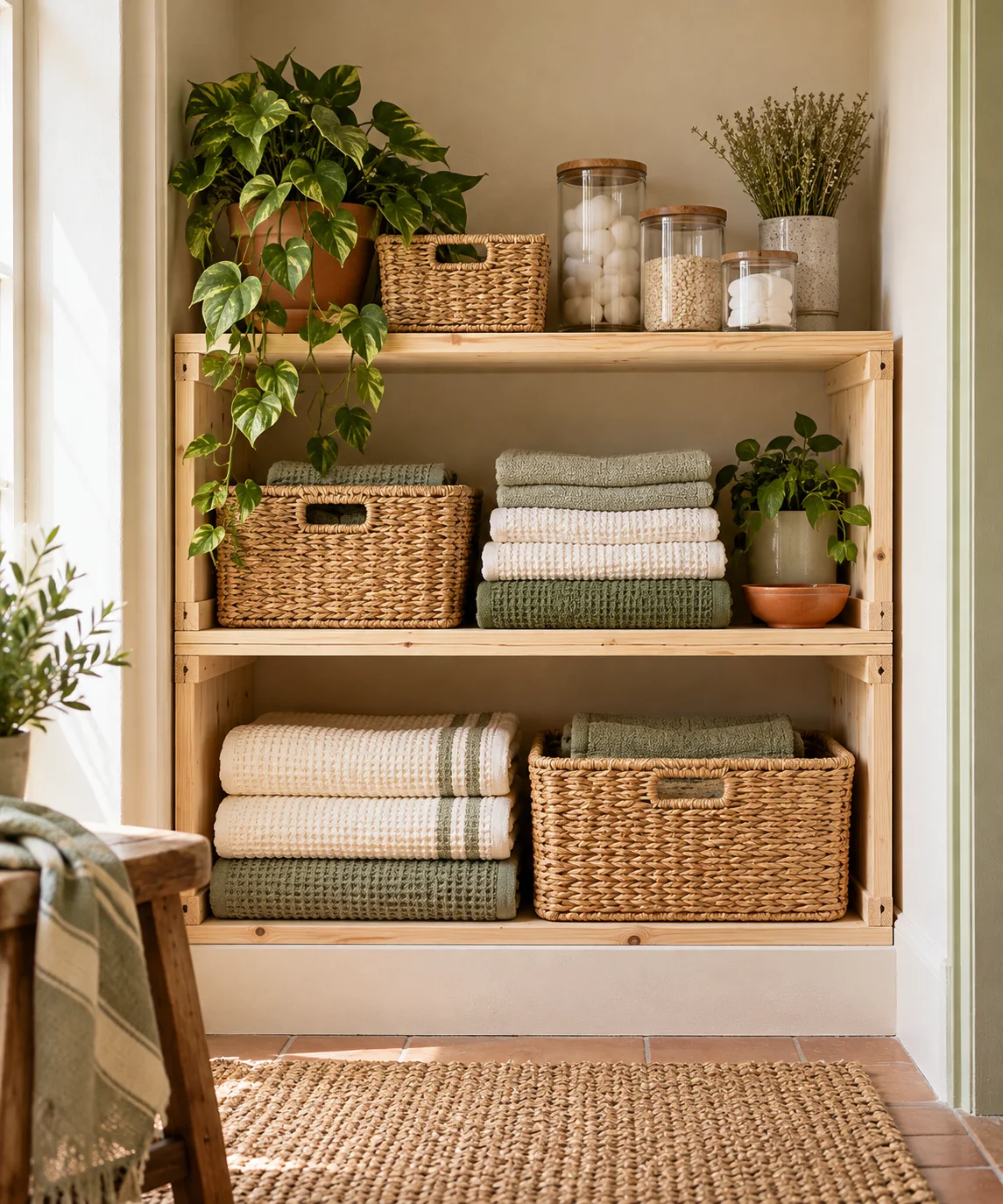
Assessing Space and Layout Limits
Measure the floor width, baseboard profiles, and surrounding clearance before arranging wooden crates. To avoid tip-over hazards, keep modular arrangements low to the ground rather than building tall, freestanding vertical towers. Placing crates horizontally side-by-side or in stable, low two-tier arrangements provides practical shelf capacity while preserving balance on hard bathroom floors. Leave clearance around entry doors, shower screens, and heat sources.
Moisture Protection and Surface Sealing
Raw, untreated pine absorbs ambient humidity rapidly in bathrooms, which can lead to warping, grain swelling, and surface mildew. Treat raw wooden crates with a moisture-resistant interior sealant, such as a water-based polyurethane or protective clear coat, prior to placing them in service. Allow the finish to cure fully in a well-ventilated space so finishes dry completely before introducing towels or personal care items into the cubbies.
Stability Boundaries and Anti-Tip Planning
Freestanding, unfastened stacked boxes carry an inherent risk of tipping if bumped, jostled, or loaded unevenly. Always place the widest, heaviest items on the ground level to keep the centre of gravity low. If stacking modules beyond a single tier, consult furniture safety standards and manufacturer recommendations regarding mechanical tethering or wall brackets. Never rely solely on crate weight or friction to prevent accidental shifting on smooth tile.
Lining Slats for Small Accessories
The open-slat base of standard shipping crates can let small items, such as tweezers, combs, or compact cosmetics, slide between the openings. Place rigid cork sheets, washable silicone liners, or fitted fabric bins inside each crate floor. Grouping smaller items into removable storage baskets not only prevents falling objects but also makes cleaning and dusting the individual crate interiors significantly easier.
Ventilation and Routine Care
Bathrooms experience frequent temperature and humidity changes that require regular inspection of stored timber items. Leave a slight gap between the back of the crates and the wall to allow continuous air circulation. During routine bathroom cleaning, shift crates away from the wall to vacuum settled lint and check for any signs of moisture retention. Wipe slats with a lightly dampened cloth and dry them immediately.
YOUR STARTING POINT
A little checklist.
Original editorial guidance. Images are AI-generated concepts, not photographs of completed projects. Our sources and approach.
Questions to consider
Are stacked wooden crates safe to leave freestanding in a bathroom?
Tall, unattached crate stacks are unstable and can topple if pulled or bumped. Keep modular configurations low to the floor, position heavier items at the bottom, and follow standard furniture anti-tip practices if elevating units.
How can I prevent crates from wobbling on uneven bathroom tile?
Bathroom floors often slope slightly toward drains or have uneven grout joints. Applying self-adhesive rubber or felt furniture shims under low corners helps level the base unit and prevents rocking on hard surfaces.
Can untreated craft crates be used directly in a bathroom?
Raw craft crates absorb steam and moisture readily, making them vulnerable to warping and surface mold. Sealing all surfaces with a water-resistant topcoat is recommended to protect the wood and stored linens.