Entryway Organization · THE GUIDE
Stack Vertical Shelving to Leverage High Entryway Ceilings
Compact entryways often suffer from cramped floor areas that make standard consoles and bench furniture impractical. When square footage is strictly limited, rooms with tall ceilings offer valuable overhead volume that standard layouts overlook. By utilizing the vertical span above standard door headers, you create high-capacity storage zones for seasonal and rarely accessed items without constricting ground-level circulation. Developing vertical shelving requires deliberate structural planning, careful weight distribution, and uniform organization systems. This approach keeps daily drop zones tidy while utilizing dead overhead space safely and intentionally in tight urban spaces.
Jump to the checklist ↓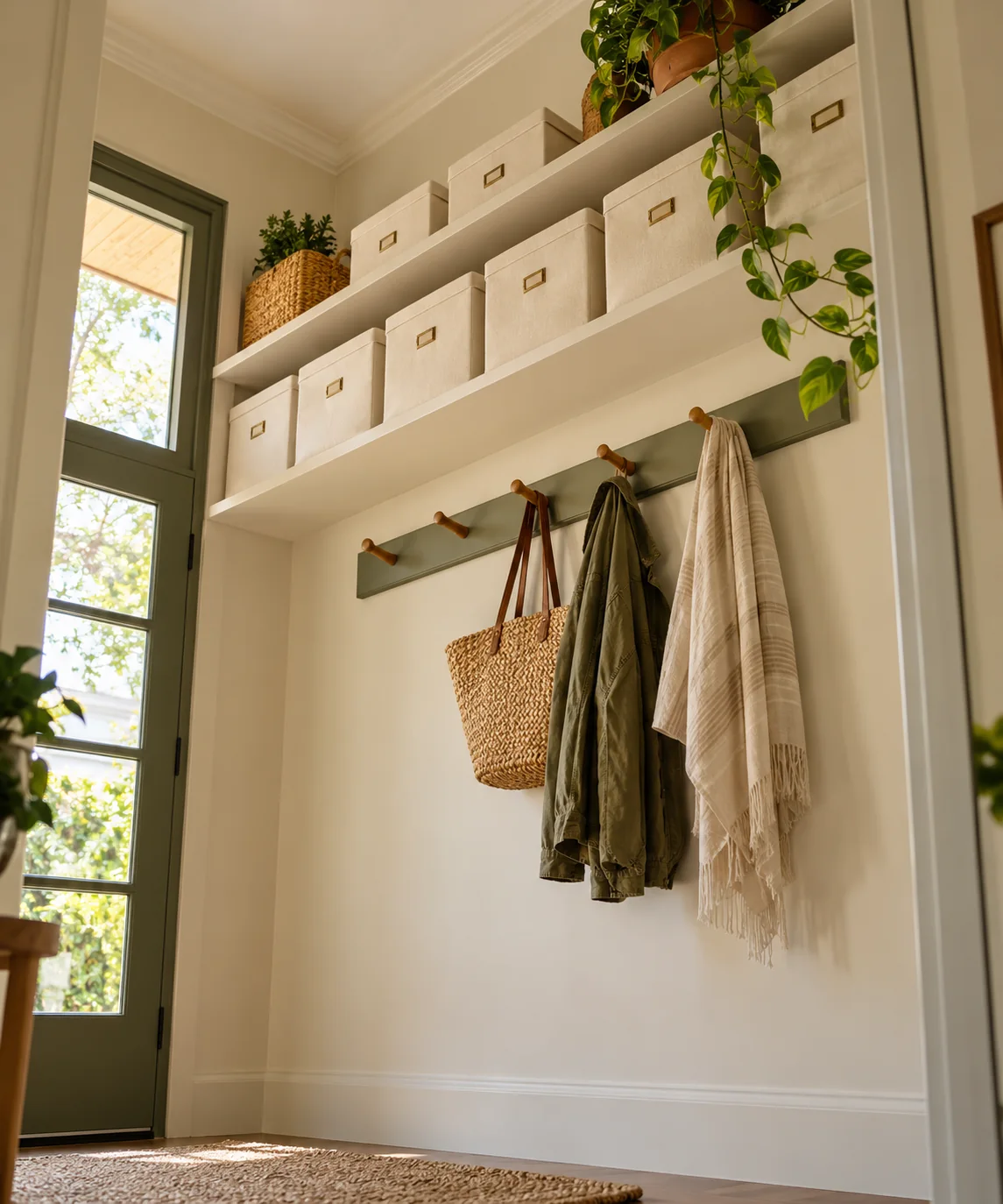
Assess Overhead Space and Building Guidance
Before planning high shelving, inspect the available vertical space between door trim and the ceiling while checking local building rules or rental agreements. Vertical installations in high-traffic corridors require careful structural evaluation of wall construction, whether hollow drywall, plaster, or masonry. Rather than assuming standard clearances, measure intended storage containers against available ceiling height to confirm adequate overhead room. For rented properties or non-standard wall substrates, consider tall freestanding shelving units secured to wall studs with anti-tip hardware rather than complex wall-mounted carpentry.
Distribute Weight and Adhere to Load Ratings
High storage naturally suits lightweight, bulky belongings retrieved only seasonally, such as spare winter knitwear or lightweight travel bags. Reserve high tiers exclusively for low-density goods packed in manageable containers, keeping heavy objects closer to floor level to minimize handling hazards. Always review the manufacturer load capacity for brackets, shelves, and fasteners rather than estimating strength by sight. Daily-use accessories like leashes, lightweight jackets, or mail belong on waist-height organizers or low hooks where they can be reached without overhead strain.
Standardize Storage Bins and Labeling
Loose articles placed on elevated shelves look cluttered and create potential fall hazards during retrieval. Select uniform, lightweight fabric or soft-sided bins with integrated, reinforced handles on their lower edge to allow safe handling from below. Clear, large-text labels facing the hallway eliminate guesswork and prevent rummaging blindly while standing on access steps. Avoid glass, heavy metal, or fragile bins on elevated platforms to minimize safety hazards if a container is tipped or misaligned during handling.
Integrate Accessible Lower Organization
Complement high storage with accessible lower hooks or freestanding hanging rails positioned within easy arm reach. Positioning coat hooks at standard shoulder height maintains continuous vertical utility without projecting into primary walking corridors. Arrange hooks with adequate spacing so winter coats and bags hang flat without overcrowding. If mounting any wall-hung hardware, always locate solid wall framing or use hardware specifically rated for your wall material, following manufacturer installation guidance carefully.
Plan Safe Access and Routine Maintenance
Storing belongings high up necessitates a stable access strategy. Keep a certified, slip-resistant folding step stool nearby in a closet or designated alcove rather than relying on precarious household chairs. Periodically inspect shelf brackets, anchors, and joinery to verify that fixtures remain tight, level, and securely seated against the wall. Dust shelf surfaces and container tops regularly using an electrostatic extension wand from floor level to maintain a clean overhead environment without repeated climbing.
YOUR STARTING POINT
A little checklist.
Original editorial guidance. Images are AI-generated concepts, not photographs of completed projects. Our sources and approach.
Questions to consider
How high should shelves be positioned above an interior door?
Shelf height should be determined by container dimensions, ceiling height, and wall stud locations rather than a fixed arbitrary formula. Ensure the shelf clears the door trim cleanly and allows adequate headroom so stored boxes can be lifted down without striking the ceiling or catching on door mouldings.
What type of bins work best for high overhead storage?
Lightweight fabric, woven canvas, or molded plastic bins with rigid sides and secure bottom handles work best. Lightweight containers reduce handling strain when lifting overhead and minimize the risk of damage or injury compared to heavy, brittle, or glass containers.
How do I prevent vertical entryway storage from feeling visually overwhelming?
Select storage bins and shelving in neutral colours that coordinate with your existing wall paint. Matching tones minimize visual contrast in tight entry spaces, helping overhead storage blend harmoniously into the architecture of the corridor.