Small Kitchen Organization · THE GUIDE
Stackable Acrylic Bins for Fridge Condiment Zones
Door shelves in compact refrigerators fill quickly with tall dressing bottles, specialty sauces, and preserves, leaving little room for daily essentials. Pushing excess jars onto deep interior glass shelves often creates visual clutter where smaller containers get forgotten at the back. Stackable acrylic bins solve this overflow by converting dead vertical space into visible, pull-out storage zones. By grouping bottled items into transparent, modular tiers, you protect shelf visibility while preventing sticky rings on the glass. Planning proper dimensions and airflow clearance ensures chilled air circulates evenly around your ingredients.
Jump to the checklist ↓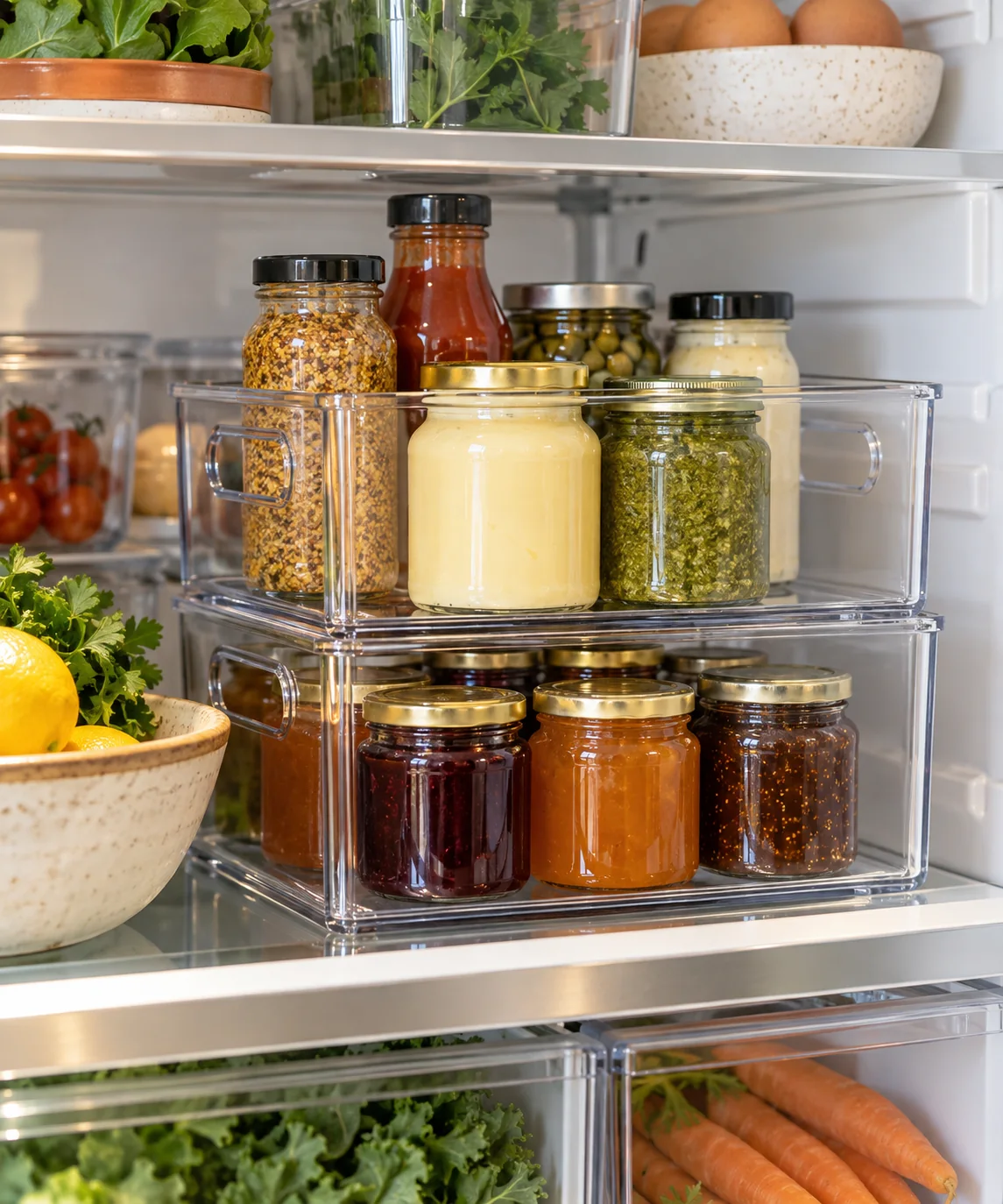
Evaluating Vertical Shelf Spacing
Interior refrigerator shelves offer fixed or adjustable vertical slots that establish the maximum allowable height for storage containers. Before purchasing bins, measure the usable clearance between shelves, taking note of internal light housings, door hinges, and hanging temperature sensors that reduce usable space. For stacked configurations, select containers that leave sufficient vertical headroom so bottles in the lower and upper tiers can be lifted out without catching on the shelf above. Measure the deepest condiments you intend to store alongside the bins to confirm both fit comfortably without pressing against the refrigerator ceiling or shelf frame.
Sorting Condiments by Stability and Reach
Acidic condiments, commercial mustards, and high-sugar jams generally tolerate minor door-opening temperature shifts well, making them suitable for accessible interior bins. Group heavier glass jars toward the base of stacked units to lower the overall center of gravity and reduce the risk of tipping when sliding containers forward. Place frequently used spreads and everyday dressings in accessible upper bins or front-facing positions. Keep temperature-sensitive items, such as fresh dairy spreads or mayonnaise, toward the colder middle or rear sections of internal shelves rather than right near the front edge.
Maintaining Interior Airflow and Vent Clearances
Refrigerators rely on internal air circulation to maintain uniform cooling and prevent warm spots from developing across lower compartments. Crowding shelves completely from edge to edge with solid plastic organizers can restrict the movement of chilled air around cooling channels. Position bins with sensible breathing room between container sides and interior appliance walls. Avoid positioning deep organizers directly flush against rear cooling vents or air return grilles, allowing cool air to cycle freely down through crisper sections and across interior shelves as intended by the appliance manufacturer.
Drawer Inserts Versus Modular Stacking Totes
Different container designs offer distinct practical benefits depending on daily cooking habits. Units equipped with pull-out drawer inserts allow you to slide out bottom-tier jars without having to lift off the upper container. Conversely, nesting bins that rest directly on each other's top rims require two hands to separate when reaching for base ingredients. If you choose pull-out drawers, look for models with built-in rear stop tabs that keep the drawer from pulling entirely free when weighted with heavy glass bottles. Clear bin fronts maintain visibility across all layers so items do not get hidden behind opaque labels.
Hand Washing and Acrylic Surface Care
Standard rigid acrylic plastic cannot tolerate the concentrated heat, steam cycles, or alkaline detergents used in residential dishwashers. Dishwasher exposure frequently leads to clouding, surface warping, and fine network cracks known as crazing. Wash acrylic organizers by hand in the sink using lukewarm water, a mild liquid dish soap, and a non-abrasive microfiber cloth. To reduce how often bins require washing, line the interiors with removable, washable silicone mats or precut shelf liners that catch sticky honey rings and condiment drips before they reach the plastic.
YOUR STARTING POINT
A little checklist.
Original editorial guidance. Images are AI-generated concepts, not photographs of completed projects. Our sources and approach.
Questions to consider
Can clear acrylic refrigerator bins go into the dishwasher?
No. The high temperatures and harsh drying cycles of dishwashers can warp acrylic, turn transparent plastic cloudy, and cause hairline structural cracks. Wash bins by hand using warm water, mild dish soap, and a soft cloth.
How do I prevent stacked bins from sliding on smooth glass shelves?
Apply small, clear non-slip silicone bumper pads to the bottom contact points of the base bin. These pads provide grip against smooth tempered glass shelves and prevent stacked containers from shifting when opening the refrigerator door.
How much weight can stacked plastic refrigerator organizers handle?
Weight capacity depends on plastic thickness, container geometry, and manufacturer design. Distribute bottle weight evenly across the base rather than concentrating heavy glass jars in one corner, and avoid overloading tiers to prevent shelf sagging or cracked bin frames.