Container Vegetable Gardens · THE GUIDE
Stackable Terracotta Pots for Balcony Herb Spirals
Balcony gardeners often face limited horizontal surface area when cultivating culinary herbs. A vertical arrangement of graduated terracotta containers recreates the varied moisture zones of a traditional herb spiral within a compact footprint. Porous unglazed clay allows air circulation through the container walls, producing faster-drying conditions in upper vessels while lower tiers retain moisture longer. By arranging drought-tolerant herbs near the top and moisture-tolerant varieties below, you can accommodate multiple species efficiently. Careful planning helps ensure the assembly remains manageable, maintains necessary access paths, and respects balcony load guidelines.
Jump to the checklist ↓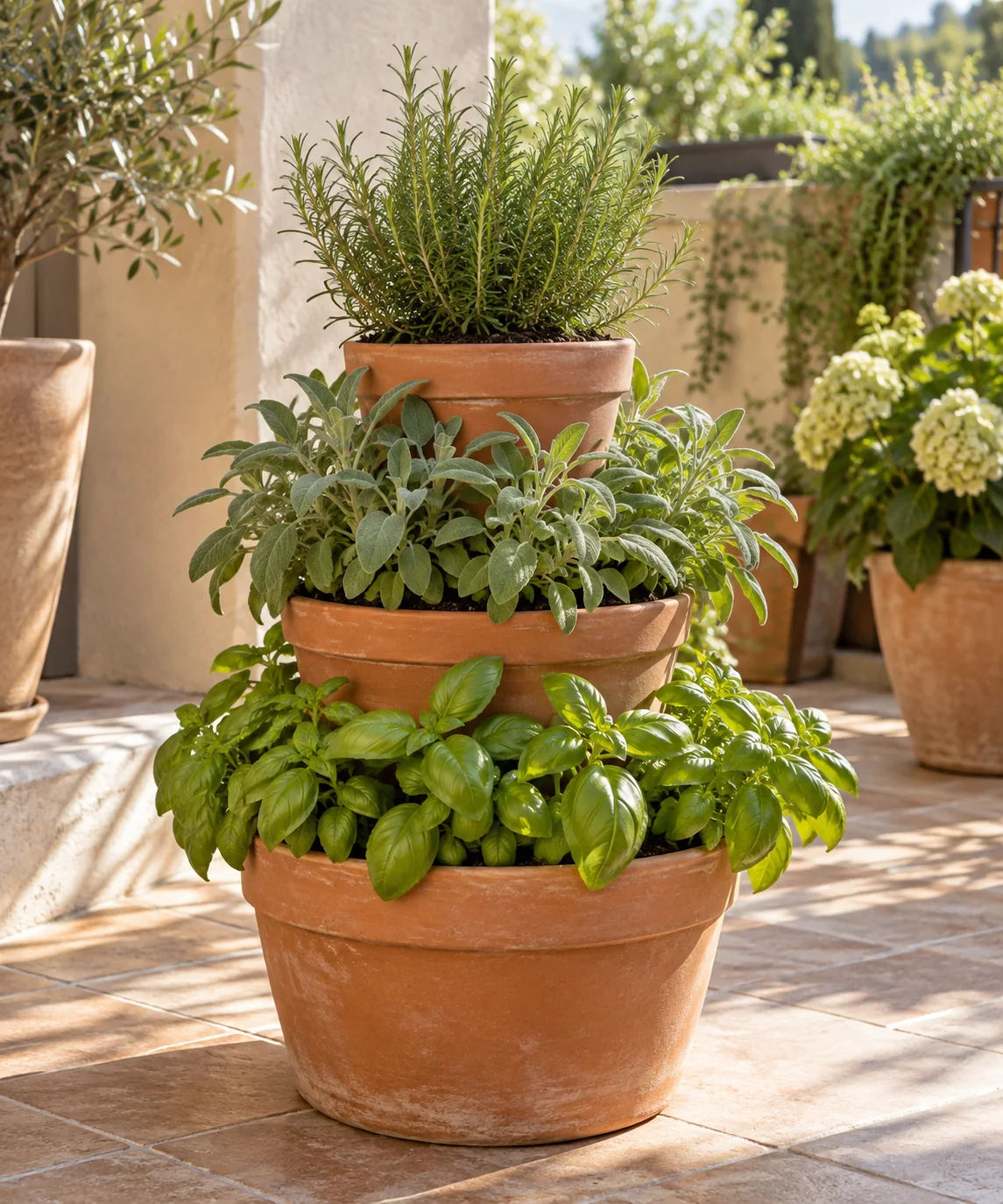
Graduated Vessel Selection and Stacking Limits
A tiered arrangement requires a stable sequence of pot sizes, such as broad thirty-five, twenty-five, and fifteen-centimeter diameters. Rather than free-stacking pots directly on loose soil, place an inverted, sturdy clay pot or stable masonry riser inside the base vessel to form a flat resting shelf for the next tier. Stacking should be limited to two or three tiers to prevent top-heavy instability. Because stacked clay pots are prone to shifting when disturbed, avoid stacking containers in high-traffic pathways or unattended areas where pets or gusts could dislodge them.
Moisture Gradient Mapping
Stacking containers introduces varying drying rates across the vertical profile. The uppermost pot receives direct sun exposure and maximum air contact, causing its smaller soil volume to dry rapidly. Plant drought-tolerant herbs with woody stems, such as thyme or winter savory, in this top position. The middle container retains moderate moisture suitable for sage or oregano. The wide bottom tier receives percolating moisture from the vessels above, providing suitable conditions for leafy herbs such as flat-leaf parsley or chives that prefer relatively consistent hydration.
Substrate Selection Without Gravel
Terracotta containers perform best when filled with an open, free-draining potting medium that supplies roots with adequate aeration. Use a quality container potting mix blended with perlite or pumice to prevent compaction. Avoid adding stones, gravel, or broken pot shards to the bottom of the containers; this creates an artificial water table that restricts drainage and reduces available root volume. Instead, place small pieces of breathable mesh over each drainage hole to retain the potting soil while allowing excess water to escape.
Balcony Placement and Load Verification
Saturated terracotta, wet soil, and plant growth generate significant weight. Before assembling tiered planters on an elevated balcony or deck, check your property regulations and consult building management or structural documentation to confirm permissible floor load allowances. Never assume an elevated slab or deck is safe based on container placement near walls or corners. Ensure the footprint leaves emergency exits, utility access points, and maintenance pathways clear, while placing the containers where they receive adequate natural light.
Routine Watering and Seasonal Care
Water each tier according to its individual moisture level rather than saturating the entire stack at once. Upper tiers dry substantially faster than the base and require more frequent hydration. In regions subject to winter freezing, unstack and empty terracotta planters before the first hard frost. Saturated clay expands and cracks when frozen, destroying containers left outdoors. Store clean, dry pots in a protected indoor area until spring replanting.
YOUR STARTING POINT
A little checklist.
Original editorial guidance. Images are AI-generated concepts, not photographs of completed projects. Our sources and approach.
Questions to consider
Can culinary herbs tolerate partial shade on a balcony?
Most culinary herbs require several hours of direct sun to maintain compact growth and strong foliage production. In low-light conditions, stems become elongated and weak, and soil moisture evaporates much more slowly, raising the risk of root decline.
How can I safeguard stacked pots in high winds?
Stacked planters cannot be guaranteed against displacement during severe weather. Keep vertical arrangements low, place them in sheltered spots, and unstack containers temporarily whenever severe storm or high-wind warnings are issued.
Will lower containers become waterlogged from upper tiers?
Runoff from upper pots does enter the lower containers. Monitor the base soil moisture manually before watering, select plants that tolerate higher moisture for the lower tier, and ensure all drainage holes remain unobstructed.