Small Kitchen Organization · THE GUIDE
Stackable Wire Baskets for Potato and Onion Storage
Root vegetables like potatoes, sweet potatoes, and onions store best in cool, dry, dark, and well-ventilated environments. Storing them inside enclosed drawers, airtight plastic containers, or grocery bags traps ambient moisture, leading to premature softening, mold, or decay. Open-front stackable wire baskets placed on lower pantry shelves or cabinet bases offer practical airflow and organized storage. By elevating produce off solid surfaces and allowing air circulation from multiple sides, modular metal baskets keep dense root crops ventilated and visible. Storing distinct produce varieties in separate tiers helps prevent moisture exchange and odor transfer, simplifying everyday inventory management in compact kitchens.
Jump to the checklist ↓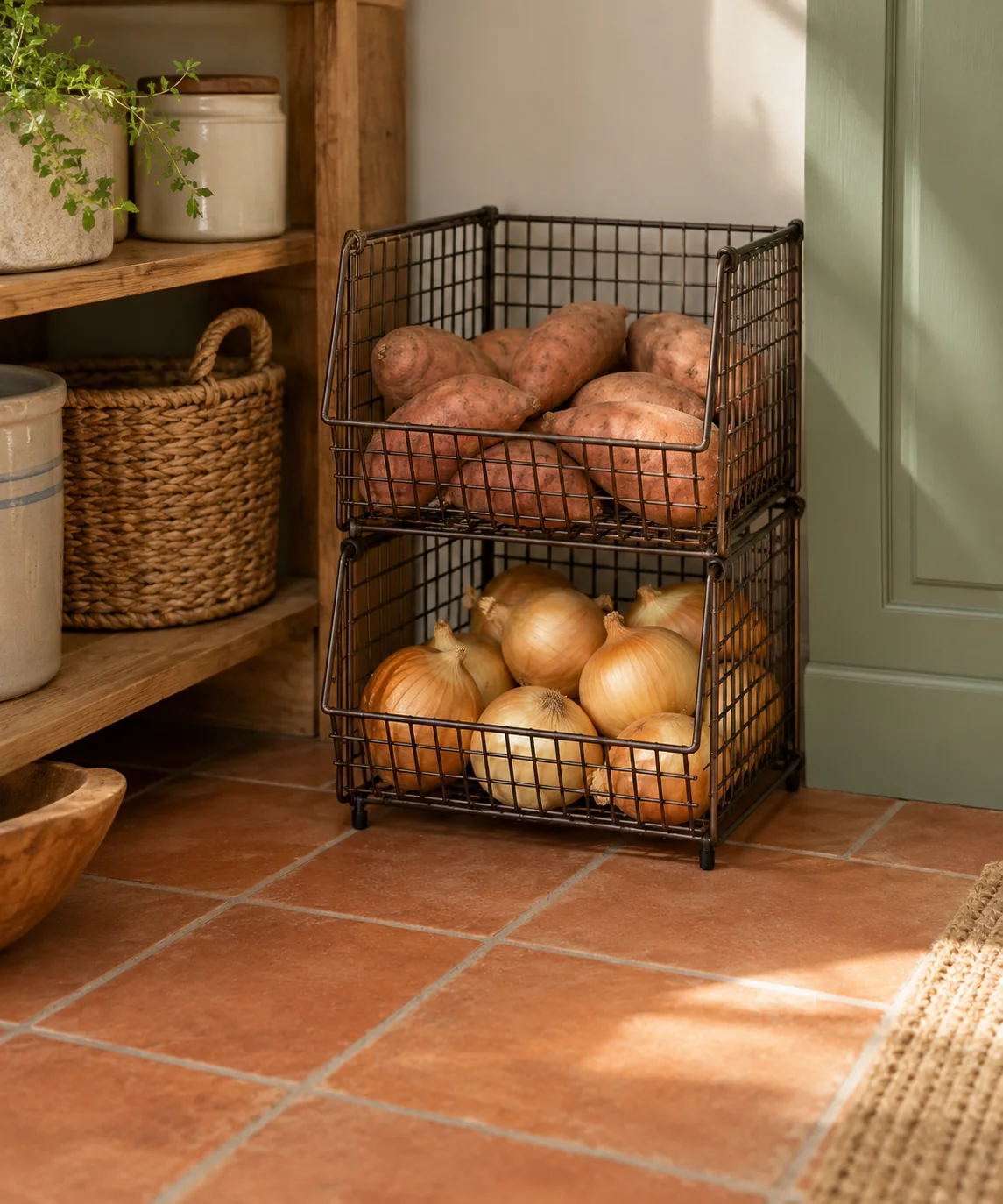
Separating Root Produce Across Distinct Tiers
Although potatoes and onions require cool, dry, and well-ventilated storage, keeping them in direct contact inside the same container can shorten shelf life. Potatoes transpire moisture that can cause nearby dry onions to soften and spoil, while strong onion aromas can permeate surrounding produce. Dedicate the lower basket tier to heavier potatoes or sweet potatoes, and reserve an upper basket tier for dry yellow, white, or red onions. This vertical arrangement isolates the crops while preserving a single, compact vertical footprint. Shallots and garlic can share a ventilated upper section or a small companion wire caddy where they remain dry and easy to inspect.
Selecting Low, Temperature-Stable Locations
Kitchen ambient air temperatures tend to stratify, leaving floor-level cabinets and lower pantry shelves cooler than upper cabinetry. Place stackable wire units on a low pantry shelf, the bottom of a dedicated dry-goods cabinet, or an out-of-the-way floor perimeter away from direct sunlight. Keep root storage well clear of heat-producing appliances such as dishwashers, ovens, range walls, and refrigerator condenser vents, which cycle warm air into adjacent cabinetry. Consistent ambient cool conditions delay sprouting and skin shriveling without the need for refrigeration, which can convert potato starches into reducing sugars.
Managing Soil Debris and Papery Husks
Open metal mesh baskets maximize ventilation around produce, but loose onion skins, dry husks, and residual garden dirt naturally fall through the grid. Line the interior bottom of each wire basket with a removable layer of unbleached parchment paper, kraft paper, or a clean open-weave liner. This liner catches falling flakes and dirt without obstructing the lateral air circulation between the wire side rungs. Routine cleaning then requires only lifting the liner, emptying the accumulated debris into compost or trash, and laying down fresh paper, protecting pantry shelves below from gritty buildup.
Evaluating Stacking Mechanics and Weight Distribution
Dense crops like russet or sweet potatoes add weight quickly, which can destabilize poorly matched wire components. Choose baskets built with positive interlocking tabs, nesting handles, or dedicated corner feet that prevent upper tiers from shifting forward during produce retrieval. Keep freestanding stacks to a moderate height of two or three tiers to prevent top-heavy tipping when reaching toward the back. Place the heaviest tubers across the bottom basket and lighter alliums in upper tiers. Ensure the lowest basket rests squarely on a level, solid shelf or floor surface before loading bulk produce.
Confirming Usable Clearance and Access Depth
Before committing to a specific basket set, measure your available shelf depth, width, and vertical clearance. Account for the practical clearance needed above the front opening of each basket so you can comfortably insert a hand and remove larger baking potatoes without knocking against the tier above. Compare manufacturer dimensions against your shelf spacing rather than relying on generic capacity claims. Testing the space with everyday household containers helps confirm whether your cabinet door swings freely and whether the front scoop provides natural reach-in clearance.
YOUR STARTING POINT
A little checklist.
Original editorial guidance. Images are AI-generated concepts, not photographs of completed projects. Our sources and approach.
Questions to consider
Why should potatoes and onions be stored in separate wire baskets?
Potatoes release moisture that can accelerate rot and mold development in dry onions, while onions emit strong volatile odors. Storing them in separate, well-ventilated wire tiers maintains necessary air circulation while keeping the two crops from accelerating each other's spoilage.
Do wire produce baskets need to be kept in the dark?
Yes, potatoes should be shielded from sustained light exposure. Light triggers chlorophyll accumulation beneath the skin, turning potatoes green and producing bitter solanine compounds. Place baskets inside a dark pantry, a closed larder cupboard, or loosely drape a clean, breathable cloth over the top.
How should wire baskets and liners be maintained?
Inspect produce weekly and discard any deteriorating items. Clean wire frames periodically by wiping them with a cloth dampened with mild soapy water, drying them thoroughly to avoid rust. Replace paper liners whenever dirt or onion skins accumulate to maintain clean pantry shelves.