Patio Seating Ideas · THE GUIDE
Stacking Resin Armchairs for Rented Apartment Breezeways
Rented apartment breezeways present a unique planning puzzle: they require comfortable outdoor seating while demanding complete compliance with shared access codes and routine building maintenance. Single-piece molded resin armchairs offer a practical balance of structural rigidity, moisture resistance, and lightweight mobility. When severe weather hits or building management schedules pressure washing, these chairs quickly stack into a minimal vertical footprint beside your entry. Selecting matte, UV-stabilized polypropylene designs ensures durability without the brittle fading common in cheaper plastics. With careful measurement of breezeway clearance, you can create a functional sitting area that never impedes daily movement.
Jump to the checklist ↓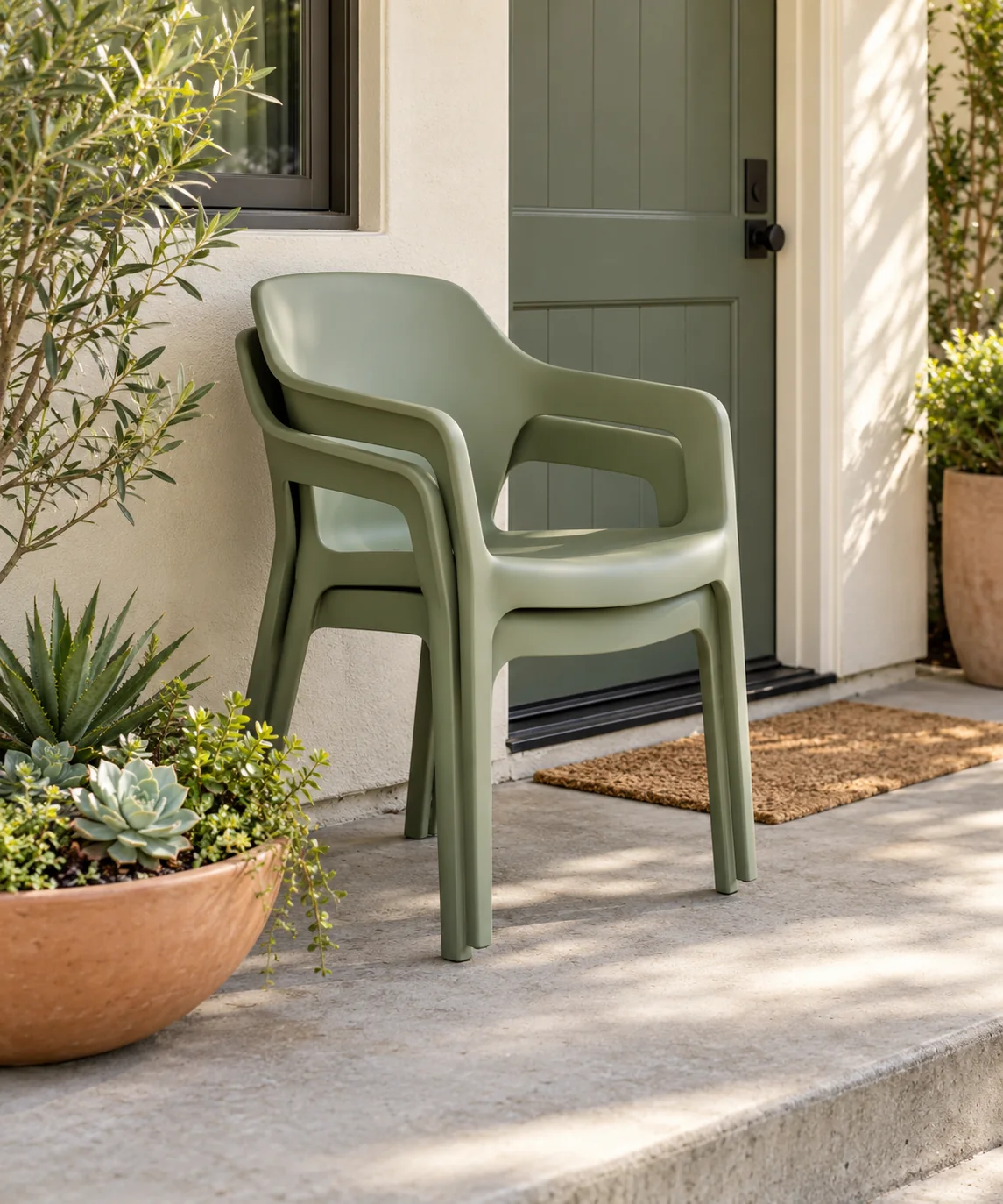
Checking Egress Rules and Space Planning
Before purchasing or placing seating in an apartment breezeway, consult your lease agreement and property management rules. Many residential complexes and local municipal fire codes strictly prohibit personal belongings in shared corridors, regardless of open width, to maintain clear emergency egress routes. If your building permits corridor seating, measure the thoroughfare to ensure that seated occupants or stacked furniture do not impinge on normal pedestrian movement or block neighboring entryways. Marking planned footprints with removable tape can help you observe whether neighbors, delivery carriers, and emergency personnel have unimpeded passage.
Selecting Sturdy Resin Construction
Not all synthetic chairs withstand continuous exterior exposure equally well. Look for single-piece injection-molded resin composed of commercial-grade polypropylene with UV inhibitors. Single-mold designs eliminate mechanical fasteners, hinges, and weld joints that corrode or loosen when exposed to wind-driven rain and ambient moisture. A matte or textured finish hides superficial surface scuffs far better than high-gloss plastics. Verify that the armchair incorporates subtle weep holes or gentle slopes in the seat pan so morning condensation and rainwater drain away naturally without pooling.
Stacking Mechanics and Wall Placement
Stacking stability depends on how nesting legs interlock. Quality stacking chairs nest vertically without splaying outwards, adding modest height per additional chair rather than substantial lateral bulk. Position the stacked chairs against a solid exterior wall, keeping them entirely clear of any door swing arc. Check manufacturer limits on nesting height to prevent unstable, top-heavy piles. Placing non-marking rubber feet under the base chair legs helps prevent slipping and reduces scraping noises across exterior concrete finishes.
Routine Cleaning and Surface Maintenance
Breezeway floors accumulate urban soot, airborne pollen, and foot traffic grime that transfer to chair legs. Resin simplifies upkeep because it tolerates gentle washing without rusting. Clean the chairs using warm water mixed with mild liquid dish soap and a soft microfiber sponge. Avoid abrasive scouring pads, bleach, or solvent-based cleaners, which permanently score synthetic surfaces and create microscopic crevices that trap grime. During seasonal breezeway power washing conducted by landlords, nest the chairs indoors temporarily to protect them from high-pressure water jets.
Cold Weather Limits and Severe Weather Precautions
While weather-hardy resin resists water damage, prolonged freezing temperatures can make thin plastics temporarily brittle under sudden shock loads. If temperatures plunge below freezing, avoid dropping heavy items onto cold plastic seats. For added comfort during chilly mornings, introduce removable seat pads that you bring inside after use. In shared corridors, lightweight furniture can shift during severe weather; bring seating indoors during high wind advisories or storm alerts rather than leaving stacks exposed.
YOUR STARTING POINT
A little checklist.
Original editorial guidance. Images are AI-generated concepts, not photographs of completed projects. Our sources and approach.
Questions to consider
How can resin chairs be managed during windy weather?
In shared open corridors, wind gusts can shift lightweight furniture. Stack chairs flat against a recessed wall when not in use, and move them indoors during high-wind advisories or severe weather rather than relying on self-weight alone.
Can household bleach be used to clean discolored resin?
Bleach and harsh oxidizing chemicals should be avoided, as they can degrade UV stabilizers and leave plastic surfaces prone to chalking or premature brittleness. Warm water, mild dish soap, and a soft-bristled brush or baking soda paste are gentler alternatives.
Are personal armchairs permitted in apartment breezeways?
Many multifamily properties and local fire codes strictly forbid placing personal furniture in shared corridors, as corridors serve as critical emergency egress paths. Always consult your property manager or lease agreement before introducing any seating to a breezeway.