Entryway Organization · THE GUIDE
Stage an Open Hall Tree With Bins for Closet-Free Homes
Homes lacking a dedicated entryway closet often face immediate visual clutter right inside the front door. When outerwear, footwear, and daily essentials spill directly into adjacent living spaces, establishing clear physical boundaries is vital. An open-frame hall tree combined with structured opaque bins provides an adaptable, freestanding landing zone. This system introduces essential vertical hanging space, lower footwear storage, and concealed containment without altering interior walls. By deliberately zoning shelves and establishing strict load limits, homeowners can maintain an orderly, welcoming entrance that keeps living areas calm, functional, and organized.
Jump to the checklist ↓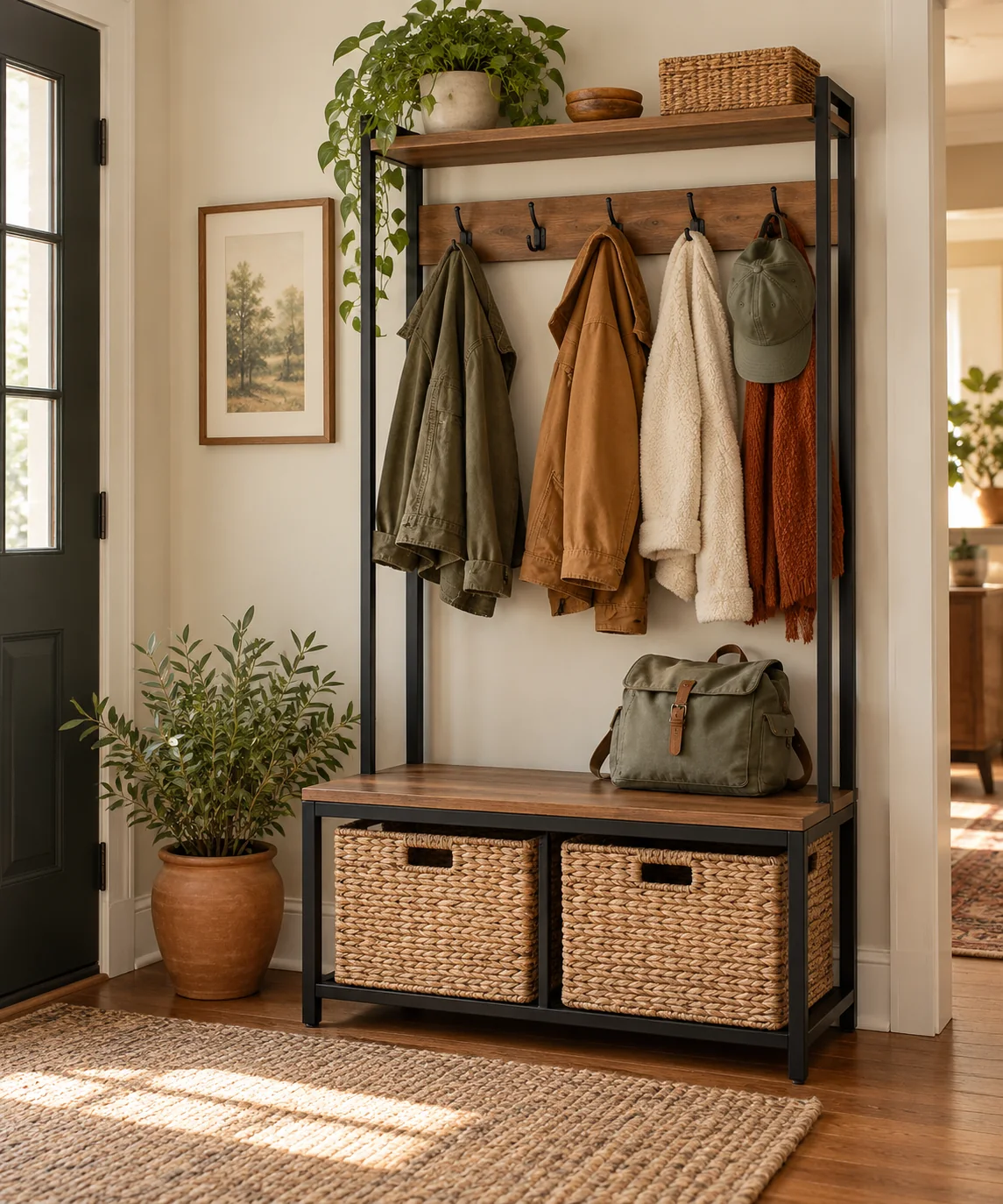
Evaluating Walkway Clearances and Placement
Select a hall tree proportional to your entrance dimensions to maintain comfortable everyday passage. Ensure the frame sits completely clear of front door swings, room thresholds, and high-traffic pathways. In compact layouts, an open frame with a shallower depth allows ambient light to pass through, delineating a functional drop zone without enclosing the entryway. Always measure your available footprint carefully, accounting for protruding hooks, hung bulk coats, and baseboards to ensure the piece sits flush and stable where intended.
Allocating Tiers for Visual and Physical Balance
Organize the hall tree into functional vertical zones to keep daily items manageable. Reserve upper shelving for lidded bins or light off-season accessories, mid-tier hooks for daily outerwear, and lower shelves for footwear. Distributing heavier items toward lower shelves helps maintain a lower center of gravity. Tall, narrow storage pieces should always be evaluated according to manufacturer assembly guidelines and included anti-tip tether instructions rather than relying on load balancing alone to prevent accidental tip-overs.
Containing Small Accessories With Matching Bins
Loose gloves, dog leashes, and daily mail create visual clutter when left loose on open shelving. Incorporating structured, opaque bins made of fabric, woven fiber, or lined wire conceals these varied, loose items. Designating a specific container for each category streamlines morning departures and evening returns. Uniform containers also visually consolidate the piece, giving open metal or wood frames a cohesive, deliberate appearance within an open-concept floor plan.
Establishing an Outerwear Rotation Strategy
Without closet doors to hide accumulated garments, an open hall tree quickly fills beyond capacity. Establish a regular habit of rotating outerwear based on immediate seasonal needs. When a new jacket or coat stays by the door, shift older or infrequently worn layers to bedroom storage or secondary hanging racks. Encourage household members to move oversized school bags or sports gear to personal rooms once unpacked, keeping the main entrance clear and functional.
Routine Resetting and Surface Protection
Complete a brief weekly reset to remove stray mail, excess shoes, and miscellaneous items that gather on open surfaces. Check lower footwear tiers to ensure shoes are arranged neatly and not tracking grit across the frame. During wet seasons, place a water-resistant drip tray on lower shelves to catch dampness, melting snow, and road salt, preserving the wood or metal finish from moisture damage over time.
YOUR STARTING POINT
A little checklist.
Original editorial guidance. Images are AI-generated concepts, not photographs of completed projects. Our sources and approach.
Questions to consider
How do I prevent an open hall tree from looking messy?
Incorporate matching opaque bins on open shelves to conceal small, irregular belongings like mail, scarves, and keys. Limit upper hanging space to current, everyday outerwear and rotate unused garments to secondary storage to avoid overcrowding the frame.
Can an open hall tree accommodate wet winter footwear?
Yes, provided shelf clearances accommodate footwear height and finishes are shielded. Placing a low-profile waterproof tray on or beneath the bottom rack contains melting slush, road grime, and salt, protecting the unit surface and home flooring.
What dimensions should I consider for a compact entryway?
Look for slim furniture profiles that leave generous passage for your specific traffic flow and exterior door clearances. If the unit includes an integrated bench, always confirm the manufacturer's load rating and floor stability recommendations rather than assuming all compact frames support seating.