Entryway Organization · THE GUIDE
Stage Hardy Shade Plants on a Tiered Entry Corner Stand
Entryways often feel austere, defined by flat drywall, metal locksets, and utility panels. Adding greenery introduces organic texture, but these transitional zones rarely receive generous daylight. A tiered corner plant stand maximizes vertical space without narrowing walkways or obstructing door swings. By selecting resilient houseplants known for tolerating indirect or low light, such as cast-iron plants, ZZ plants, or snake plants, you introduce living elements that survive away from windows. This layout transforms dead corners into welcoming focal points while keeping floor footprints clear for incoming footwear and bags.
Jump to the checklist ↓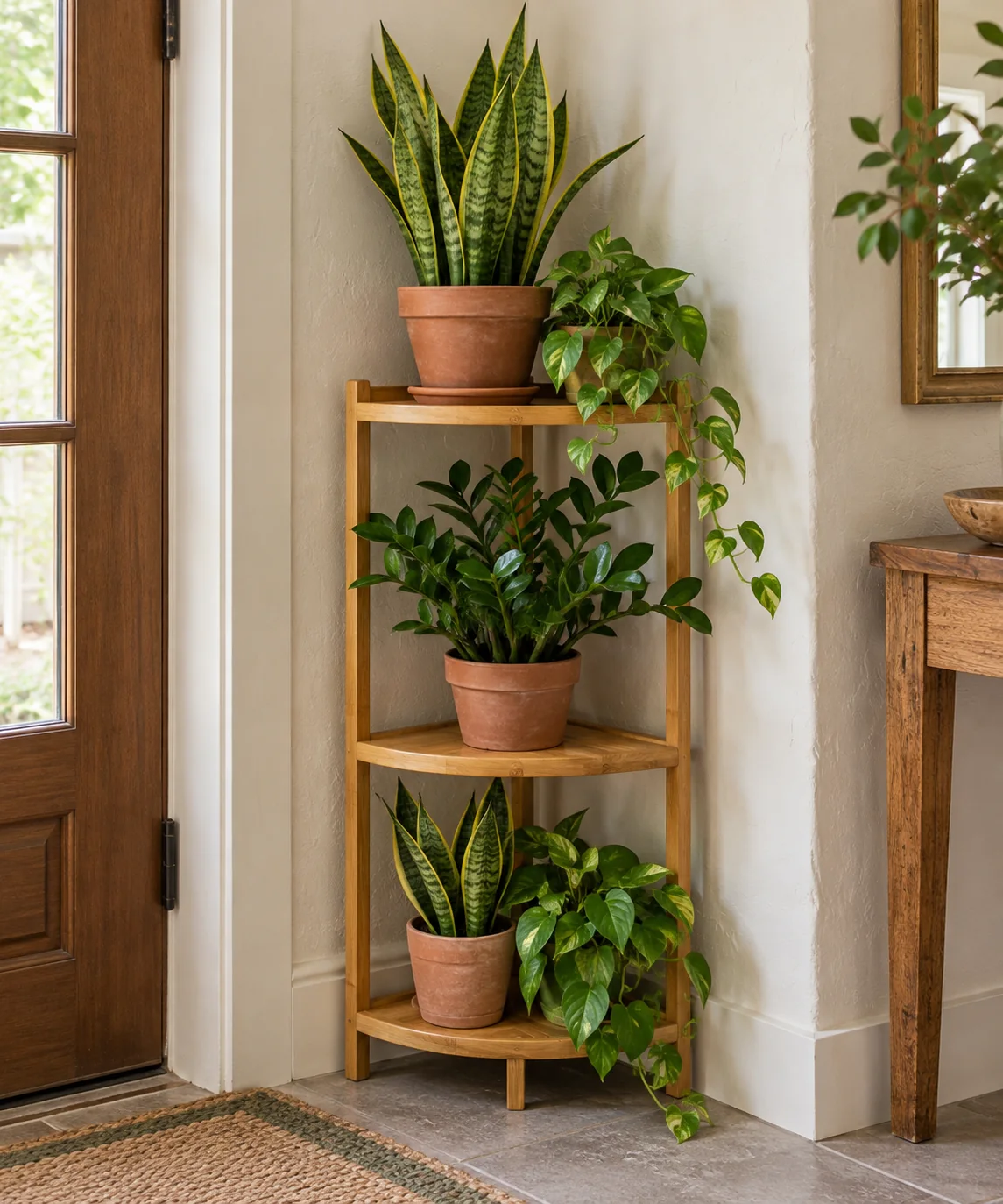
Assess Clearance and Traffic Flow
Measure your entryway corner before selecting a plant stand to ensure it does not impede household movement. Check that the unit sits completely outside the operational path of the exterior door, closet doors, and primary walking routes. A compact triangular or curved corner unit generally tucks into unused wall junctions without encroaching on foot traffic. Ensure sufficient clearance remains for carrying groceries, bulky coats, and bags through the entryway. If an entry door swings toward the plant stand, position a sturdy floor-mounted doorstop to prevent accidental collisions with pots and leaves.
Select Tolerant Low-Light Houseplants
Entry halls typically offer limited natural light, making plant selection critical to long-term success. Species known for tolerating dim, indirect lighting, such as ZZ plants (Zamioculcas zamiifolia), snake plants (Dracaena trifasciata), and cast-iron plants (Aspidistra elatior), adapt better to interior corners than flowering or sun-dependent varieties. Avoid delicate ferns, edible herbs, or desert succulents, which decline rapidly without bright exposure. Grouping plants with differing silhouettes, such as upright architectural leaves alongside arching foliage, creates visual interest across tiers while maintaining realistic care requirements.
Organize Tiers by Weight and Balance
Distribute containers intentionally across vertical shelves to maintain physical stability and protect flooring. Place the largest, heaviest container on the lowest tier to anchor the stand and establish a low center of gravity that resists accidental tipping. Use intermediate and upper tiers for lighter, smaller pots or cascading varieties. Every pot must be fitted with an impermeable saucer or deep drip tray to catch drainage water, preventing moisture from pooling on the stand surfaces or damaging entrance flooring underneath.
Manage Moisture and Household Dust
Entryways experience steady air movement from opening exterior doors, which carries airborne dust, salt residue, and outdoor debris. Gently wipe broad foliage with a soft, damp cloth periodically to keep leaf surfaces clear and receptive to available room light. In low-light environments, plants consume moisture slowly, making overwatering a frequent concern. Inspect soil moisture several inches beneath the surface before watering rather than relying on a fixed schedule. Promptly empty standing water from saucers to safeguard plant root systems.
Evaluate the Layout with Everyday Household Routines
Before finalizing a plant stand arrangement, observe the entryway corner through typical daily departures and arrivals. Staging a small temporary table or container in the corner helps reveal whether household members tend to bump into that space when removing shoes or hanging outerwear. Notice how natural light shifts throughout the day and assess whether the spot receives recurring cold drafts when the main door opens. Adjusting the stand position early prevents overcrowding and protects foliage from sudden temperature drops.
YOUR STARTING POINT
A little checklist.
Original editorial guidance. Images are AI-generated concepts, not photographs of completed projects. Our sources and approach.
Questions to consider
Can I use culinary herbs on an entryway corner stand?
Most culinary herbs require direct, intense sunlight to survive and will quickly weaken in an entryway corner. Stick to resilient foliage houseplants that tolerate low natural light levels for consistent results indoors.
How often should I water plants kept in dim entryway corners?
Watering intervals depend on ambient humidity and container size. Because low-light zones slow down plant transpiration and soil evaporation, check soil dryness several inches below the surface before watering rather than following a strict daily calendar.
Will drafty exterior doors harm shade-tolerant entryway plants?
Repeated exposure to freezing drafts can damage sensitive foliage. Place the stand slightly back from the immediate threshold, use a draft stopper at the door bottom, and choose hardy varieties like cast-iron plants.