Indoor Plant Styling · THE GUIDE
Stagger Hanging Ceiling Pots to Fill an Empty Corner
Unoccupied room corners can be enlivened with vertical greenery, but suspending containers overhead requires careful attention to building policies, structural anchoring points, container weight limits, and ongoing accessibility. Staggering multiple trailing plants at offset heights introduces dynamic foliage layers and visual interest without sacrificing floor or tabletop space. A successful arrangement relies on selecting lightweight materials, confirming solid attachment points into ceiling framing, maintaining comfortable clearance from walkways, and establishing a safe watering routine that prevents moisture damage to flooring below.
Jump to the checklist ↓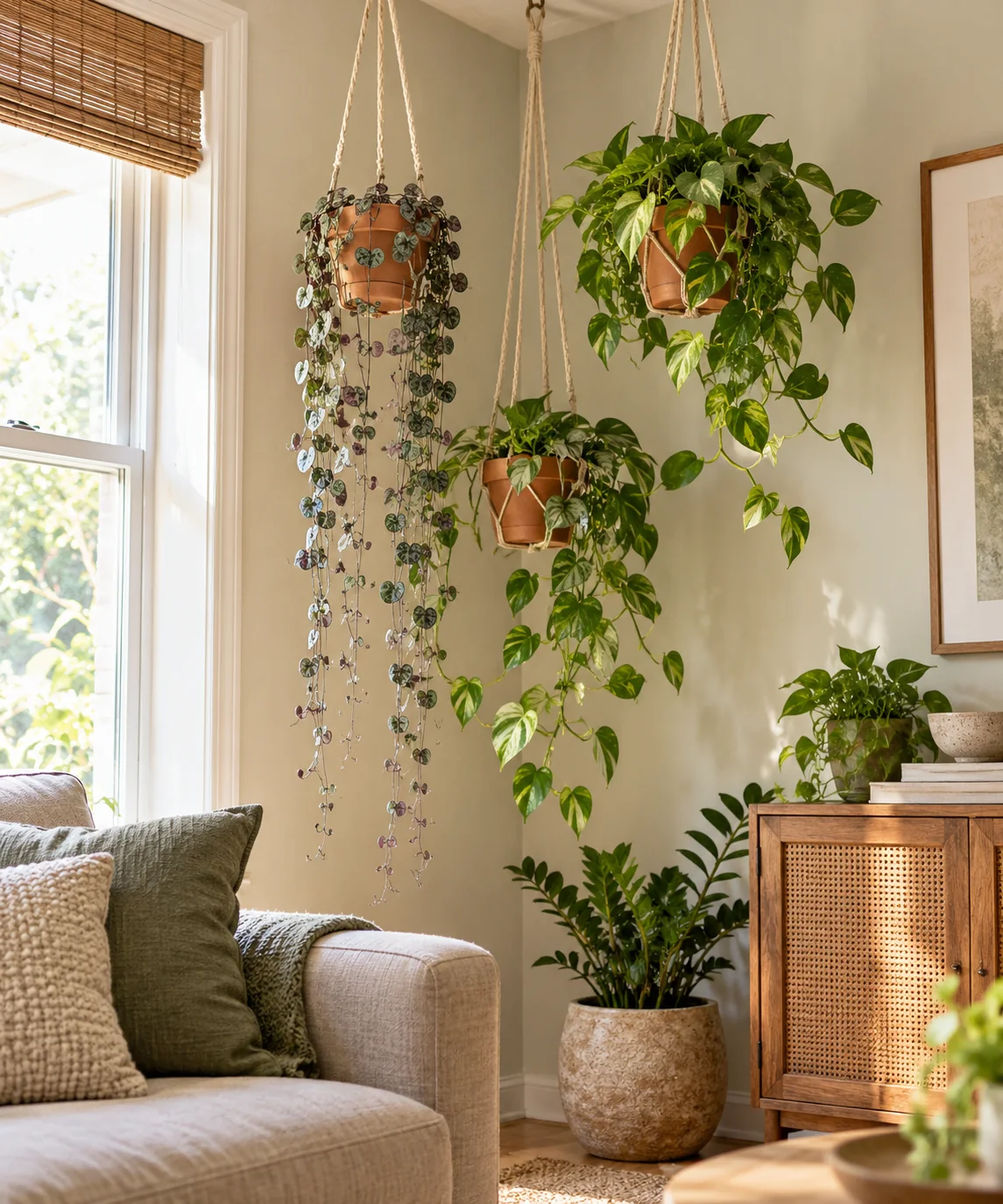
Evaluating Foliage and Saturated Container Weight
When hanging multiple plants from above, total weight is the most critical constraint. Potting medium gains considerable heft when fully saturated with water. Opt for lightweight plastic nursery pots seated inside thin decorative cachepots rather than heavy ceramic or stone vessels. Pair these with resilient, lightweight trailing specimens such as satin pothos, string of hearts, or trailing hoya species. Confirm that each outer container is fully watertight or equipped with a well-fitted drip tray to catch any seepage before moisture can reach furnishings or flooring underneath.
Planning Staggered Elevations and Sightlines
Varying the drop length of each planter creates visual separation and allows lower foliage to receive ambient light without being entirely shaded by the pot above. Plan for noticeable vertical separation between containers, ensuring the lowest planter remains well above seated head height and clear of standing traffic pathways. Staggering the cord lengths draws the eye through the corner in a stepped line rather than creating a heavy visual cluster at a single horizontal level.
Determining Clearance from Walls and Traffic Paths
Ceiling suspensions must be mapped with adequate horizontal clearance from nearby architecture. Keep containers positioned far enough from adjacent walls so dangling foliage can cascade naturally without leaves repeatedly scraping against paint or window frames. Ensure the overall cluster does not interfere with interior door swings, operable window treatments, or everyday walking paths. Maintaining open space around each pot also promotes healthy ambient air circulation around the foliage.
Structural Verification and Ceiling Substrates
Before planning ceiling hardware, review property guidelines or lease agreements, as many rental properties prohibit overhead penetrations. Never install hanging hardware into hollow drywall or plaster without anchoring directly into solid wood ceiling joists, as drywall anchors can loosen and fail unexpectedly under sustained, shifting plant loads. Use a reliable stud finder to locate structural framing, and select fasteners specifically rated by the manufacturer to support more than the fully watered weight of the assembly.
Routine Maintenance and Safe Watering Access
Overhead containers require a sensible plan for checking moisture and pruning runaway runners. Because warm air rises, hanging containers may dry out faster than tabletop plants. Use a sturdy, slip-resistant step stool rather than stretching uncomfortably when monitoring soil moisture. Whenever possible, lift out the inner plastic grower pots and transport them to a sink for thorough watering. Allow all drainage to stop completely before returning the inner pots to their suspended cachepots.
YOUR STARTING POINT
A little checklist.
Original editorial guidance. Images are AI-generated concepts, not photographs of completed projects. Our sources and approach.
Questions to consider
How do I safely determine where to hang ceiling hooks?
Consult your building guidelines first. When approved, use a stud finder to locate solid wood ceiling joists. Fasteners must anchor securely into structural framing rather than unsupported drywall or plaster, using hardware with a manufacturer weight rating that comfortably exceeds the saturated container weight.
Can I stagger hanging plants in a corner with limited daylight?
Most trailing plants need moderate ambient light to avoid sparse growth and leaf loss. If your corner sits far from a window, choose shade-tolerant species such as heartleaf philodendron or supplement the corner with an appropriately rated indoor plant grow bulb mounted nearby.
How can I prevent staggered trailing vines from tangling together?
Provide sufficient horizontal spacing between suspension points so leaves do not interlock. Position slower-growing varieties alongside faster growers, and regularly trim or redirect trailing stems so each specimen retains its own defined space.