Rental-Friendly Decor · THE GUIDE
Start Garden Seeds on a Compact Tabletop Tray with Drip Basins
Starting vegetable seeds indoors gives gardeners a head start before the final spring frost, but keeping trays on rental surfaces introduces moisture risks. Wood tables, laminate counters, and parquet floors swell quickly when exposed to standing water from drainage holes. By pairing standard cell inserts with a solid, unpierced leakproof base basin and a moisture barrier mat, you can foster young transplants without endangering security deposits. Thoughtful positioning near bright windows preserves your living space while providing tender seedlings the intense daylight they need during their initial growth stages.
Jump to the checklist ↓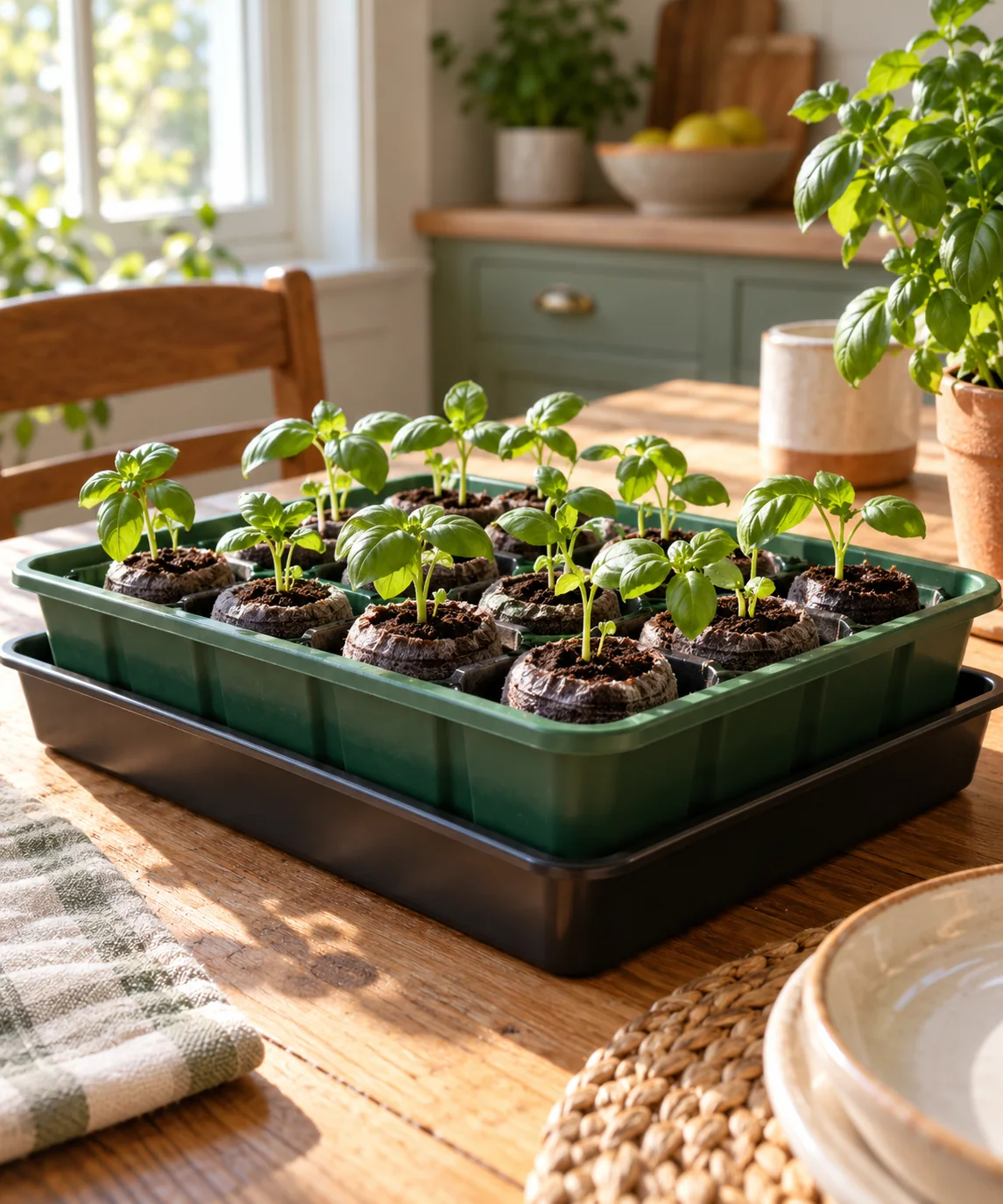
Selecting Watertight Tray Combinations
Standard plastic seedling flats typically feature perforated bottom holes for water drainage, making an unpierced secondary drip basin essential for indoor surfaces. Choose a solid, heavy-gauge nursery catch tray without punch-outs as your foundation. Before adding moist seed-starting mix, inspect the base for hairline fractures, transit damage, or thin manufacturing seams that might seep under the weight of wet soil. For added furniture protection, place a waterproof silicone mat or non-porous liner beneath the plastic tray to create a secondary barrier against accidental spills and condensation.
Bottom-Watering to Prevent Mess
Pouring water overhead directly into seedling cells often splashes potting mix across nearby surfaces and can dislodge fragile emerging sprouts. Bottom-watering offers a cleaner, more controlled alternative. Pour room-temperature water directly into the outer catch tray, allowing the growing medium to draw moisture upward through capillary action via the cell drainage holes. After thirty to forty-five minutes, check the soil surface for even dampness. Discard any unabsorbed standing water from the reservoir to avoid waterlogged roots and prevent spills when adjusting the tray.
Evaluating Light and Clearances
Most vegetable seedlings require consistent, direct natural light to prevent weak, elongated stems. Position your tabletop setup near an unobstructed south-facing or west-facing window, ensuring the tray sits securely on a level surface out of primary walkways where it could be bumped. If window treatments such as curtains or blinds hang nearby, secure them out of reach so moving fabric cannot knock over tender seedlings or brush against wet compost. Check that cold drafts from window seals do not create chilling microclimates against young leaves.
Separating Garden Propagation from Food Prep
Indoor seed starting involves organic potting compost, moisture, and microbial activity, so keep seedling setups separate from kitchen food prep zones and active dining tables. If space requires using a multipurpose table, establish clear physical boundaries using designated trays and wipe down table surfaces with appropriate cleaners before and after handling plants. Assess your available tabletop space beforehand using shallow rimmed trays or baking sheets to confirm the footprint leaves sufficient room for other household tasks without crowding.
Routine Maintenance and Tray Limitations
Tabletop seedling setups require vigilant daily monitoring because warm indoor air can dry out small starter cells quickly. Lift individual cell packs or check moisture levels by touch each morning rather than relying on a rigid calendar schedule. Keep absorbent cloths nearby to wipe away condensation from humidity domes and tray exteriors before droplets run onto furniture. Recognize that shallow starter basins are temporary holding systems; plan to pot up seedlings into larger containers once true leaves develop and outdoor conditions become favorable.
YOUR STARTING POINT
A little checklist.
Original editorial guidance. Images are AI-generated concepts, not photographs of completed projects. Our sources and approach.
Questions to consider
How do I verify the base tray is completely watertight?
Fill the empty drip basin with shallow water inside a sink or bathtub and place it over dry paper towels for thirty minutes. If the paper remains completely dry, the basin is free of hairline fractures and safe to place over protective mats on indoor furniture.
Can I place seedling trays near active heating vents?
Avoid placing trays directly over or adjacent to forced-air heating vents. Hot, dry air currents accelerate soil evaporation, stress delicate feeder roots, and make moisture levels difficult to regulate, often causing seedlings to wilt rapidly.
What should I do if water spills onto a wood table?
Blot standing liquid immediately with an absorbent towel rather than wiping, which spreads moisture across the grain. Lift the tray and mat, dry the underlying wood thoroughly, and allow the finish to air dry completely before returning the tray setup to the table.