Patio Seating Ideas · THE GUIDE
Step-Down Cushion Seating for Multi-Tier Patio Retaining Walls
Multi-tier patios and low retaining walls often present underutilized vertical transitions that fragment outdoor living spaces. Rather than cluttering broad grade transitions, adapting suitable low stone or concrete steps into casual perch seating adds functional capacity for small gatherings. Exterior box cushions provide padding against dense masonry, while non-slip underlays help stabilize pads on smooth flagstone or pavers. Adopting this seating arrangement requires careful verification of step stability, egress compliance, moisture management, and safe circulation paths that leave stairways unobstructed.
Jump to the checklist ↓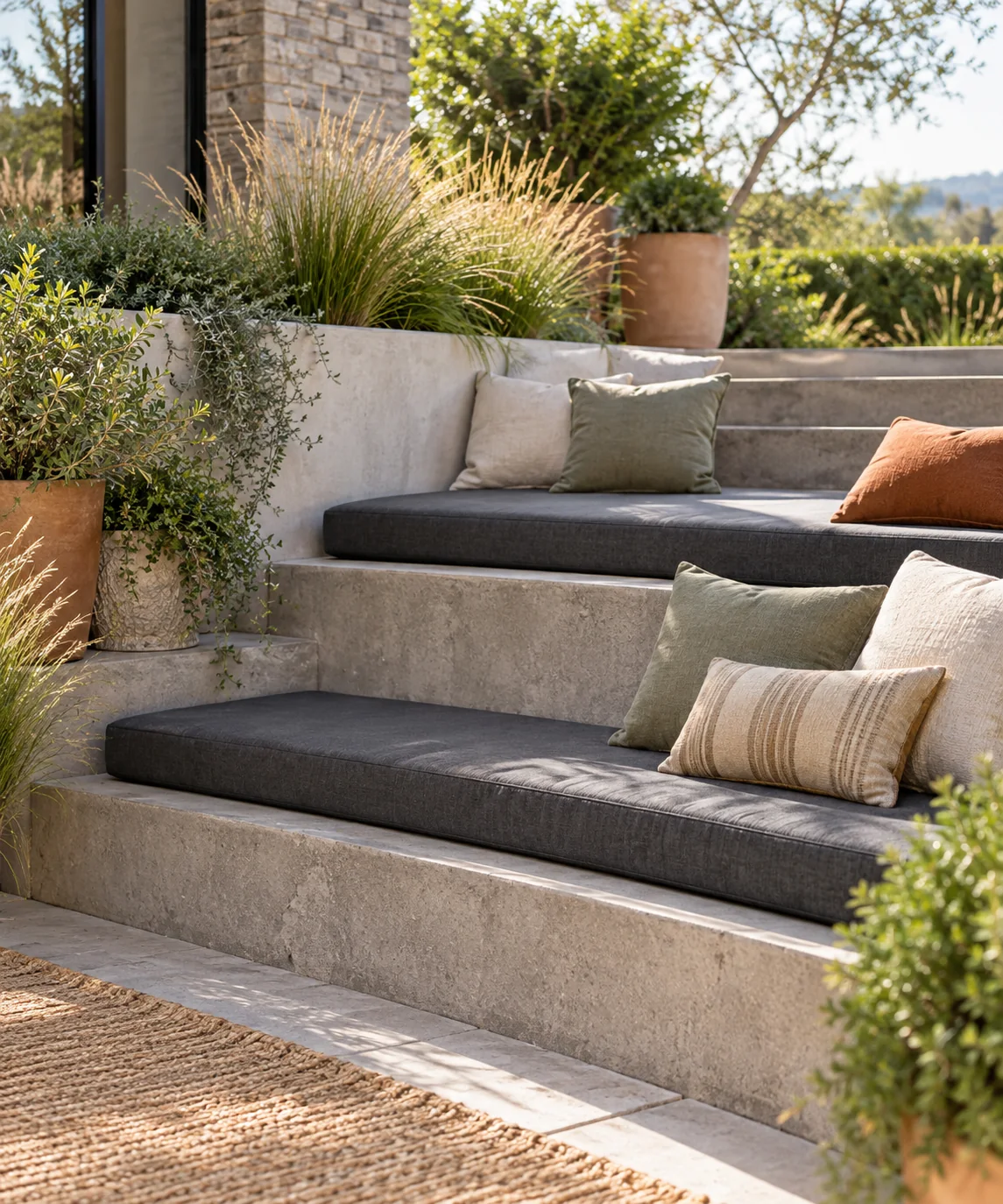
Tread Dimensions and Seating Ergonomics
Before selecting or sizing foam cushions, examine the dimensions and condition of your retaining tiers or low patio steps. Standard landscape steps are frequently too shallow for relaxed sitting; comfortable perch seating generally requires an unobstructed tread depth of at least fourteen to eighteen inches. Capstones should be fully bedded and stable without any rocking or loose mortar. If your steps feature standard seven-inch risers, place cushions only on extended landings or wide integrated benches where knees can bend naturally without forcing awkward posture or blocking the steps below.
Fabric and Foam Selection for Masonry Contact
Cold masonry readily conducts ground dampness and outdoor chill, making standard indoor textiles impractical for direct stone contact. Marine-grade vinyl or heavy solution-dyed acrylic upholstery fabric resists exterior moisture absorption, cleans readily with mild soap, and withstands surface abrasion from shoes or grit. For interior padding, specify medium-to-firm reticulated outdoor foam or dense closed-cell foam. While closed-cell foam minimizes liquid absorption, no outdoor foam fully eliminates atmospheric moisture condensation when pressed against cold stone capstones.
Removable Non-Slip Base Stabilization
Cushions placed on smooth-troweled concrete or finished flagstone can easily shift when individuals sit down or stand up. To improve grip without drilling into masonry or applying messy adhesives, back each cushion with an exterior-rated rubberized non-slip mesh or loose-lay silicone open-weave traction liners directly beneath the pads. Keep the stone surface underneath clean and swept of loose sand, as grit beneath a traction mat can scratch polished stone or cause the liner to slide during use.
Clearance, Flow, and Egress Considerations
Adapting grade transitions for seating introduces potential hazards if pedestrian routes become constricted. Building codes typically require primary exterior stairs and designated emergency egress routes to remain completely unobstructed. Designate one wide, clear side of the stairway exclusively for foot traffic, maintaining a clear passage of at least thirty-six inches. Never place heavy planters on stair treads to mark zones, as objects placed on steps create severe trip hazards; instead, position planters on the adjacent level patio floor.
Moisture Dissipation and Storage Routines
Even durable outdoor vinyl and synthetic foams require routine drying intervals when used over dense masonry. Temperature fluctuations overnight routinely cause condensation to form between cold stone and cushion undersides. Lift cushions regularly to allow the masonry to dry thoroughly, reducing the risk of mineral efflorescence, moss growth, or mildew staining. During persistent rainy weather or off-season periods, clean cushions thoroughly, dry them completely, and store them upright in an indoor utility area or ventilated storage trunk.
YOUR STARTING POINT
A little checklist.
Original editorial guidance. Images are AI-generated concepts, not photographs of completed projects. Our sources and approach.
Questions to consider
Can retaining wall cushions be left outdoors all season?
No. Leaving cushions resting continuously on outdoor masonry traps condensation, encouraging algae, efflorescence, and mildew growth on the stone. Store cushions upright in a dry, ventilated area when not actively in use.
How do I choose between marine vinyl and solution-dyed acrylic for stone seating?
Marine vinyl wipes dry instantly and resists dirt transfer, but can become hot in direct sun. Solution-dyed acrylic breathes better and stays cooler to the touch, though it requires slightly longer drying times after rainfall.
What precautions should be taken with tall retaining walls?
Tiered walls exceeding thirty inches in height generally require approved guardrails under local building codes to prevent falls. Only use low, ground-level retaining tiers or broad landscape steps for casual cushion seating.