Small Kitchen Organization · THE GUIDE
Step Shelf Risers for Nested Coffee Mugs and Saucers
Compact upper kitchen cabinets often waste upper vertical volume while horizontal shelf space becomes cluttered with mismatched drinkware. Placing tiered step shelf risers inside a standard cupboard creates distinct graduated platforms for coffee mugs, teacups, and stacked saucers. Instead of blind searching or precariously stacking fragile ceramic handles inside one another, a stepped arrangement keeps every cup visible and immediately retrievable. Determining shelf depth, vertical clearance, and safe weight distribution ensures this simple modular addition optimizes morning routines without overcrowding cabinet hinges or risking chipped porcelain edges during daily dish handling.
Jump to the checklist ↓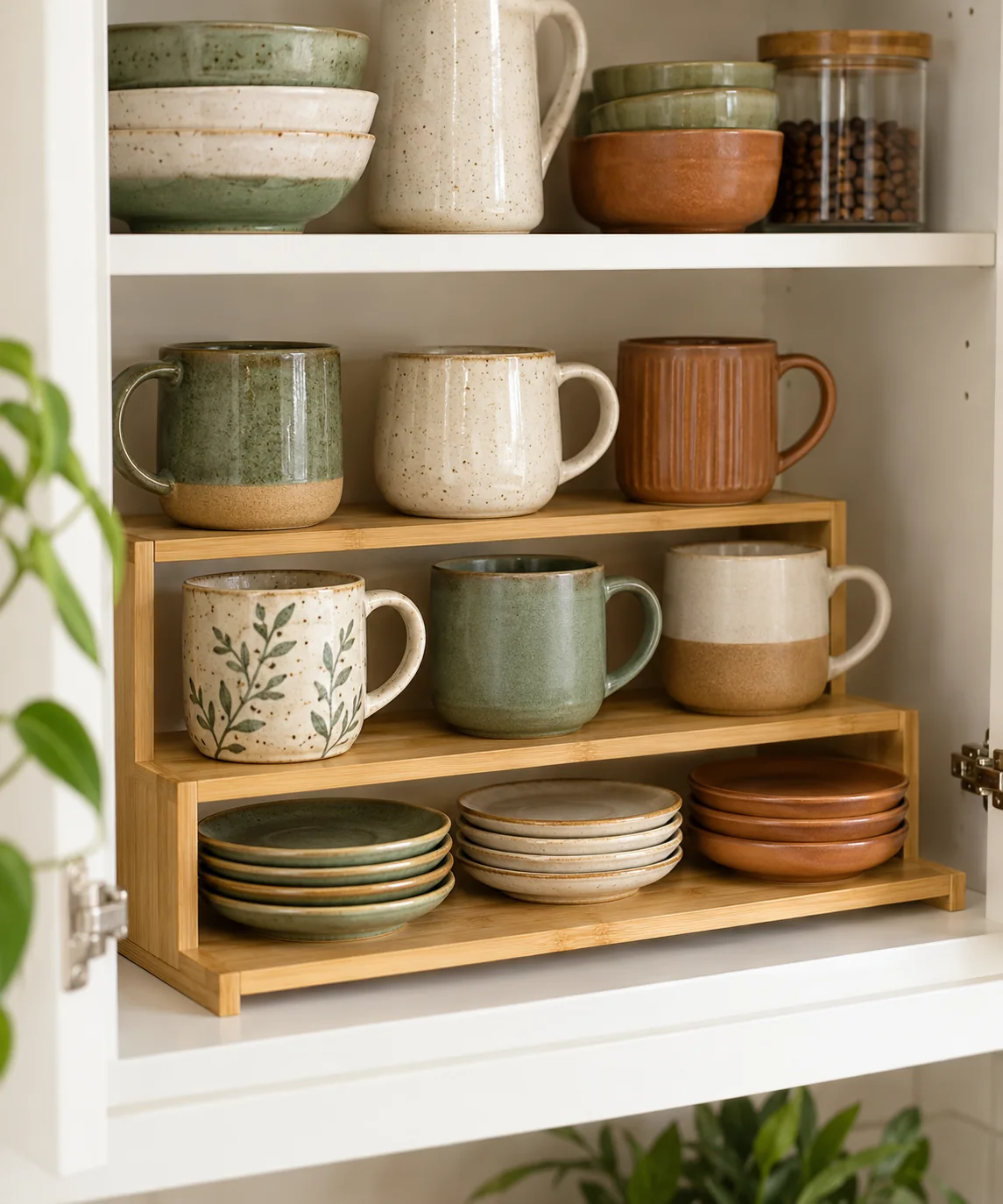
Calculating Cabinet Depth and Tier Heights
Standard upper kitchen cabinets feature an interior depth ranging from ten to eleven inches. Measure this interior depth alongside the total vertical clearance between shelves before choosing a riser. A standard three-tier riser requires roughly nine inches of depth, with each step offering a one-and-a-half to two-inch elevation gain. Confirm that mugs placed on the uppermost step have at least two inches of head clearance below the cabinet ceiling so your hands can comfortably lift them without scraping knuckles.
Grouping Cups by Diameter and Geometry
Coffee drinkware varies widely in form, from wide-rimmed latte bowls to narrow espresso cups and oversized diner mugs. Measure the base diameter of your primary mugs to ensure each tier depth, typically three inches, accommodates the footprint securely. Position wider, heavier ceramic vessels along the bottom tier or base shelf to anchor the unit. Reserve the middle and upper tiers for lighter teacups, insulated glasses, or stacked saucers, keeping the center of gravity low and stable.
Arranging Saucers and Nested Drinkware Safely
Directly stacking ceramic mugs rim-to-rim often leads to chipped glazes and snapped handles under lateral pressure. Instead, nest saucers in low stacks of three to four pieces on the flat lower tier, placing corresponding demitasse or teacups directly on top only if their foot rings seat cleanly into saucer indentations. For standard mugs, arrange them in single rows across each step with handles oriented in the same direction, preventing awkward handle collisions during rapid retrieval.
Selecting Stable, Grip-Friendly Materials
Choose step risers constructed from rigid materials such as sealed bamboo, acrylic, or heavy-gauge steel that resist sagging under collective dish weight. Avoid flimsy plastic shelves that bow in the center, which causes rounded cups to tip outward toward the door. Look for risers with non-skid rubber feet or line the steps with thin silicone matting. This non-slip surface cushions delicate ceramic foot rings, dampens clattering noises, and prevents shifting during cupboard access.
Testing Daily Ergonomics and Accessibility
Before finalizing your cupboard configuration, simulate daily usage by reaching for cups at varying heights. Place everyday coffee mugs on the front bottom and middle tiers where reach angles are natural and effortless. Keep occasional tea sets or seasonal mugs on the elevated rear step. Verify that the cabinet door closes flush without touching the handles of front-row mugs. A half-inch buffer between the door frame and the front rim prevents impact damage when shutting doors.
YOUR STARTING POINT
A little checklist.
Original editorial guidance. Images are AI-generated concepts, not photographs of completed projects. Our sources and approach.
Questions to consider
Can I stack mugs on the top tier of a riser?
Avoid vertical mug stacking on elevated steps. The top tier is furthest from your reach line; stacked mugs on an elevated narrow step easily tip over when grabbing neighboring cups in a hurry.
Will a three-tier riser hold heavy stoneware mugs?
Yes, provided the riser is made of solid bamboo or steel. Check the manufacturer's weight rating and place the heaviest stoneware on the base cabinet shelf or bottom tier to maintain cabinet balance.
How do I prevent the riser from sliding inside the cabinet?
Place small silicone bumper pads under each corner of the riser's base legs. Alternatively, cut a piece of non-adhesive grip shelf liner to rest directly underneath the riser unit.