Container Vegetable Gardens · THE GUIDE
Step-Stool Herb and Alpine Strawberry Planter Display
A sturdy outdoor two-step stool offers an efficient, non-permanent way to elevate small edible plantings on compact balconies. Raising shallow containers off the deck improves light interception, keeps ripening fruit away from surface dirt, and provides comfortable harvesting access without bending. Alpine strawberries and low-growing culinary herbs thrive in this tiered arrangement because their root architectures fit comfortably within shallow terracotta bowls. Made from weather-treated timber or durable synthetic lumber, a compact step stool functions as a mobile vertical riser that can be shifted easily as seasonal sunlight patterns change.
Jump to the checklist ↓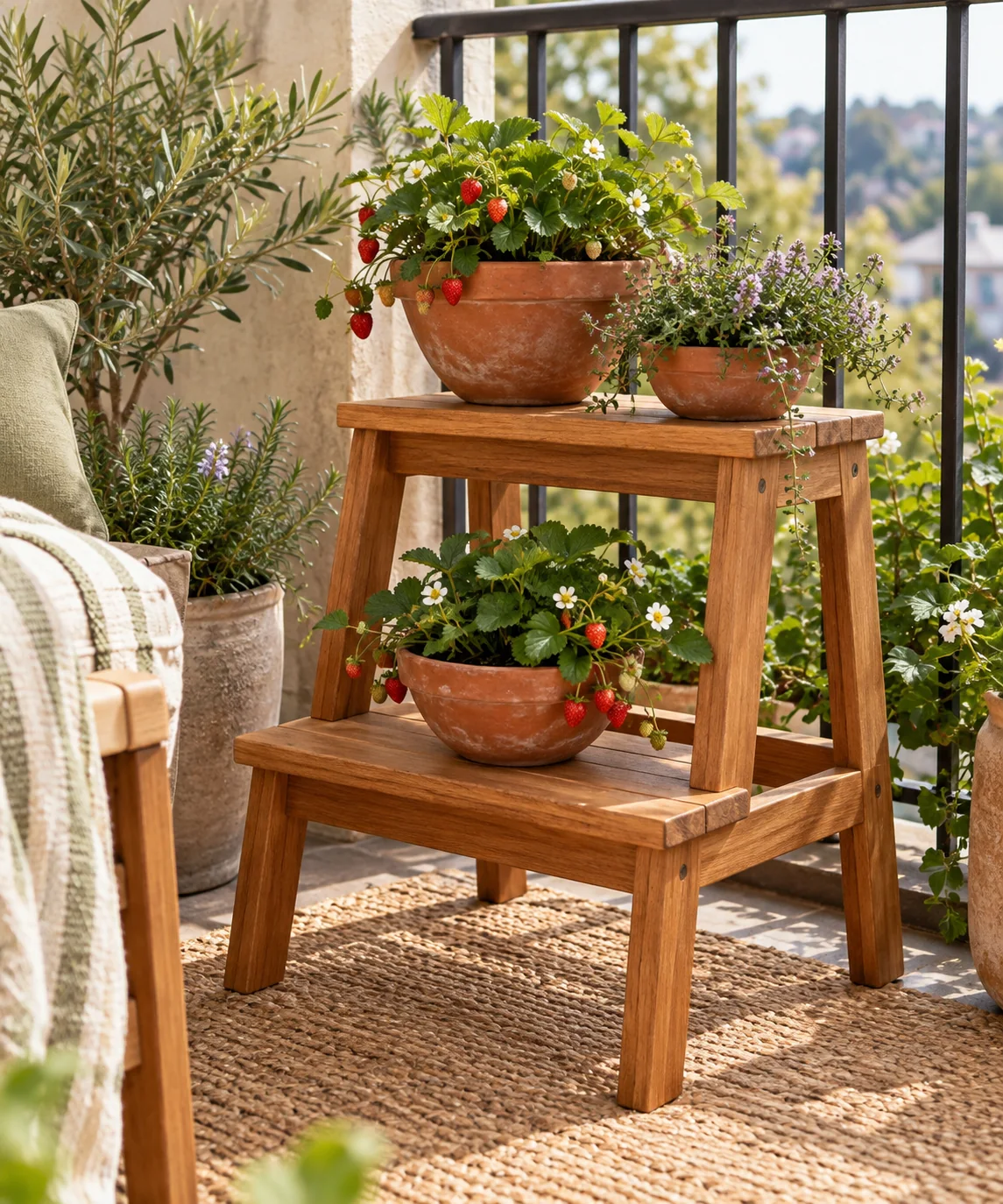
Platform Selection and Placement Safety
Choose an outdoor-rated step stool with wide, non-slip treads and a broad, level footprint. Because elevated platforms placed near balcony edges introduce tipping and falling-object risks, position the stool against an interior structural wall well away from balustrades. Consult property management guidelines or local residential rules before arranging tiered plant displays, as many multi-family communities restrict furniture height and edge placement on exterior terraces. Teak, cedar, or powder-coated metal stools withstand sun and moisture exposure, but you should routinely inspect fasteners to ensure steps remain level and stable under weight.
Sizing Containers for Stool Treads
Select broad, shallow containers that rest completely within the footprint of each step. Planters must never overhang the front, rear, or side edges of the treads, as uneven weight placement or accidental contact can cause pots to tip. While heavier planters like terracotta offer more resistance to slight breezes than featherweight plastic cups, weight alone cannot guarantee stability during sudden gusts or turbulent elevated wind drafts. Place rubber-footed saucers beneath each pot to collect excess moisture and prevent water from deteriorating the stool surface or creating slippery conditions on the deck below.
Sunlight Alignment and Tier Allocation
Alpine strawberries and culinary herbs perform best when placed where they receive adequate natural light suited to their species. Orient the stool to make the most of available sun angles across the balcony floor. Place spreading alpine strawberries on the higher step where trailing foliage can clear the rim without touching lower foliage, leaving the lower tier for compact culinary greens such as chives or thyme. Keep the arrangement tidy and accessible so you can harvest or inspect leaves without leaning across unstable furniture or reaching past railing boundaries.
Potting Medium and Moisture Management
Shallow pots elevated on steps experience faster moisture loss than larger ground-level containers due to unrestricted air circulation around their bases and sides. Fill each container with a commercial potting soil formulated for containers, incorporating compost and perlite to maintain moisture without impeding drainage. Avoid placing coarse gravel in the base, which reduces the active rooting depth. Check soil moisture manually by feeling the top inch of mix each morning, providing water when dry while ensuring saucers do not remain flooded for extended periods.
Seasonal Repositioning and Storm Precautions
One practical advantage of a freestanding step stool is its reversibility and portability. As seasonal sun angles change from spring through autumn, the entire arrangement can be relocated across the balcony floor to track shifting light corridors. However, never rely on furniture placement during high-wind advisories or severe weather. Move containers directly down to the primary deck floor or bring them indoors ahead of storms. At the close of the growing season, clean the containers, empty spent annual rootballs, and store the stool under cover to protect its finish.
YOUR STARTING POINT
A little checklist.
Original editorial guidance. Images are AI-generated concepts, not photographs of completed projects. Our sources and approach.
Questions to consider
Can regular garden strawberries be grown on a step stool?
Standard June-bearing or everbearing varieties send out long, vigorous runners that quickly crowd small steps and create tangles. Alpine strawberries develop in tidy, runnerless clumps, making their growth habit far more manageable on narrow step surfaces.
How should pots on elevated stools be managed during windy weather?
Do not rely on the weight of the pots or soil to keep them secure in strong winds. Balcony drafts accelerate around building corners, so monitor local weather forecasts and move elevated containers down to the floor or inside before high winds develop.
Will watering plants on the upper step damage the lower pots?
Water from upper containers can wash soil particles onto lower foliage if drainage is unmanaged. Equip the upper pots with properly fitted drip saucers and apply water slowly at soil level with a narrow-spout can to prevent overflowing onto the tier below.