Kitchen Herb Gardens · THE GUIDE
Stoneware Plant Saucer Array with Sand-Filled Drainage
Planters on kitchen counters often suffer from standing water in plastic catch trays or mineral rings on stone countertops. A functional, plastic-free alternative relies on broad stoneware saucers lined with coarse washed horticultural sand. Terracotta pots seated directly on this sand bed discharge excess moisture through bottom holes into the granular layer, dispersing moisture across a wider surface area. The porous unglazed sand and clay structure facilitates natural evaporation into the room while keeping pot bases free from waterlogged stagnation. This layout stabilizes pots and safeguards shelf finishes when configured correctly.
Jump to the checklist ↓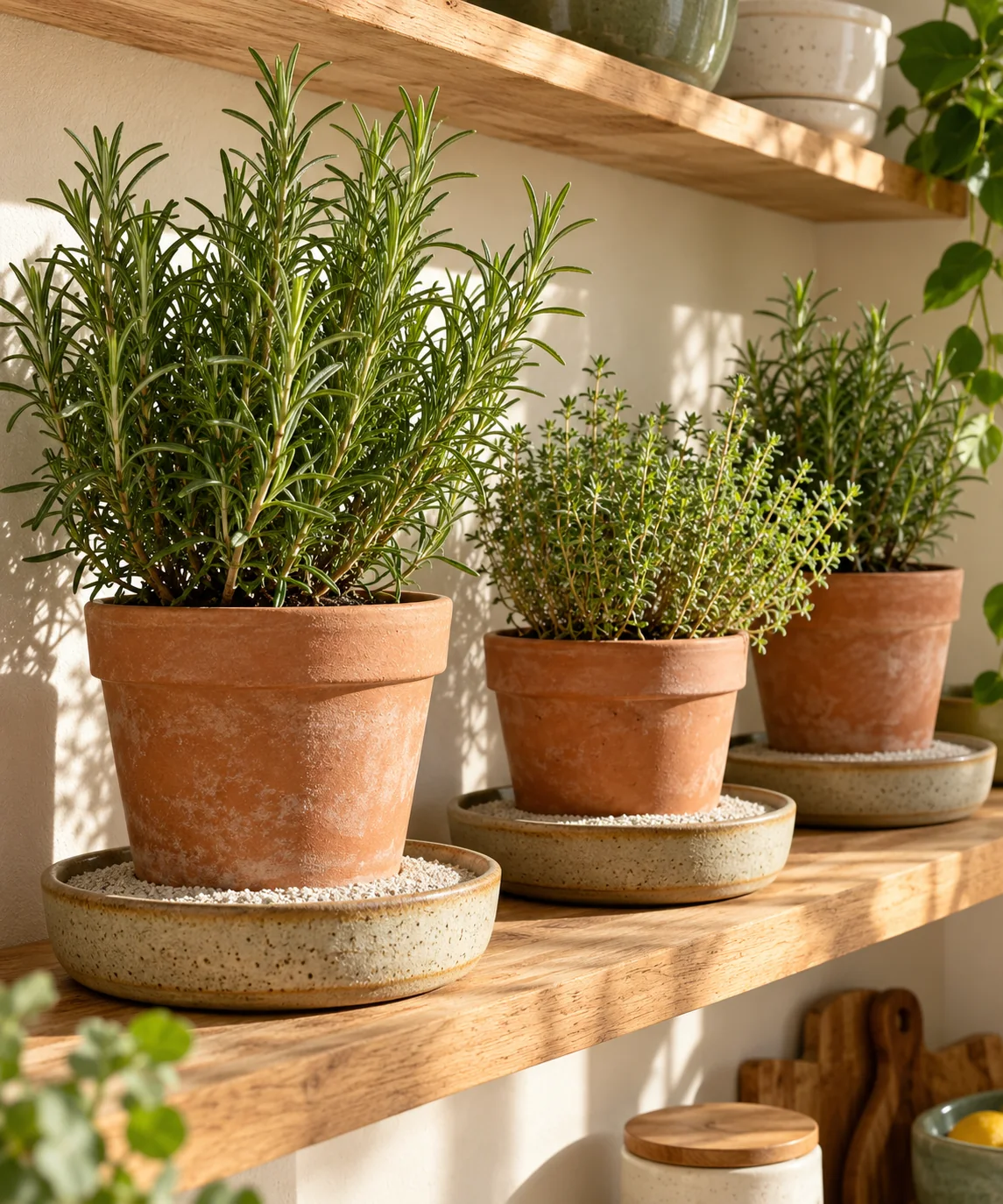
Dish Selection and Dimensions
Select heavy stoneware saucers with a flat interior floor and an outer rim rising between three-quarters of an inch and one inch. The dish diameter should extend at least two inches beyond the base of the terracotta pot. This margin ensures sufficient exposed surface area around the perimeter for continuous moisture evaporation. Avoid glazed interior dishes if you want the ceramic itself to pull moisture, though fully vitrified or glazed bottoms prevent dampness from transferring down onto wooden kitchen shelves.
Sand Layer Depth and Grading
Fill each saucer with a uniform half-inch layer of clean, coarse horticultural sand or washed silica sand. Do not use fine builder's sand or play sand, which packs down tight and restricts airflow under the drainage hole. The coarse grains create microscopic air voids that hold seepage away from the root aperture. Level the sand bed with a straight edge before placing the pot, ensuring the container sits level without wobbling or leaning under its own weight.
Water Seepage Mechanics
When watering Mediterranean herbs like rosemary and thyme, pour water slowly until slight run-through enters the sand base. The capillary action of the sand bed draws moisture laterally across the saucer. Rather than submerging the pot base in stagnant puddles that promote fungal rot, the sand exposes the water film to circulating room air. Within hours under warm kitchen shelf conditions, the thin moisture film evaporates naturally, elevating micro-humidity around herb foliage without drowning root tips.
Countertop Surface Protection
Even vitrified stoneware can transfer subtle temperature differentials or condense humidity beneath its base during warm afternoons. Protect vulnerable kitchen counters, such as oiled butcher block or porous marble, by affixing dense cork pads or non-abrasive silicone bumpers under each saucer. Maintain an intentional air gap of one-eighth inch beneath the stoneware dish. This small elevation prevents trapped moisture rings and allows you to slide the arrangement smoothly during kitchen cleaning routines.
Routine Maintenance and Sand Replacement
Over several months, tap water minerals and organic tannins from potting soil will migrate into the sand layer, creating visible crusts or discoloration. Every three to four months, lift the pots, scrape out the spent sand, and rinse the stoneware dishes with warm water. Replace the bed with fresh, dry horticultural sand to maintain rapid capillary transport. Never leave standing water pooling above the sand line; spoon out any accidental irrigation overflow immediately.
YOUR STARTING POINT
A little checklist.
Original editorial guidance. Images are AI-generated concepts, not photographs of completed projects. Our sources and approach.
Questions to consider
Can I use beach sand for this kitchen saucer array?
Beach sand contains salts and fine silt that damage herb roots and compact into an impermeable paste. Use thoroughly washed, coarse horticultural grit or silica sand to ensure clean moisture dispersal and open capillary evaporation.
Does this sand system eliminate the need to check saucer runoff?
No. The sand absorbs small amounts of normal drainage. If you overwater heavily and water pools visibly above the sand line, siphon out the excess to avoid keeping the pot base submerged in standing liquid.
Will damp sand encourage mold growth on kitchen shelves?
Coarse sand dries rapidly in bright, warm kitchen areas with good airflow. Provided your herbs receive strong light and you avoid saturation, the rapid evaporation cycle prevents mold from establishing on the mineral surface.