Pantry Organization · THE GUIDE
Store Dried Beans and Legumes in Graduated Vintage Glass Canning Jars
Bags of dried legumes often slump awkwardly on shelves, spilling stray lentils into corners and hiding current stock levels. Transferring dried beans, chickpeas, and split peas into graduated vintage-style glass canning jars creates an orderly, protective storage solution. Thick-walled glass provides a reliable barrier against humidity and pantry pests while showcasing the rich textures and natural colors of whole legumes. Arranging jars in stepped sizes establishes an appealing rhythm across your shelves. With proper sizing, dark storage considerations, and simple inventory labeling, glass jars transform bulk staple shopping into an efficient, visually clean pantry routine.
Jump to the checklist ↓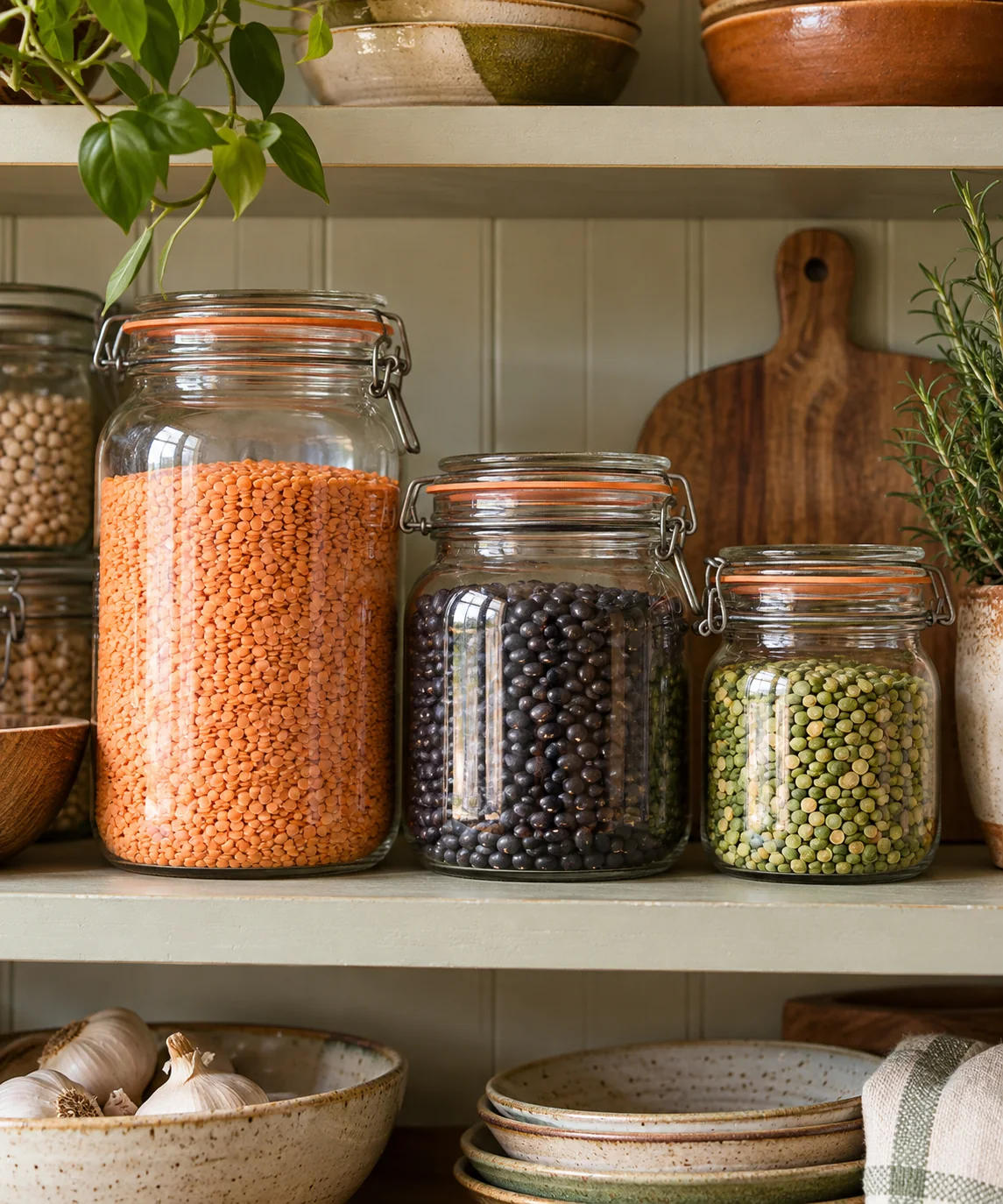
Selecting Appropriate Jar Capacities
Match jar volumes directly to typical bulk purchase quantities to avoid awkward partial bags left in storage. A standard one-pound bag of dried black beans, navy beans, or brown lentils fits comfortably into a one-quart (thirty-two-ounce) canning jar, leaving practical headspace for handling. Bulkier legumes, such as whole dried chickpeas or broad beans, generally require two-quart containers for full-bag decanting without overflow. Smaller half-pint or pint jars work well for specialty pulses, including French green lentils, split yellow peas, or whole urad dal. Choosing consistent graduated sizes across two or three heights establishes a clean visual rhythm while accommodating varying household cooking frequencies.
Inspecting Seals and Glass Integrity
Authentic vintage jars and modern reproduction preserve containers must feature sound surfaces to protect dry pantry staples. Inspect older glass rims, threads, and wire-bail seating ridges closely for tiny chips, burrs, or hairline stress cracks that could shed glass fragments into food. For wire-bail jars, confirm that rubber or silicone replacement gaskets remain pliable, elastic, and free of dry rot or cracking. When using two-piece metal lids or glass lids with synthetic gaskets, ensure the contact surfaces seat flush against the rim to prevent humid kitchen air from entering and compromising bean texture.
Managing Light and Storage Conditions
While clear glass attractively displays whole legumes, prolonged exposure to direct sunlight or strong ambient light accelerates the fading of natural pigments and breaks down sensitive surface nutrients. However, long-term cooking problems, such as seed coats failing to soften evenly, are primarily driven by elevated ambient temperatures and fluctuating storage humidity rather than light alone. To protect both appearance and culinary quality, position filled glass jars in a dark interior cupboard, an enclosed pantry cabinet, or on shaded shelving positioned well away from direct window exposure, cooking ranges, and heat-producing appliances.
Implementing Graduated Shelf Arrangements
Organize your jar collection using tiered risers or depth-staggered rows to maintain clear visibility across all legume varieties. Place taller half-gallon jars holding bulk soup beans toward the rear of the shelf, mid-sized quart jars of everyday lentils in the central row, and compact pint jars along the front edge. Alternatively, arrange jars in a progressive graduated line from tallest to shortest across the shelf span. Allow a small physical clearance between adjacent glass vessels to prevent accidental contact, clinking, and rim chipping when lifting jars down for meal preparation.
Labeling and Stock Rotation Practices
Different dried legumes can look deceptively similar once decanted, yet their cooking times and hydration needs differ considerably. Apply removable kraft tape or discreet paper labels to the lid or container base noting the bean variety, purchase date, and estimated cooking notes. Practice straightforward stock rotation by finishing the remaining contents of an existing jar before adding newly purchased stock. Wash and thoroughly air-dry glass containers before each refill, ensuring that no interior moisture or residual food dust remains to encourage mold or premature spoilage.
YOUR STARTING POINT
A little checklist.
Original editorial guidance. Images are AI-generated concepts, not photographs of completed projects. Our sources and approach.
Questions to consider
How long can dried beans be stored in glass jars safely?
Dried beans remain safe for years in airtight glass jars, but they cook best within twelve to eighteen months. Older beans gradually lose internal moisture, requiring significantly longer soaking and cooking times to soften properly.
Can I use antique zinc-lidded jars for food storage?
Avoid placing food directly against old zinc lids or degrading milk-glass liners. Instead, use modern two-piece metal canning bands with fresh seals or modern wire-bail reproduction jars fitted with food-grade silicone rings for safety.
Will heavy glass jars damage standard wire pantry shelves?
Multiple full-quart glass jars concentrate significant weight on thin wire rungs. Install rigid acrylic shelf liners or thin birch plywood sheets across wire shelves to distribute jar weight evenly and prevent tipping between slats.