Rental-Friendly Decor · THE GUIDE
Store Outdoor Tools in a Weatherproof Balcony Storage Box Bench
Limited outdoor square footage in apartment living requires dual-purpose furnishings that keep floor space clear and tidy. Gardening supplies like trowels, spare nursery pots, watering cans, and potting soil bags quickly create visual clutter and track grime across the threshold. A compact, weatherproof storage box bench combines functional seating with an enclosed, moisture-resistant repository. By choosing a low-profile deck box made from all-weather resin or treated wood, renters can maximize small balcony footprints while keeping essential gardening accessories clean, dry, and easily accessible throughout the growing season.
Jump to the checklist ↓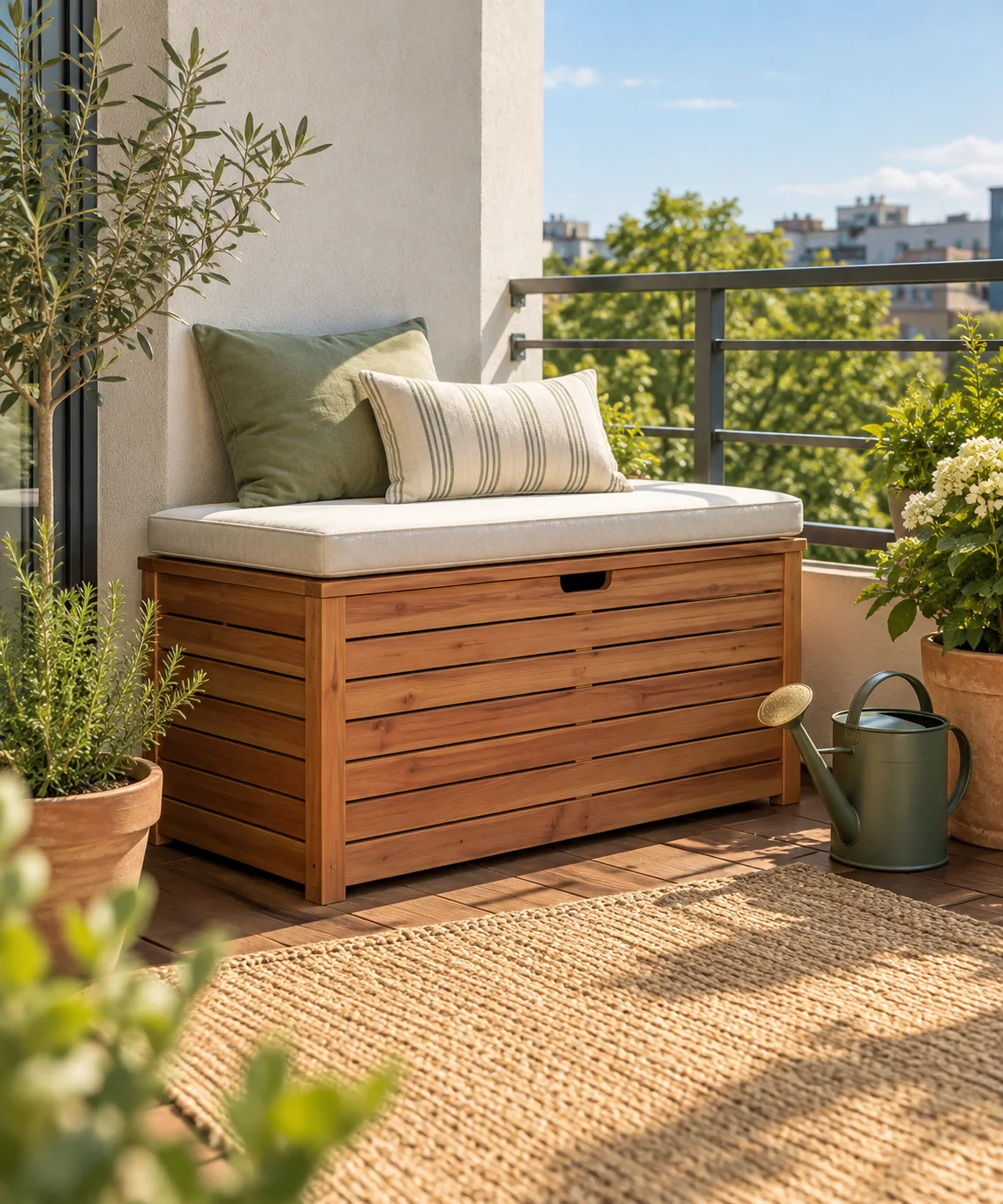
Balcony Clearance, Weight, and Placement Planning
Carefully measure your balcony dimensions and verify door clearance before purchasing a storage bench. Check with your building management, landlord, or local structural guidelines regarding allowable balcony floor loads and storage restrictions, as structures differ significantly in permitted live and dead loads. When planning placement, keep access doors, ventilation paths, and floor drainage scuppers completely unobstructed. Balcony railings must always remain clear to avoid climbing hazards and to adhere to residential building codes. Store only basic gardening accessories and dry supplies rather than heavy bulk materials to stay comfortably within building guidelines.
Material Selection: Resin Versus Treated Timber
Weather resistance determines how reliably your equipment remains sheltered from moisture. Molded high-density resin or polypropylene deck boxes provide dependable moisture barriers, withstand continuous ultraviolet exposure, and resist rot or splintering. If you select natural timber such as cedar or teak, confirm the wood features an exterior-rated protective seal or manufacturer-specified outdoor treatment. Natural wooden benches require periodic reapplication of protective finishes to limit moisture uptake and surface weathering over time. Untreated softwoods and compressed fiberboard absorb moisture rapidly, swell, and degrade when exposed to outdoor humidity and driving rain.
Internal Tool Organization and Spill Prevention
Organizing internal supplies prevents loose potting soil, amendments, and debris from accumulating along the base of the storage unit. Place open bags of potting mix or perlite into separate lidded plastic tubs or heavy-duty totes before placing them inside the bench. Group smaller accessories like hand pruners, snips, and plant markers into shallow utility caddies so they remain easy to locate without sifting through larger containers. Thoroughly clean and dry watering cans and hand sprayers before closing them away, as lingering moisture in an enclosed compartment encourages mildew growth and can oxidize metal tool edges.
Seating Comfort and Manufacturer Weight Limits
To use the bench surface as occasional outdoor seating, select cushions made with solution-dyed acrylic, olefin, or marine-grade polyester fabrics designed for exterior environments. These synthetic textiles resist sun fading and dry relatively quickly after rainfall. Always verify the manufacturer's specified weight capacity for the lid before using the unit as a seat, confirming it is explicitly engineered to support adult seated loads rather than designed solely as a utility storage chest. During severe weather or high-wind advisories, store cushions and loose seat pads directly inside the compartment to prevent them from blowing free.
Routine Cleaning and Pest Prevention
Enclosed outdoor storage chests benefit from regular cleaning to clear out accumulated dust, pollen, and webs. Wipe down interior and exterior surfaces several times per season using a sponge dampened with warm water and mild liquid dish soap, then allow the lid to stay open until the compartment dries completely. Check the perimeter seals and hinge fittings periodically to confirm the lid sits flush against the rim to deflect blowing rain and airborne dust. Avoid storing open packets of birdseed, animal feeds, or edible organic waste in the bench, which can attract rodents or insects to balcony areas.
YOUR STARTING POINT
A little checklist.
Original editorial guidance. Images are AI-generated concepts, not photographs of completed projects. Our sources and approach.
Questions to consider
How should I manage a lightweight storage bench during strong winds?
Consult manufacturer guidance and building rules regarding wind precautions. In exposed or high-story balconies subject to severe wind advisories, lightweight benches may need to be brought indoors or temporarily emptied and placed flat against a sheltered interior wall as permitted by building guidelines.
Can I use the storage bench as an elevated step stool to reach hanging plants?
No. Deck benches and storage boxes are engineered only for evenly distributed seated weight across the top panel, not concentrated standing loads. Stepping on the lid risks breaking the structural panel, tipping the furniture, or losing balance near balcony safety barriers.
How can I prevent metal hand tools from rusting inside an outdoor bench?
Wipe soil and grit completely off tool blades, ensure the metal is entirely dry, and apply a thin film of mineral oil to cutting edges before storage. Keep watering cans emptied and dry, and ensure the bench lid closes tightly to keep out driving rain.