Pantry Organization · THE GUIDE
Store Root Vegetables in Breathable Wire Baskets on Low Shelves
Root vegetables such as potatoes, sweet potatoes, onions, and garlic require steady, temperate conditions to stay firm and minimize premature sprouting. Storing them inside sealed plastic packaging traps ambient moisture, fostering stagnant air that accelerates mold, rot, and skin decay. Utilizing lower pantry shelving can help establish a consistent storage area, as floor-level ambient air tends to experience fewer warm air drafts than upper cabinetry. Open wire baskets lined with breathable craft paper allow air circulation around produce while catching shedding skins, creating a tidy and practical storage zone.
Jump to the checklist ↓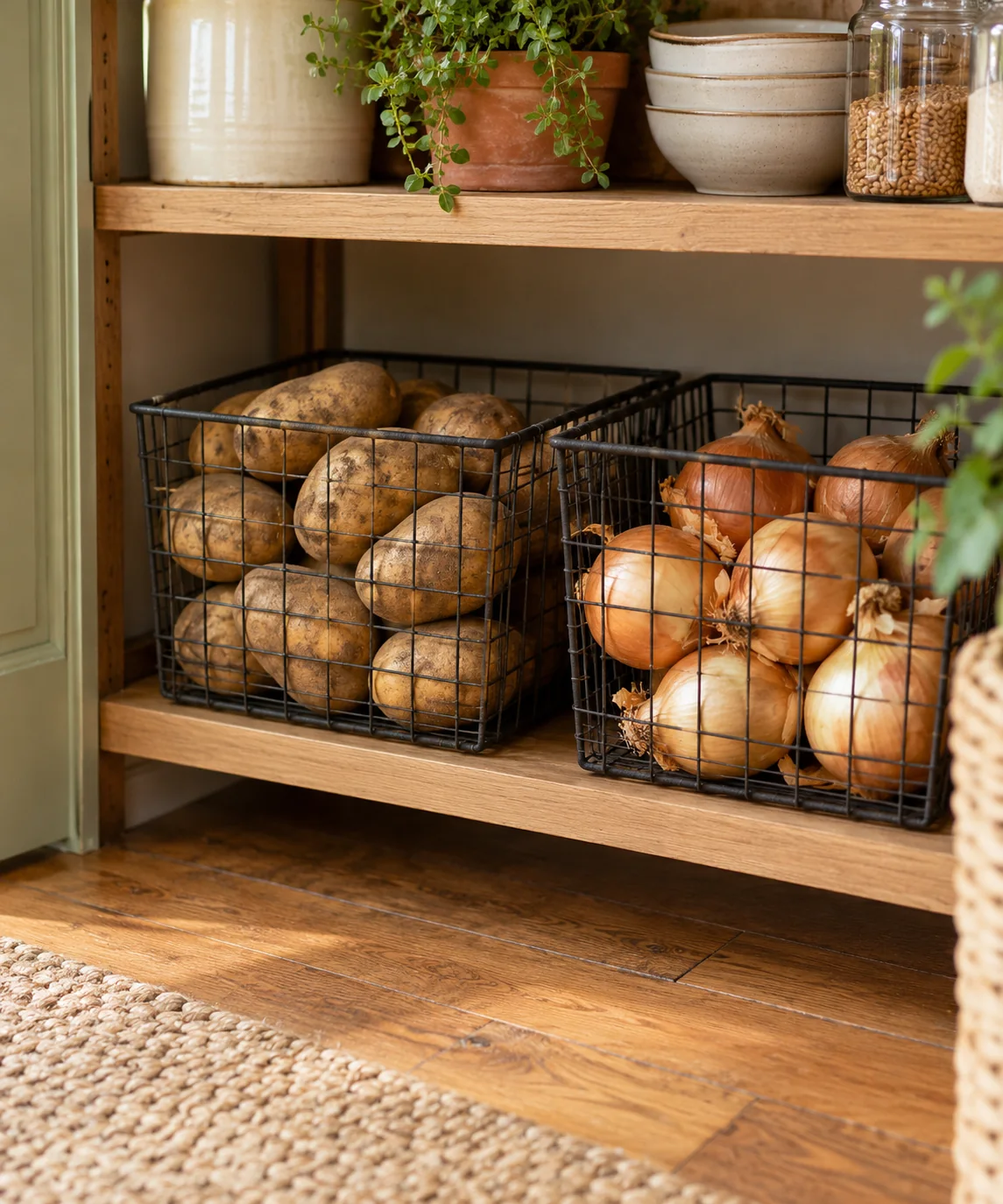
Microclimate Selection on Low Shelves
Pantry temperatures frequently vary from ceiling to floor due to natural air stratification. Warm air collects near upper shelves, whereas cooler air remains closer to the floor. Root crops generally fare better in cooler, shaded parts of the home away from direct heat sources. Positioning vegetable baskets on the lowest pantry shelf, or slightly elevated on an open riser, keeps produce in a relatively stable zone. Keep this storage footprint well away from warm appliance exhaust vents, such as those from dishwashers, freezers, or kitchen ranges, which circulate warm, dry air that dehydrates tubers.
Separating Alliums and Tubers
While both require cool, dry conditions, storing onions and potatoes in the same container often leads to faster degradation. Onions release ambient moisture that can encourage potato eyes to break dormancy and sprout, while potatoes can similarly compromise the outer skins of alliums. Keep potatoes and sweet potatoes in one dedicated basket, and place onions, shallots, and garlic in a separate basket nearby with adequate space between them. Maintaining this physical separation also prevents sulfur aromas from penetrating porous potato skins.
Ventilation and Craft Paper Liners
Open wire baskets provide continuous passive ventilation around stored produce, helping surface moisture evaporate before rot can form. However, bare metal wires can create pressure marks on thin-skinned new potatoes, and dry allium tunics inevitably drop debris through wire gaps. Lining the base of each basket with a trimmed sheet of unprinted craft paper creates a practical barrier. The paper catches loose dirt and dry skins for straightforward disposal while allowing air to move freely through the basket sides.
Handling Light Exposure and Greening
Light exposure stimulates chlorophyll development in potato skins, which occurs alongside the accumulation of solanine, a bitter-tasting glycoalkaloid. If a pantry features glass doors or receives frequent overhead illumination, tubers need protection from direct exposure. Position baskets in the darkest accessible part of the shelf. A clean, breathable cotton or linen kitchen cloth laid loosely across the top of the basket blocks light while still allowing convective airflow. Avoid non-breathable covers that trap condensation.
Inspection Routine and Basket Hygiene
A single rotting vegetable can introduce moisture and microbial growth to neighboring produce. Set aside time each week to look over stored crops. Handle tubers gently to feel for soft spots, shrinkage, or early sprouting, removing compromised vegetables promptly before they affect adjacent items. Whenever a basket empties, discard the paper liner and inspect the wire frame. Wipe metal surfaces clean with a damp cloth, dry them thoroughly to prevent rust, and insert a clean paper liner before adding new produce.
YOUR STARTING POINT
A little checklist.
Original editorial guidance. Images are AI-generated concepts, not photographs of completed projects. Our sources and approach.
Questions to consider
Why shouldn't I wash root vegetables before storing them in wire baskets?
Pre-washing introduces moisture into skin crevices and paper layers, creating conditions favorable to fungal rot and premature mold. Keep vegetables in their unwashed state until immediately prior to cooking, and brush off heavy dry soil with a dry towel if needed.
Can solid plastic containers work as well as wire baskets?
Solid containers restrict airflow, which can trap natural humidity and cause condensation spots where produce rests against smooth plastic. Wire baskets allow convective air movement, helping surfaces stay dry and reducing localized decay.
When should craft paper basket liners be replaced?
Replace craft paper liners whenever you observe accumulated soil, dry onion skins, or damp spots from damaged produce. Swapping in a fresh sheet during regular restocking helps maintain hygiene without requiring frequent washing of the metal frame.