Garden Tool Organization · THE GUIDE
Store Soil Amendments in Metal Feed Bins with Hanging Metal Scoops
Leaving bags of potting soil, coarse vermiculite, and bone meal on shed floors invites moisture absorption and pest intrusion. Rodents can chew through polyethylene sacks to nest or consume organic amendments, leaving behind contaminated messes. Heavy-gauge galvanized steel feed bins help mitigate this vulnerability by providing durable physical protection against pests and keeping materials off damp concrete floors. Pairing each dedicated bin with an exterior hanging aluminum feed scoop streamlines potting mix preparation, helps reduce cross-contamination between materials, and creates an orderly, clean potting space suited for humid seasonal shed environments.
Jump to the checklist ↓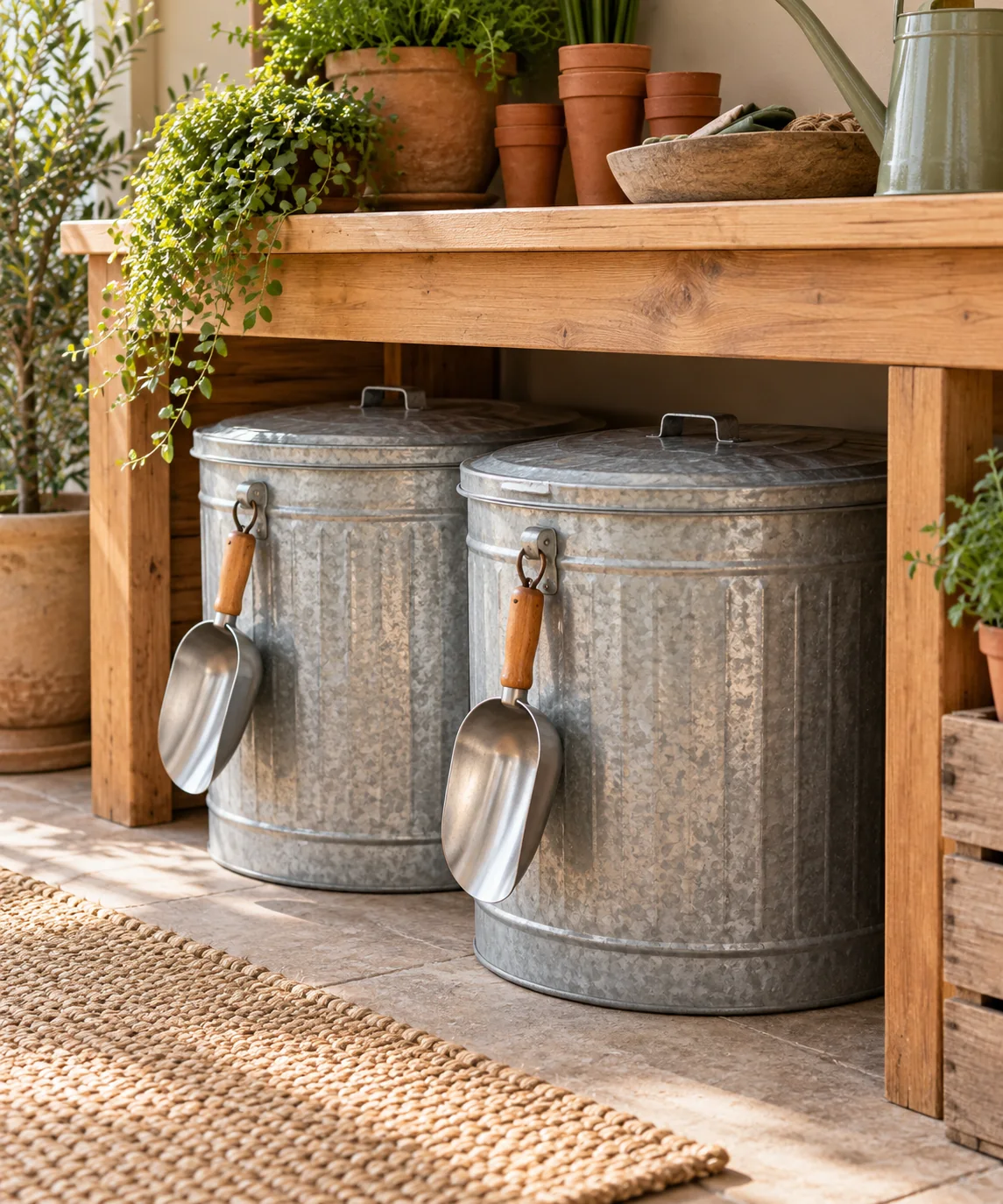
Selecting Bin Gauge and Bench Integration
Choose heavy-duty galvanized steel cans or lidded livestock feed tubs sized appropriately for your space, often ranging between ten and twenty gallons in capacity. A ten-gallon bin typically holds a standard bag of potting substrate without excessive dead space. Position the bins beneath your potting surface on a raised wooden duckboard or slatted base rather than directly on cold shed concrete. Raising the base slightly off the slab promotes airflow underneath, helping prevent condensation from collecting beneath the bottom metal seam where corrosion often begins.
Lid Seals and Moisture Control
Metal feed cans help deter mice, squirrels, and insects, but standard utility lids are rarely hermetically sealed against ambient humidity. Store dry amendments like perlite, dry pumice, or prepackaged dry organic fertilizers with lids securely closed. For damp potting soil mixes, ensure the lid fits snugly enough to exclude pests while allowing occasional air exchange so that trapped moisture does not foster anaerobic conditions or surface mold. Check stored mediums periodically during humid weather to monitor moisture levels.
Dedicated Scoops and Magnetic Stowage
Avoid cross-contaminating seed-starting mediums with concentrated fertilizers by dedicating an aluminum utility scoop to each separate amendment container. Cast aluminum scoops offer rigidity when working through settled potting soil or coarse bark. Storing scoops using heavy-duty rubber-coated magnetic hooks on the exterior wall of each galvanized bin keeps the handles accessible and off the floor. External placement prevents scoop handles from becoming submerged in amendment dust, making handling cleaner when preparing mixes.
Dust Containment and Refill Ergonomics
Pouring powdery amendments like dry perlite, lime, or fine rock powders can generate airborne particulates in enclosed storage areas. When refilling bins from bulk bags, work in a well-ventilated space, open the packaging close to the rim, and allow the material to settle gently rather than dumping from height. If working with dry peat-based blends outdoors, working on calm days reduces particulate drift. Keep the surrounding pathway clear of hoses and clutter to allow safe, balanced lifting when handling heavy refill bags.
Corrosion Monitoring and Cleaning Cycles
Galvanized zinc coatings help protect steel containers from atmospheric rust, but prolonged contact with acidic amendments, damp compost, or moisture-retentive peat can degrade the finish over time. Adding a heavy-gauge interior liner provides an extra moisture barrier for damp substrates. Inspect bins periodically, brushing out accumulated dust and checking seams for signs of surface wear or moisture buildup. Ensure containers are completely dry before refilling, and verify that handles and lid latches remain in good working order.
YOUR STARTING POINT
A little checklist.
Original editorial guidance. Images are AI-generated concepts, not photographs of completed projects. Our sources and approach.
Questions to consider
Can I store moist potting soil in galvanized metal cans year-round?
Yes, but use a thick plastic interior liner. The persistent moisture and acidic nature of wet compost or peat will slowly corrode the interior galvanized zinc coating, eventually compromising the bottom seam of the metal bin.
Why use cast aluminum scoops instead of plastic gardening scoops?
Plastic scoops become brittle over cold winters and crack when prying through dense, compacted soil mixes. Cast aluminum provides rigid structural strength, does not warp, and survives repeated hard scraping along the bottom of metal bins.
How do I secure the metal lids against strong raccoons?
Look for feed bins that feature integrated lid locking bars that clamp upward over the handle. Alternatively, loop a short rubber tie-down strap across the lid handle and connect it securely to both side handles.