Garden Tool Organization · THE GUIDE
Store Soil Sifting Screens Flat in an Under-Counter Shelf Slot
Soil sifting screens, or garden riddles, consume excessive bench space when parked on work surfaces and pose trip hazards when leaned against bench legs. Inserting a shallow horizontal shelf slot immediately beneath the main potting worktop establishes a dedicated horizontal zone for these broad, flat frames. This placement keeps mesh inserts accessible at hip height while freeing up valuable surface square footage for repotting containers. Storing frames horizontally also protects fragile woven wire from structural warping, frame racking, and accidental puncture damage caused by larger tools.
Jump to the checklist ↓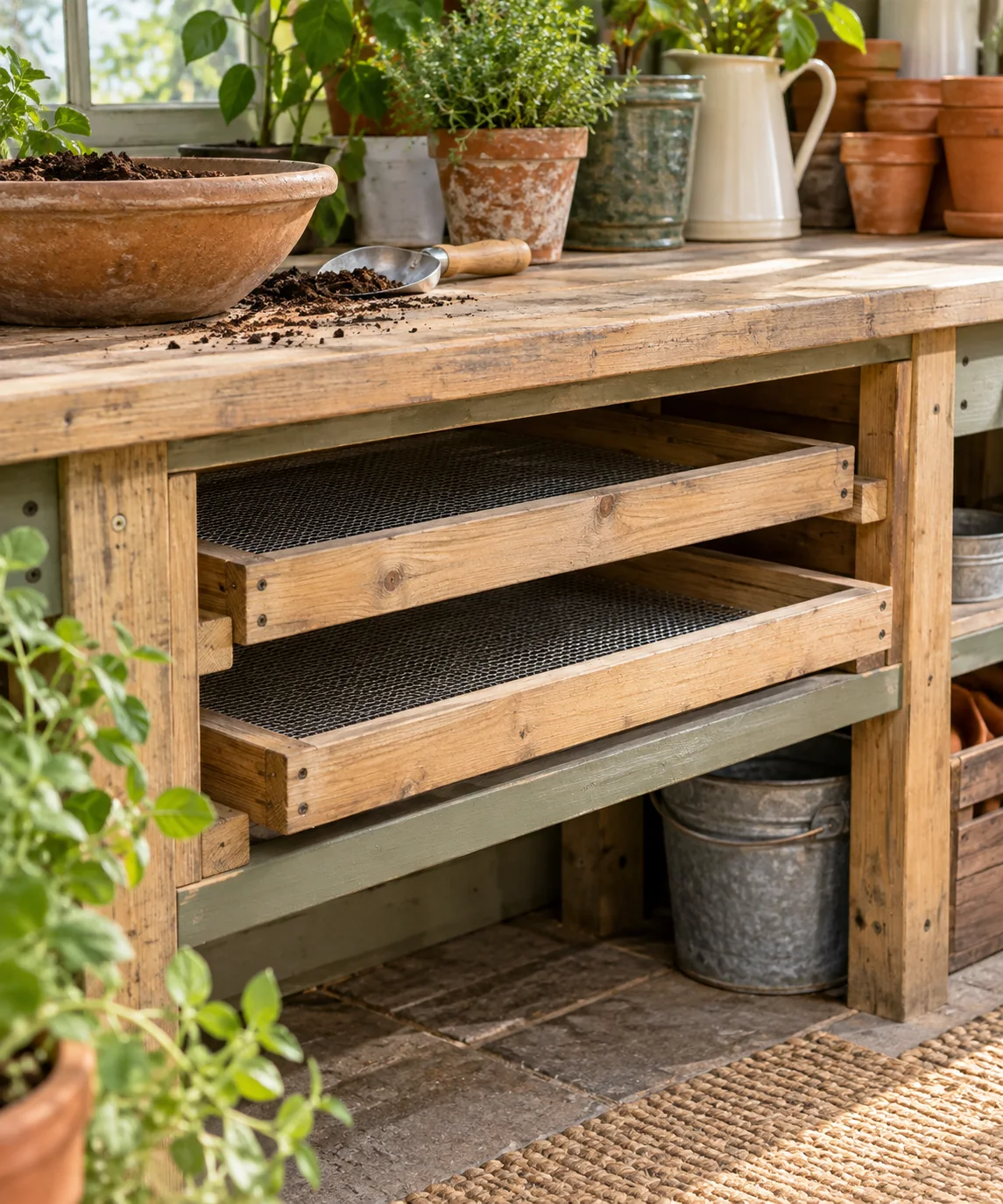
Assessing Slot Clearance and Riddle Dimensions
Measure the outer frame dimensions of your sifting screens, taking into account any corner brackets, nested mesh rims, or side handles. An under-counter slot or intermediate shelf should provide adequate vertical height for your hands to slide frames in and out smoothly without scraping knuckles against the underside of the worktop. Sizing the shelf depth to match or slightly exceed the frame dimensions keeps riddles tucked neatly under the bench overhang, preventing corners from catching on clothing or carts.
Non-Invasive Shelf Options and Weight Support
Potting benches with pre-existing lower rails or adjustable shelf pins offer convenient resting points for horizontal storage panels. Using smooth, pre-finished boards or removable shelf inserts creates a stable, low-friction base that allows sifting frames to slide without snagging. Ensure the support shelf is rated for the combined weight of your sifting screens so the surface remains level and does not sag across wide spans.
Layering Screens and Protecting Wire Mesh
When storing multiple interchangeable screen gauges in a single compartment, place the coarsest, heaviest mesh frame at the bottom of the stack to support lighter inserts above. Finer wire mesh should remain near the top of the stack where it is protected from downward pressure. Avoid placing hand trowels, tampers, or heavy containers on top of stored screens, as concentrated weight can stretch or distort tensioned wire mesh.
Debris Containment and Air Circulation
Garden riddles naturally accumulate soil crumbs, perlite fragments, and compost dust during sifting tasks. Brushing screens clean with a dry, stiff bench brush over a compost bin before storing them keeps debris from gathering inside the shelf slot. Keeping the front and rear of the shelf compartment open allows ambient air to circulate around wooden rims and wire mesh, helping residual moisture evaporate between potting sessions.
Storage Boundaries and Practical Limitations
Under-bench slot storage is intended for dry, empty hand riddles and interchangeable mesh inserts rather than loaded soil flats or heavy amendment tubs. Regularly inspect the shelf support to confirm fasteners and brackets remain tight under regular use. If storing screens in an unheated shed or damp greenhouse, periodically check wooden frames for swelling or metal wire for corrosion, wiping surfaces clean as needed.
YOUR STARTING POINT
A little checklist.
Original editorial guidance. Images are AI-generated concepts, not photographs of completed projects. Our sources and approach.
Questions to consider
Can I stack metal and wooden sifting screens together?
Yes, provided both the wooden rims and metal screens are clean and dry before resting together. Stacking heavier frames beneath lighter ones helps distribute weight evenly across the frames.
How far back under the bench should screens sit?
Screens should sit fully beneath the outer overhang of the worktop so the edges remain flush or slightly recessed, keeping the aisle clear of protruding corners.
How do I prevent stored screens from sliding forward during bench work?
Ensure the shelf is installed level across its width and depth. If bench vibration causes shifting, placing a thin non-slip liner beneath the bottom frame provides friction without permanent alterations.