Laundry Space Organization · THE GUIDE
Store Stain Treatments in a Portable Wire Caddy
Stain removal requires rapid intervention, yet specialty sprays, enzyme sticks, and application tools often end up scattered across high shelving or hidden behind bulk detergent jugs. Centralizing spot-treatment supplies into a portable wire caddy keeps your primary tools organized, visible, and mobile. An open-frame caddy travels effortlessly from laundry sinks to ironing boards or bathroom basins where immediate pretreating occurs. By consolidating scrub brushes, specialized formulas, and measuring caps in a self-draining container, you eliminate searching during laundry emergencies while protecting utility surfaces from sticky product residue.
Jump to the checklist ↓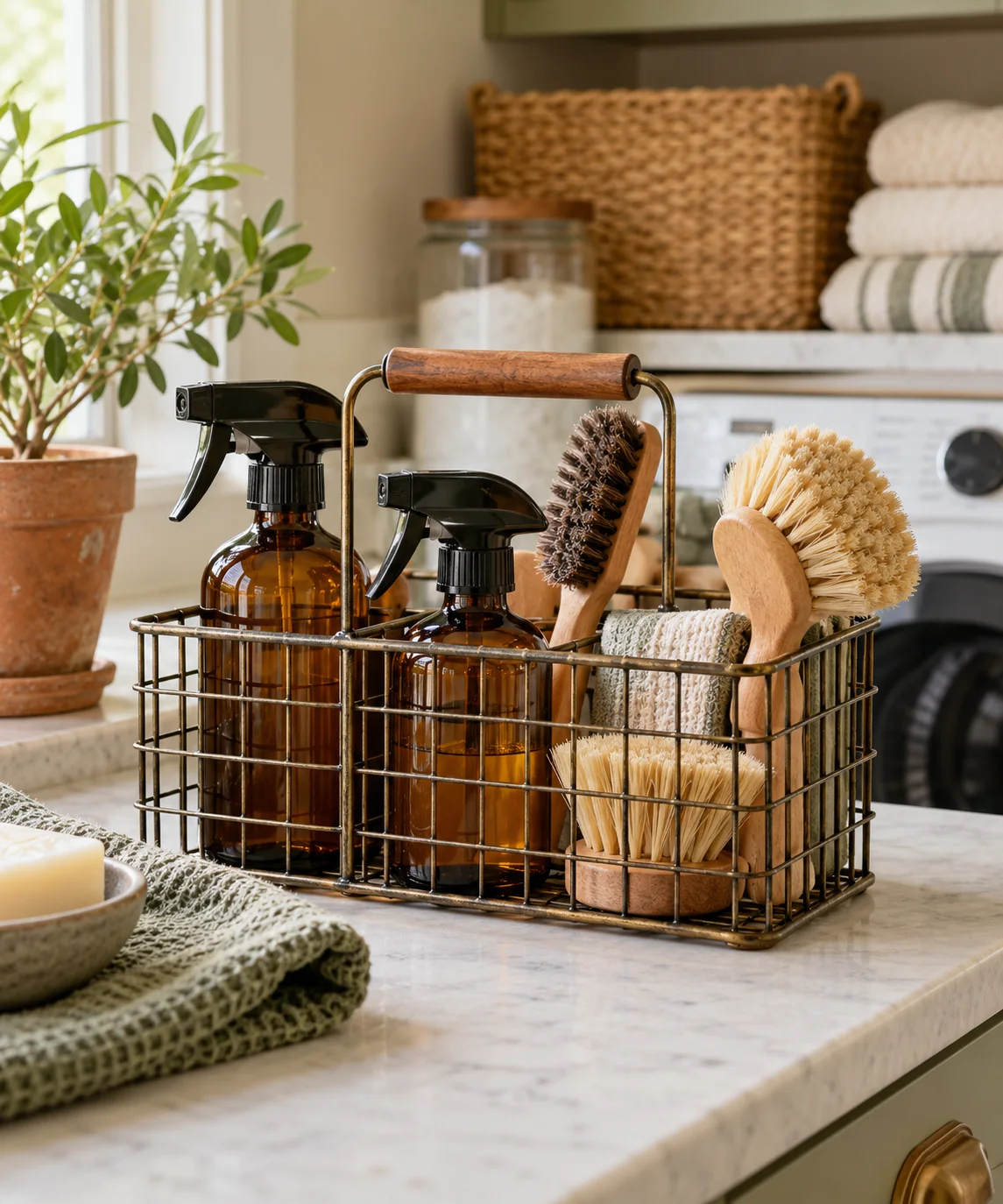
Arranging by Treatment Application Sequence
Organize your caddy according to the chronological steps of treating a garment. Group gentle pretreat sticks and solid soap bars at the front for targeted spot work. Place trigger spray bottles and liquid solutions across the deeper rear compartment. Reserve side pockets for horsehair detail brushes, measuring pipettes, or cotton cloths. Arranging tools in logical operational order lets you grasp the exact product needed with one wet hand without knocking over delicate bottles.
Evaluating Basket Proportions and Balance
Select an open-wire caddy with a tall central carry handle and side rails high enough to support tall spray bottles. Narrow baskets with low walls allow top-heavy bottles to tip sideways when the caddy is lifted. A container measuring ten by eight inches with six-inch sidewalls typically holds three spray solutions, two treatment tubes, and application brushes. Keep weight distributed evenly across the center partition to ensure stable transport.
Surface Protection and Drip Control
Wire baskets allow air circulation around damp scrub brushes, but leaky bottle spouts can drip liquid onto laundry counters. Prevent sticky rings by inserting a removable silicone mat or shallow plastic tray into the caddy base. A flexible silicone liner catches stray drops of concentrated pretreatment without trapping moisture around the metal wire, and it pulls out instantly for quick rinsing under running water.
Mobility Between Wash Zones
Stains often appear far from the laundry room, whether in bedroom dressing zones or entryway mudrooms. A sturdy wire caddy with a smooth wooden handle enables safe single-trip transport across the house. Moving the entire kit prevents half-used stain pens from migrating into kitchen drawers or bathroom vanity cabinets. When pretreating finishes, returning the complete caddy to its base shelf maintains household storage order.
Nozzle Maintenance and Supply Audits
Liquid spot removers can dry inside spray nozzles, leaving crusty deposits that disrupt application spray patterns. Once a month, wipe down bottle caps, rinse scrub brush bristles in plain water, and wipe down the caddy frame. Inspect bottle seals for slow leaks that coat adjacent tools. Keeping supplies clean ensures every trigger functions cleanly when urgent treatment is required on stained garments.
YOUR STARTING POINT
A little checklist.
Original editorial guidance. Images are AI-generated concepts, not photographs of completed projects. Our sources and approach.
Questions to consider
Why use wire instead of solid plastic for a cleaning caddy?
Open wire provides superior visibility, allowing you to see fill levels through the sides. It also promotes rapid drying for damp scrub brushes, reducing trapped odor compared to sealed, non-ventilated plastic boxes.
How do I prevent metal wire caddies from rusting in laundry rooms?
Select a caddy with an enamel, powder-coated, or plated bronze finish. Place a silicone drip liner in the base and never store soaking brushes directly against raw metal seams to prevent moisture contact.
What tools belong in a basic spot-treatment caddy?
A standard kit includes an enzyme spray, an oxygen-based paste or stick, a soft-bristled horsehair garment brush, clean white blotting towels, and a gentle liquid soap bar for delicate wool and silk spot cleaning.