Indoor Plant Styling · THE GUIDE
Style a Coffee Table Foliage Centerpiece That Keeps Half the Surface Clear
Coffee tables must balance visual warmth with daily practicality, serving as spaces for morning mugs, books, and casual relaxation. Crowding the surface with multiple individual planters creates visual clutter and leaves little room for functional items. By consolidating small, textured houseplants inside a single shallow stoneware bowl, you can anchor the table with a sculptural focal point while intentionally reserving half the tabletop for daily living. This contained arrangement simplifies maintenance, protects delicate wood finishes from moisture rings, and preserves open sightlines across your primary living room seating.
Jump to the checklist ↓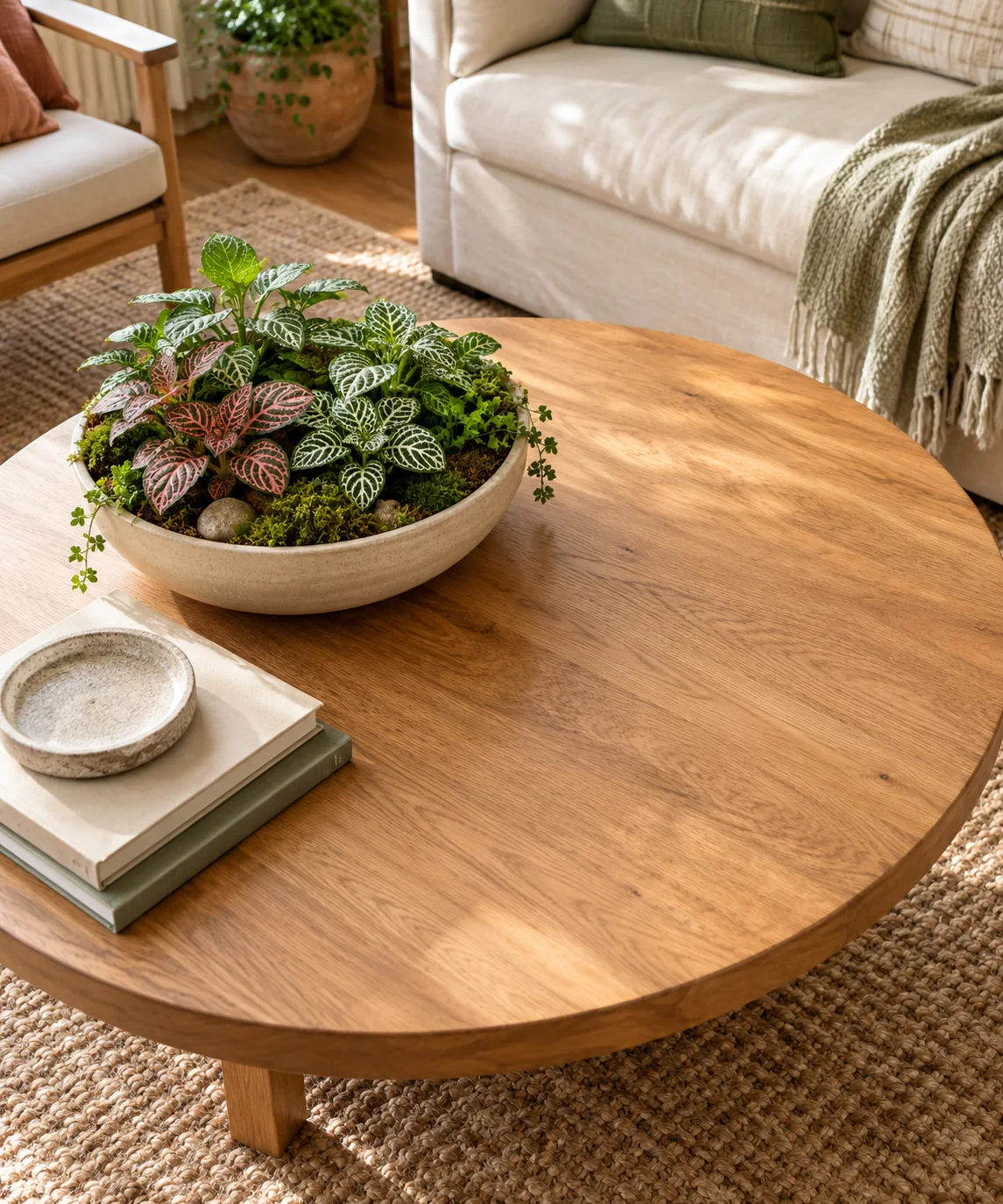
Choosing the Stoneware Basin
Select a wide, shallow stoneware dish measuring ten to twelve inches in diameter with a rim height between two and three inches. A low rim keeps plant roots contained while preventing the vessel from obstructing sightlines toward the television or conversation partners across the room. Matte neutral glazes like oatmeal, sand, or warm gray pair naturally with living greenery and blend seamlessly into diverse interior palettes without competing with the organic textures of the foliage.
Combining Contrasting Leaf Textures
Create visual richness within the single bowl by combining three distinct leaf forms: one delicate trailing variety, one broad-leaf texture, and one patterned specimen. For instance, pairing a miniature fittonia featuring fine vein patterning with a velvety peperomia and a tiny spreading pilea establishes immediate visual depth. Keep plant heights under six inches so the finished centerpiece feels grounded and compact rather than top-heavy or overwhelming to the modest coffee table surface.
Drop-In Pot Technique for Clean Living
Avoid planting directly into the stoneware bowl, which lacks drainage holes and risks root decay. Instead, keep each small plant in its individual two-inch or three-inch plastic nursery container and nestle them side by side inside the bowl. Conceal the plastic rims by tucking small pieces of preserved sheet moss around the perimeter. This drop-in method allows you to remove individual pots easily for watering, ensuring the decorative basin remains spotless and dry.
Surface Protection and Tabletop Proportions
Offset the assembled stoneware bowl onto one side of the coffee table, deliberately leaving the remaining half entirely open for drink coasters and media remotes. Stick self-adhesive felt or cork pads directly to the underside of the ceramic bowl before setting it down. Ceramic bases often feature unglazed, coarse foot rings that can scratch soft wood or lacquered surfaces over time when shifted or nudged during daily use.
Managing Centerpiece Maintenance and Sightlines
Check soil moisture weekly by lifting the individual nursery pots out of the bowl to feel their weight. Carry the pots to the kitchen sink for watering, allow excess moisture to drain completely for fifteen minutes, and wipe the pot bottoms dry before returning them to the stoneware dish. This disciplined habit prevents stagnant water from collecting at the base of the bowl, protecting root systems and safeguarding table surfaces.
YOUR STARTING POINT
A little checklist.
Original editorial guidance. Images are AI-generated concepts, not photographs of completed projects. Our sources and approach.
Questions to consider
Can I add succulents and tropical foliage into the same bowl?
It is best not to mix them. Even in separate drop-in pots, tropicals require moderate ambient humidity and regular watering, while succulents need intense light and dry conditions that coffee tables rarely provide.
How do I prevent preserved moss from rotting inside the dish?
Preserved moss does not need water. Remove the nursery pots entirely when watering so the moss stays completely dry, maintaining its texture and preventing sour odors from developing inside the stoneware basin.
What table shape works best with an offset centerpiece?
Rectangular and oval coffee tables suit offset arrangements best because their longitudinal surface clearly divides into distinct functional and decorative zones. Round tables require smaller bowls centered slightly off-axis to preserve usable perimeter.