Compact Home Offices · THE GUIDE
Style a Japanese-Inspired Floor Desk (Chabudai) in a Low-Ceiling Nook
Low-ceiling alcoves, attic knee-walls, and beneath-stair recesses frequently feel cramped with conventional office furniture. Standard task chairs and sixty-centimeter-high worktables visually consume vertical space, making sloped ceilings feel close. Shifting to a Japanese-inspired floor desk, or chabudai, completely reorients the vertical scale of the nook. By placing the primary work plane thirty to thirty-five centimeters above the floor, you significantly increase head clearance beneath low eaves. Pairing this low timber surface with a woven floor mat and supportive floor cushion creates an intentional, quiet work area that leaves the upper portion of a compact room visually open.
Jump to the checklist ↓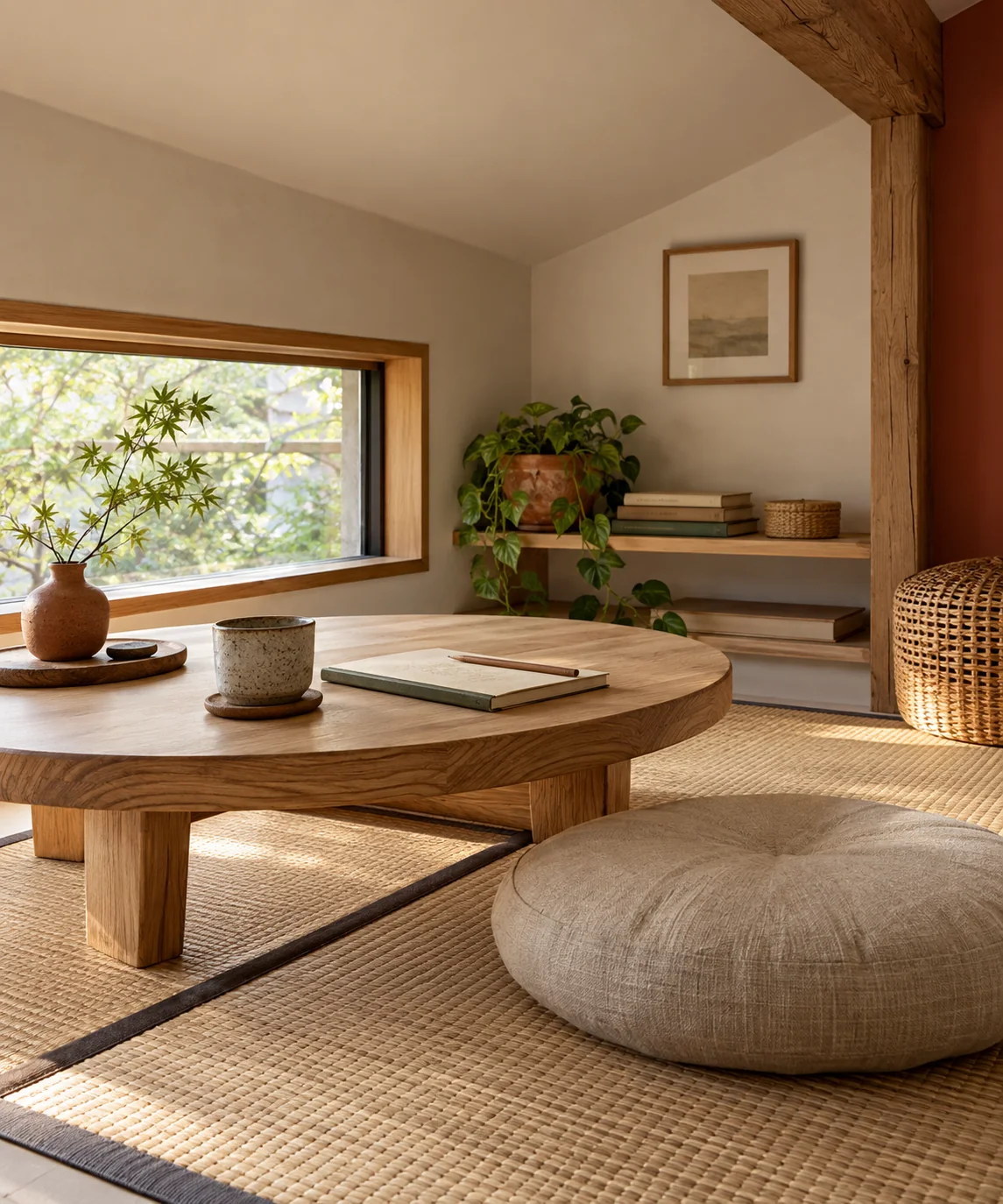
Measuring Vertical and Floor Clearances
A standard chabudai requires approximately thirty to thirty-eight centimeters of clearance from the floor to the tabletop underside. Before purchasing or repurposing a low table, measure your seated cross-legged height. Measure from the top of your chosen seat cushion to the crown of your head, then compare this against the lowest point of the angled ceiling to ensure comfortable headroom. Allocate an open floor footprint of at least ninety by one hundred twenty centimeters to allow for natural leg repositioning during extended tasks.
Layering Floor Mats and Seating Support
Hard flooring surfaces can feel unyielding during floor-based work. Lay a woven rush tatami mat, low-pile wool rug, or padded runner directly underneath the desk footprint to provide thermal separation and light cushioning. For seating, choose a firm buckwheat hull cushion, high-density foam zafu, or a supportive legless chair (zaisu) that offers back bracing. Positioning your seat cushion so your hips rest comfortably above your ankles helps maintain an upright sitting posture without feeling unstable on the floor.
Cable Management and Peripheral Layout
Floor-level setups require deliberate wire containment because power strips and charging cords sit directly in the primary line of sight. Place a lidded cable management box along the baseboard or tuck low-profile cord clips behind the desk frame. Keep desktop equipment minimal: a laptop, a compact stand to raise the screen closer to eye level, and an external low-profile keyboard. Keeping the desk perimeter clear preserves the calm, uncluttered aesthetic essential to low-profile workspaces.
Testing Ergonomics with Temporary Furniture
Before committing to dedicated floor furniture, test the low seating position using everyday household items. Place a sturdy coffee table or a firm, flat crate raised twenty-five to thirty-five centimeters onto an existing rug. Sit on folded blankets or firm sofa cushions for short working intervals. Observe how frequently you need to change leg positions between cross-legged, kneeling, or side-sitting. This trial clarifies whether floor seating suits your personal flexibility before investing in specialized pieces.
Maintenance and Practical Mobility Considerations
Rush mats and timber surfaces require regular, gentle maintenance. Vacuum natural woven mats along the grain using a soft brush attachment to avoid fraying fibers, and wipe finished wood surfaces with a dry or lightly dampened cloth. A key practical consideration is physical accessibility: sitting on and rising from the floor requires hip, knee, and ankle mobility. Those with joint stiffness or restricted mobility may find conventional seating more practical, and taking regular standing breaks remains beneficial.
YOUR STARTING POINT
A little checklist.
Original editorial guidance. Images are AI-generated concepts, not photographs of completed projects. Our sources and approach.
Questions to consider
Can I use an elevated laptop stand on a low floor desk?
Yes. Using an adjustable laptop riser brings the screen closer to eye level, helping you avoid looking downward and encouraging a more neutral neck position while seated on the floor.
What table height works best for a floor-level desk setup?
A tabletop height between thirty and thirty-eight centimeters suits most adults using an eight- to twelve-centimeter seat cushion. Verify that adequate clearance exists between the cushion and table apron for comfortable leg movement.
How can desktop clutter be minimized on a small chabudai?
Utilize shallow storage boxes, woven baskets, or a nearby low shelf for office supplies and notebooks. Storing non-essential items off the desk preserves an open working surface.