Sage and Cream Interiors · THE GUIDE
Style a Kitchen Baking Station on a Petite Rolling Utility Cart
Limited counter space can make regular home baking cumbersome, especially when retrieving bulky stoneware and dry goods from deep cabinetry. A compact three-tiered utility cart finished in muted sage introduces a dedicated, mobile preparation hub that fits neatly beside cream cabinetry. By grouping measuring tools, flour jars, and mixing bowls onto wheels, you eliminate repeated trips across the kitchen and clear working surfaces. This mobile layout allows you to wheel heavy supplies directly beside the table during dough preparation, then roll everything back into an unused nook or pantry corner once tasks finish.
Jump to the checklist ↓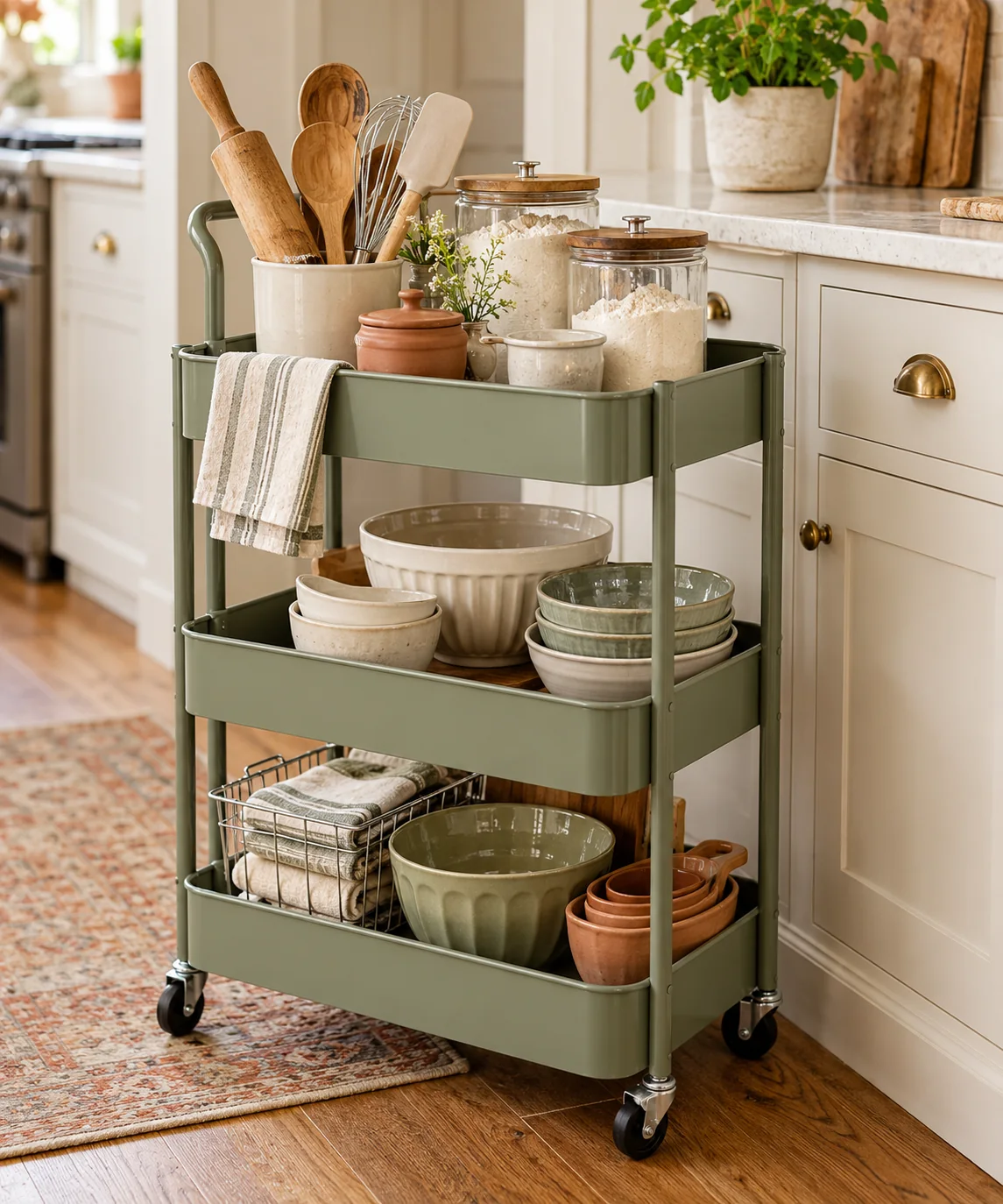
Weight Distribution and Manufacturer Load Ratings
Organizing heavy baking tools on the lowest tier lowers the cart's center of gravity and helps prevent wobbling when the cart is repositioned. Reserve the bottom shelf for dense ceramic mixing bowls and bulk containers of flour or sugar. Mid-weight items, such as liquid measuring cups and stacked pie plates, fit well on the middle shelf, while the top shelf holds lightweight items like spice tins and baking paper rolls. Always check the manufacturer-specified weight rating for each individual shelf, as exceeding published load thresholds can strain wheel casters and distort lightweight metal or plastic frames.
Container Sizing and Vertical Shelf Clearances
Standard three-tiered utility carts feature relatively compact shelf depths, requiring carefully proportioned dry-storage containers. Select square or rectangular food-safe containers with cream or natural wood lids to maximize the interior footprint without leaving awkward gaps. Measure the vertical gap between tiers before purchasing canisters to ensure you have sufficient clearance to lift jars in and out without scraping the shelf above. Label canister lids clearly so you can identify flours, starches, and sugars from a standing overhead view.
Organizing Small Tools and Spatulas
Rolling carts can quickly become cluttered if smaller baking utensils are left loose on shelves. A heavy ceramic crock in a soft cream glaze placed on the top tier keeps silicone spatulas, pastry brushes, and wooden rolling pins upright and organized. You can also utilize exterior side rails by hanging lightweight utensil hooks for measuring spoons and small whisks. This vertical arrangement keeps delicate silicone and wire tools from tangling while preserving flat shelf space for active recipe staging.
Traffic Flow and Kitchen Workflow Management
Position the rolling cart where it supports your baking prep without constricting primary movement paths between the sink, refrigerator, and oven. When you settle the cart beside cream counters or a work table, engage the caster wheel locks to prevent unexpected movement while scooping dry ingredients or stirring dough. If your kitchen layout is particularly compact, consider storing the baking station in an adjacent pantry nook or dining alcove, wheeling it into your prep space only during active baking sessions.
Surface Care and Powder Maintenance
Baking carts inevitably accumulate loose flour, cocoa powder, and stray sugar grains during routine preparation. Line wire or perforated metal shelves with smooth, food-safe silicone mats or wipeable plastic liners cut to fit each tray. These removable layers prevent fine powders from falling through into lower storage bins. For routine cleaning, sweep away dry powders with a dry microfiber cloth before wiping surfaces with a mild soap solution, and dry painted metal frames promptly to protect finishes against moisture.
YOUR STARTING POINT
A little checklist.
Original editorial guidance. Images are AI-generated concepts, not photographs of completed projects. Our sources and approach.
Questions to consider
Can a utility cart handle the weight of an electric stand mixer?
Domestic rolling carts vary widely in their load ratings, and operating a vibrating stand mixer on a wheeled cart presents an instability hazard. Check the manufacturer's load limit for your cart, and use fixed, stable countertops for operating heavy appliances.
How do I prevent glass jars from rattling when moving the cart?
Place non-slip silicone liners beneath jars and group canisters in small, padded organizing bins. This absorbs rolling vibrations and keeps glass edges from clattering together as the cart rolls over flooring transitions.
Where should flat baking sheets and rolling boards be kept?
If the cart features exterior hanging accessories or side slots, slide thin cutting boards or sheet pans vertically along the frame. Otherwise, keep oversized flat items in vertical cabinetry dividers to avoid tipping the cart's balance.