Dining Nooks · THE GUIDE
Style a Kitchen Radiator Cover to Double as Nook Backing
Kitchen radiators frequently occupy perimeter wall space that could otherwise accommodate dining furniture, presenting a challenge when arranging compact breakfast nooks. Positioning tables or seating near exposed heating elements requires careful planning to maintain room warmth and prevent thermal damage to furnishings. A properly designed, well-vented radiator casing can provide a physical barrier between hot surfaces and dining furniture. Ensuring adequate convective circulation, checking local fire safety codes, maintaining valve accessibility, and choosing heat-tolerant materials are necessary steps to keep dining spaces comfortable without compromising heating performance.
Jump to the checklist ↓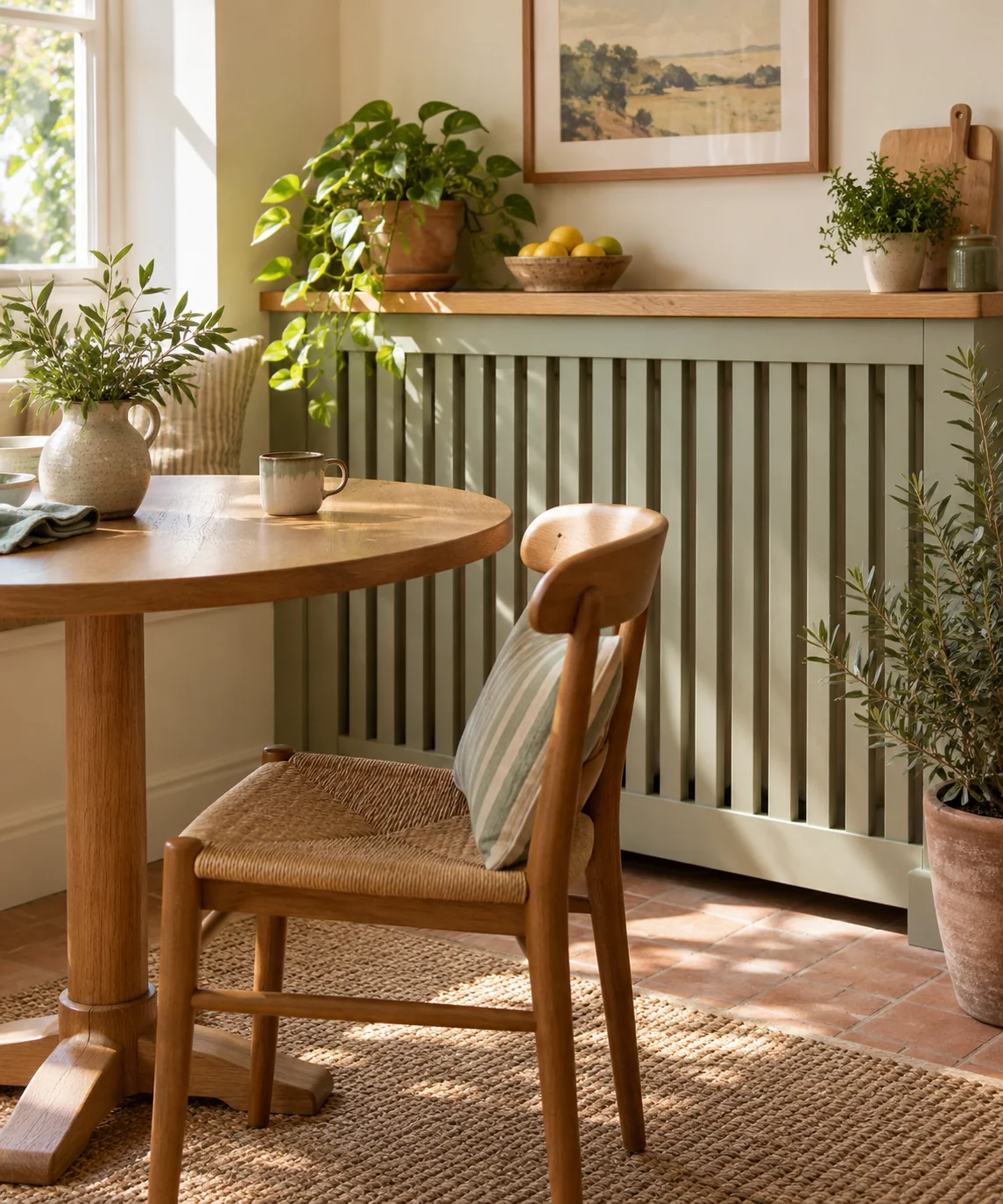
Prioritizing Convective Airflow and Heating Safety
Residential radiators transfer warmth into living spaces primarily through natural air convection, drawing cooler air upward across heated internal surfaces. Enclosing a radiator or placing large furniture directly against it can restrict this convective cycle, leading to uneven room temperatures and increased heating system strain. Before constructing or purchasing a radiator cover, consult the heating unit manufacturer guidelines and review local building safety regulations regarding heating equipment enclosures. The enclosure must incorporate generous lower intake openings and open upper venting to allow air to circulate freely without trapping intense heat against the wall.
Maintaining Separation Between Seating and Radiators
Placing dining seating adjacent to a heated unit demands deliberate spatial separation. Direct, prolonged exposure to heat can degrade upholstery foams, dry out synthetic fabrics, and cause wood frames to loosen at joinery points. If arranging a dining bench or chairs near a radiator casing, maintain an open air gap between the back of the seating and the enclosure face. Open-back dining chairs or movable benches allow ambient air currents to rise freely, preventing heat buildup and avoiding uncomfortable thermal contact for seated diners.
Evaluating Enclosure Materials and Manufacturer Standards
Radiators experience continuous heating and cooling cycles throughout cold months, exposing surrounding cabinetry materials to significant thermal stress. Unsealed lumber can warp or twist, while inferior composite boards may degrade or release unpleasant chemical odors when warmed. If selecting a radiator cover, choose materials manufactured and rated for proximity to heat, such as powder-coated metal grilles or kiln-dried hardwood framing. Any paints, stains, or clear finishes must be rated by their manufacturers for sustained radiator temperatures and allowed to cure completely before heating systems are engaged.
Limitations of Radiator Ledges in Dining Areas
While the top shelf of a radiator casing provides a convenient architectural ledge, active heating cycles make this surface warm and dry. It should never be used as a staging area for perishable food, butter dishes, dairy products, or beverages, as the elevated temperature can accelerate spoilage. Similarly, avoid placing electronics, charging cords, wax candles, or delicate potted houseplants on or above active radiator tops. Limit shelf use to heat-tolerant, non-combustible decorative ceramics or keep the surface clear to ensure rising warm air currents remain completely unobstructed.
Unrestricted Access to Valves and Bleed Points
Any enclosure placed around heating equipment must permit immediate, unhindered access for seasonal maintenance and operational adjustments. Thermostatic radiator valves require unrestricted exposure to room air currents to measure ambient room temperatures accurately; enclosing a thermostat head inside a poorly vented casing causes it to register artificial heat pockets and shut off prematurely. Ensure the cover features accessible cutouts, removable front panels, or dedicated service hatches so shutoff valves and air bleed screws can be reached quickly without moving heavy dining furniture.
YOUR STARTING POINT
A little checklist.
Original editorial guidance. Images are AI-generated concepts, not photographs of completed projects. Our sources and approach.
Questions to consider
Does placing dining furniture in front of a radiator affect heating performance?
Placing solid, upholstered furniture flush against a radiator impedes natural convection, trapping heat and reducing the efficiency of the heating system. Open-frame chairs or furniture kept at a sensible distance allow warm air to circulate properly.
Why must thermostatic radiator valves remain exposed outside of covers?
Thermostatic valves regulate heat output by sensing room air temperature. Enclosing the sensor head inside a cabinet traps warmth, causing the valve to register false high readings and prematurely shut down heating to the space.
What materials are suitable for use near residential heating radiators?
Powder-coated metals, heat-tolerant architectural grilles, and stable kiln-dried hardwoods designed for radiator covers are suitable options. Avoid heat-sensitive plastics, low-grade vinyls, or unrated finishes that can warp, crack, or release odors.