Warm Neutral Living Rooms · THE GUIDE
Style a Long Window Ledge with Low Stoneware Succulent Planters
Narrow window ledges provide prime natural light that is often left underutilized in small apartments. Styling a ledge with low-profile stoneware succulent planters introduces organic textures and living greenery without consuming precious coffee table or credenza space. Low stoneware bowls maintain an unobstructed window line, allowing daylight to flood into warm neutral living rooms. Because window sills experience direct solar radiation and localized temperature fluctuations, selecting the right vessels and plant arrangements is essential. A deliberate arrangement creates an architectural focal point while safeguarding woodwork from moisture and preserving easy access to window hardware.
Jump to the checklist ↓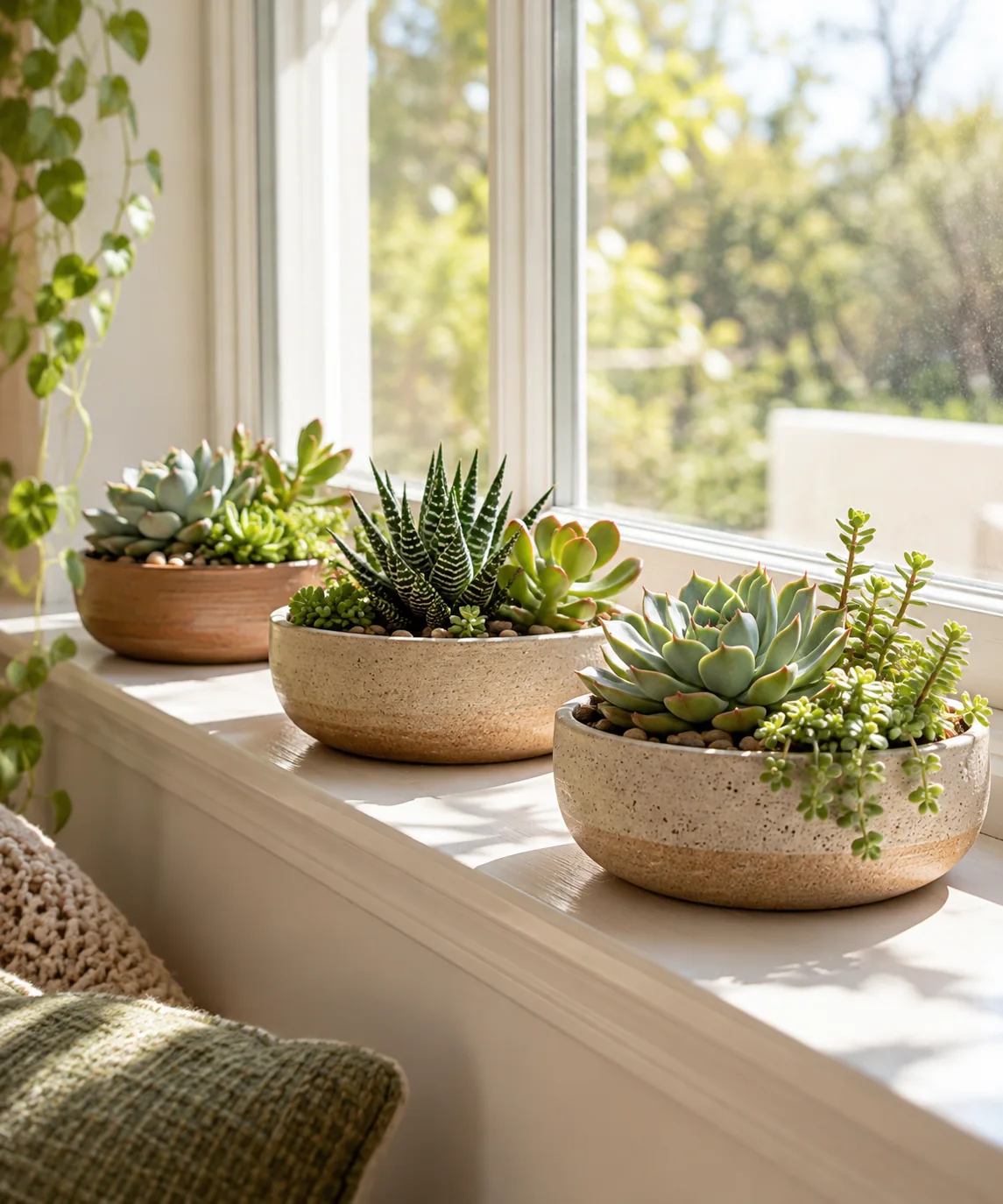
Assessing Ledge Depth and Planter Stability
Before selecting stoneware, measure the usable flat depth of the window ledge to confirm the planter base will sit entirely supported on the level casing. Vessels should rest securely without overhanging the front edge or balancing on sloped sashes, decorative moldings, or uneven trim where everyday vibrations or opening the window could dislodge them. For narrower ledges, shallow troughs, elongated oval shapes, or small individual pots often fit the available depth more reliably than broad circular bowls.
Light Exposure and Surface Warmth
South- and west-facing windows often supply the bright direct light succulents need, but window glass can warm up quickly during peak afternoon hours. Direct sun shining through glazing can heat shallow potting mix regardless of container material. Monitor the container and soil temperature during hot afternoons, and provide sheer filtering or pull containers slightly back from radiant glass panes if delicate foliage shows signs of sun bleaching or heat stress. Rotating pots occasionally encourages balanced growth toward the light.
Moisture Protection for Woodwork
Protecting window casings, paint, and finished wood from moisture is critical when displaying potted plants on interior ledges. Succulents require drainage holes to prevent root rot, making reliable, non-porous saucers or sealed trays essential. Choose glazed ceramic trays or waterproof drip saucers that prevent moisture from seeping through porous stoneware onto the wood underneath. Placing thin, non-abrasive cork or felt pads under saucers helps protect finishes from scratches, but inspect beneath them periodically to verify no condensation or overflow has gathered.
Maintaining Clear Window and Blind Operation
Ensure the placement of low-profile bowls does not interfere with window hardware or daily operation. Planters should remain clear of sash locks, tilt latches, and sliding tracks so you can open the window for ventilation without lifting or rearranging heavy pottery. Check the drop path of roller blinds, roman shades, or drapery hems to confirm the fabric hangs freely without catching spiky succulent leaves or tipping over smaller arrangements when drawn.
Seasonal Temperature Changes and Plant Care
Window ledges experience noticeable temperature swings across the year. During cold winter months, window glass cools substantially, creating localized cold pockets that can stress draft-sensitive succulent varieties. Check the sill on cold evenings and move plants slightly inward toward room temperature if drafts are significant. Water succulents only after the growing medium has dried thoroughly through its entire depth, assessing soil dryness rather than relying on a rigid calendar.
YOUR STARTING POINT
A little checklist.
Original editorial guidance. Images are AI-generated concepts, not photographs of completed projects. Our sources and approach.
Questions to consider
Can I grow culinary herbs on this window ledge instead?
Herbs can grow if sunlight is adequate, but they generally require deeper soil volumes and frequent watering that increases the risk of moisture runoff on finished woodwork. Compact succulents in shallow dishes remain simpler to manage on narrow ledges.
How often should succulents on a window sill be watered?
Water thoroughly only after the potting mix has completely dried through the full depth of the container. Checking the mix with a wooden probe or noting container weight provides a more reliable indicator than following a set number of days.
Why use matte stoneware rather than glazed porcelain?
Matte, earthy stoneware provides a textured, low-sheen look that pairs naturally with neutral interiors and softens the appearance of minor mineral deposits left behind by ambient dust or water.