Indoor Plant Styling · THE GUIDE
Style a Low Window Bench as an Indoor Botanical Hearth
A low-profile window bench provides an ideal surface for staging an indoor plant collection at a natural, eye-level threshold. Emulating the visual warmth of a traditional fireplace hearth, this low arrangement relies on dense clusters of varying foliage to anchor the room. By grouping planters below sill level, you create an uninterrupted flow of natural daylight while transforming an underused horizontal surface into a dynamic interior garden. Planning this feature requires careful attention to furniture weight tolerances, light exposures, floor clearances, and moisture protection to maintain both structural safety and thriving, manageable greenery.
Jump to the checklist ↓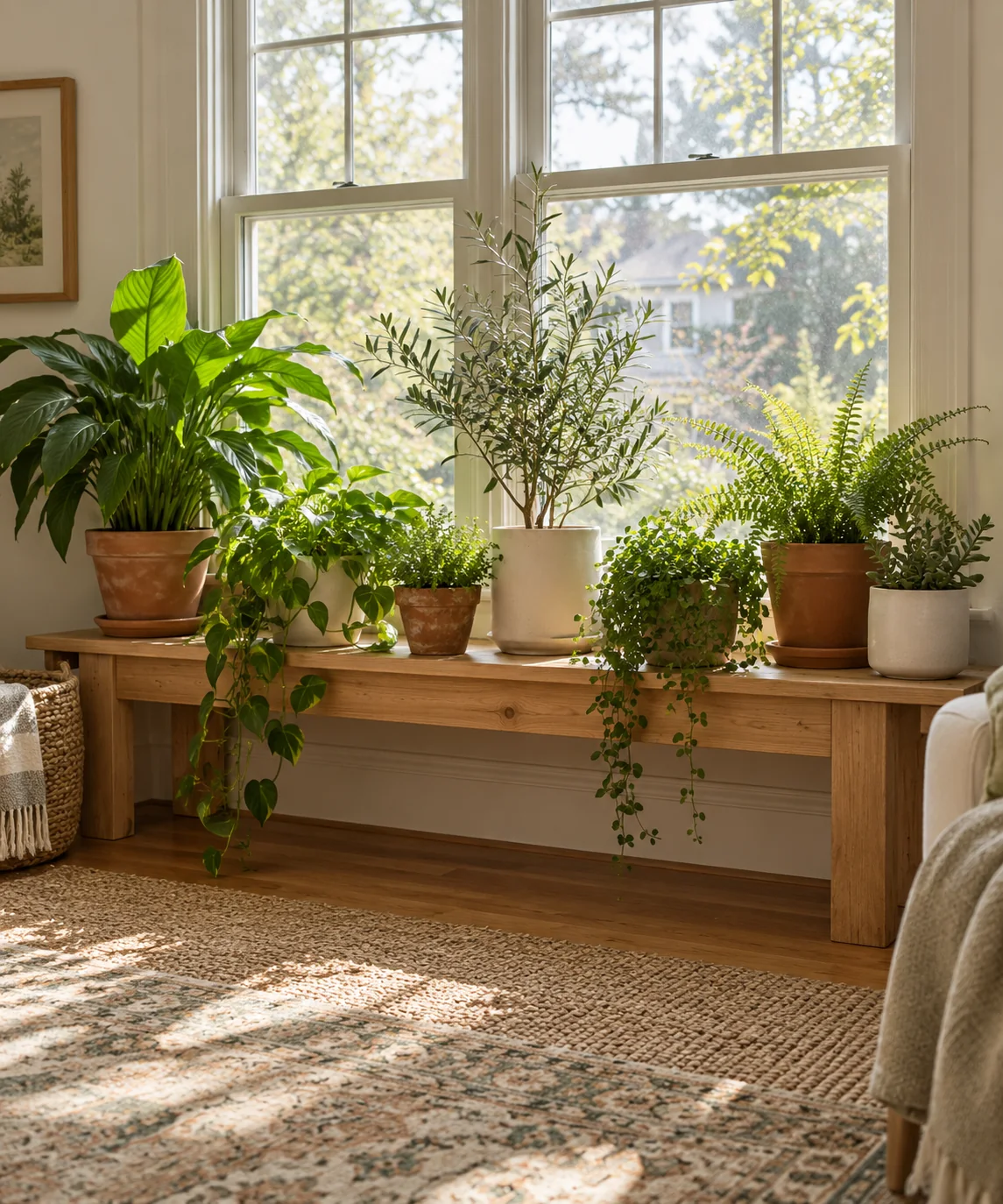
Assessing Structural Load and Window Clearances
Before arranging planters on any window bench, consult the furniture manufacturer’s published weight limits, or seek qualified guidance if the bench is a built-in unit. Potted plants, ceramic containers, and damp growing media add considerable weight once watered. Do not attempt to guess load capacity based on visual sturdiness alone. Distribute containers across the bench according to the manufacturer's load recommendations rather than concentrating mass in a single area. Additionally, maintain enough open clearance between foliage and the window sash so the window can open, close, and latch freely without snagging stems or leaves.
Layering Plant Heights for Visual Depth
Create a balanced arrangement by layering plant heights rather than lining containers in a single rigid row. Position taller upright plants toward the rear corners to frame the window casing without blocking central daylight. Place compact, mid-height foliage along the center line, and position trailing or spreading varieties near the front edge where light filters through. If pots share similar heights, introduce subtle variation by resting secondary containers on low, flat cork coasters or manufacturer-approved risers, ensuring every tier remains steady and stable.
Protecting Wood Surfaces from Water and Condensation
Unglazed terracotta and decorative ceramic pots can transfer moisture directly to finished wood through condensation and bottom drainage. Pair each planter with a fully waterproof, glazed saucer or non-porous secondary tray. To add an extra layer of protection, consider laying a continuous, breathable silicone or felt-backed waterproof runner across the bench surface prior to placing saucers. This barrier catches accidental splashes during routine care, guards against scratches from coarse pottery bases, and prevents moisture rings on finished timber surfaces.
Balancing Natural Light Across the Foliage Plane
A bench placed below glazing receives varying intensity depending on sun angle, orientation, and season. Arrange foliage according to individual exposure tolerances, placing sun-tolerant varieties where daylight is brightest and shade-tolerant selections where light is more diffused. Rotate containers periodically by a quarter turn to promote even growth and prevent plants from leaning excessively toward the glass. Check foliage regularly for dust buildup, wiping leaves gently with a damp cloth so the plants can capture ambient light effectively.
Maintaining Perimeter Space and Room Traffic Flow
Because window benches sit low to the ground, keep spreading foliage trimmed back so stems do not trail into walking paths or brush against nearby heating registers. Position the bench to preserve ample walking space around adjacent seating and walkways, allowing easy access for routine watering and household cleaning. Keeping clear clearance around the bench prevents passersby from bumping pots, protects delicate stems from snagging on clothing, and ensures saucers are not kicked accidentally during daily activities.
YOUR STARTING POINT
A little checklist.
Original editorial guidance. Images are AI-generated concepts, not photographs of completed projects. Our sources and approach.
Questions to consider
Can I use plastic saucers instead of glazed ceramic trays?
Rigid, non-porous plastic saucers provide effective moisture protection beneath planters. Inspect beneath saucers periodically to ensure condensation has not gathered between the plastic base and the wooden bench surface.
How do I protect plants from cold glass during winter?
Position foliage far enough away from the glass to prevent leaves from making direct contact with cold panes. During extreme temperature drops, close interior blinds or curtains between the glazing and the plants, or temporarily move sensitive species away from drafty window seams.
Will watering plants directly on the bench cause long-term humidity issues?
Routine watering in well-ventilated rooms does not generate problematic humidity. To prevent water damage, always empty standing runoff from catch saucers shortly after watering, which keeps roots healthy and stops moisture from pooling against surrounding furniture.