Laundry Space Organization · THE GUIDE
Style a Mobile Folding Cart with Lower Mesh Shelves
Transferring laundry from appliance drums to bedroom storage often turns into an inefficient cycle of overloaded baskets and re-wrinkled garments. A mobile folding cart equipped with a solid upper work surface and open lower mesh shelves transforms this routine into a streamlined, one-stop staging station. By sorting folded items immediately as they leave the dryer, you reduce double-handling and transport clean loads effortlessly across hallways. Structuring each level with clear categories ensures clothes, linens, and accessories stay orderly, turning a utilitarian rolling cart into a durable, functional hub for the entire household.
Jump to the checklist ↓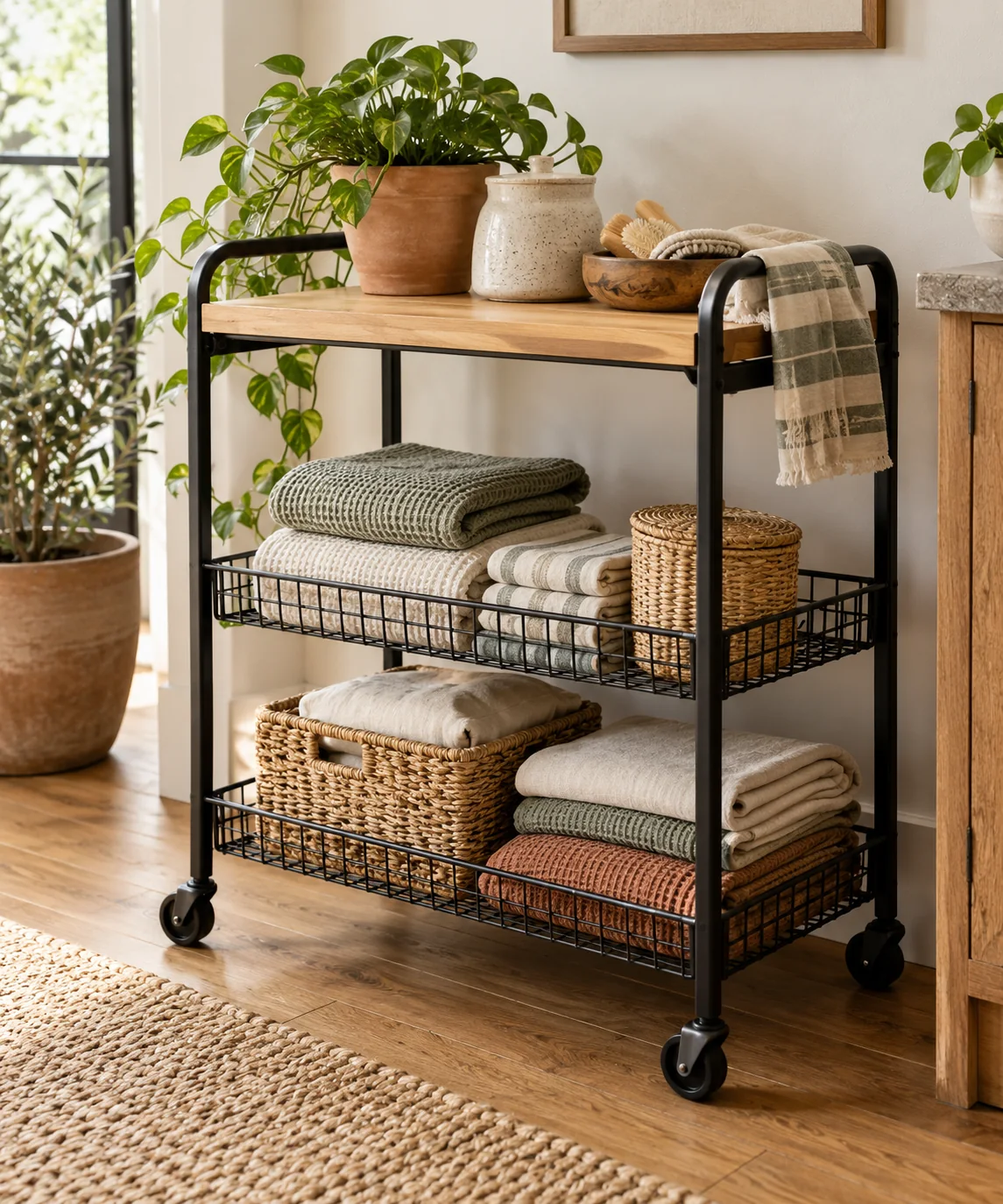
Setting Up the Primary Folding Surface
The cart’s top level should function primarily as a flat staging area rather than permanent storage. A solid wood or smooth laminate top measuring at least sixteen by twenty-four inches gives you enough space to fold shirts, press pant seams flat, and stack matching towel sets. Keep this upper deck completely cleared between laundry days so it remains instantly accessible. If space permits, place a small fabric pressing pad nearby to catch quick touch-ups before garments are distributed to wardrobes.
Organizing Lower Mesh Shelves by Destination
Assign specific destinations to the lower wire or mesh shelves to prevent mixed stacks from toppling during transit. Use the middle shelf for delicate items, lightweight tees, and children’s clothing folded into shallow canvas open bins. Reserve the bottom shelf for heavier items like bedsheets, denim, or folded bath towels that provide a stabilizing lower center of gravity. Wire mesh shelves permit passive air circulation, ensuring residual heat and humidity from freshly dried fabrics dissipate quickly without trapping stale odors.
Navigating Floor Clearances and Doorways
Before purchasing or styling a rolling cart, measure interior door frames, hallway turns, and the space between your washer and dryer. Most residential doors offer thirty to thirty-two inches of clear opening, so a cart width under twenty-two inches glides easily between rooms. Opt for multi-directional caster wheels with rubberized treads to protect hardwood and tile flooring from scrapes. Ensure the cart includes locking wheel mechanisms on at least two casters to keep the unit stationary while folding linens against the top.
Temporary Staging vs Long-Term Clutter
A mobile folding cart works effectively only when treated as an active conduit rather than a static holding pen. Leaving sorted clean clothes parked on the mesh tiers for several days invites dust accumulation and defeats its labor-saving purpose. Establish a household routine where the cart is wheeled into bedrooms, emptied directly into dresser drawers, and returned immediately to the laundry nook. Keeping the cart empty when idle preserves precious square footage in tight utility corridors.
Cleaning and Mechanical Maintenance
Rolling carts collect lint, stray threads, and ambient utility room dust, particularly around the lower wheel axles and mesh wire corners. Once a month, wipe down the wooden folding deck with a damp microfiber cloth and vacuum the wire mesh trays using a brush attachment. Inspect the caster wheels periodically to remove wrapped threads or hair that can jam the rotational bearings. Tighten assembly bolts with a standard hand wrench every six months to eliminate wobble caused by heavy laundry loads.
YOUR STARTING POINT
A little checklist.
Original editorial guidance. Images are AI-generated concepts, not photographs of completed projects. Our sources and approach.
Questions to consider
What caster wheel material works best for domestic laundry carts?
Soft polyurethane or rubber-coated casters provide the quietest roll across interior flooring. Hard plastic wheels can mark hardwood, click loudly over tile grout lines, and slip unexpectedly on smooth surfaces when the cart is stationary.
How can I stop small items falling through wire mesh shelves?
Insert shallow, breathable felt or canvas storage bins into the mesh tiers. These keep socks, undergarments, and small washcloths contained while retaining the structural airflow benefits of the open-wire cart construction without adding dead weight.
Can this cart hold heavy laundry detergents on the top surface?
Avoid storing heavy bulk liquids on the folding top. High-mounted weight raises the center of gravity, increasing tipping risks during transit. Reserve top decks for light textile work and store liquids in stable, dedicated cabinetry.