Bookshelf Styling · THE GUIDE
Style a Modest Balcony Sunroom Shelf with Terracotta Pots and Garden Books
An enclosed balcony or sunroom provides a practical setting for a compact gardening station that doubles as an organized display. A freestanding, slatted wooden shelving unit offers accessible storage for dry pots and garden references while allowing air circulation around natural materials. Because balconies and transitional sunrooms are subject to building regulations and environmental exposure, planning requires attention to weight distribution, reversible layouts, and safety clearances. By selecting manageable clay vessels, protecting paper guides from direct sun, and keeping transit paths open, you can create a functional utility space that aligns with building guidelines.
Jump to the checklist ↓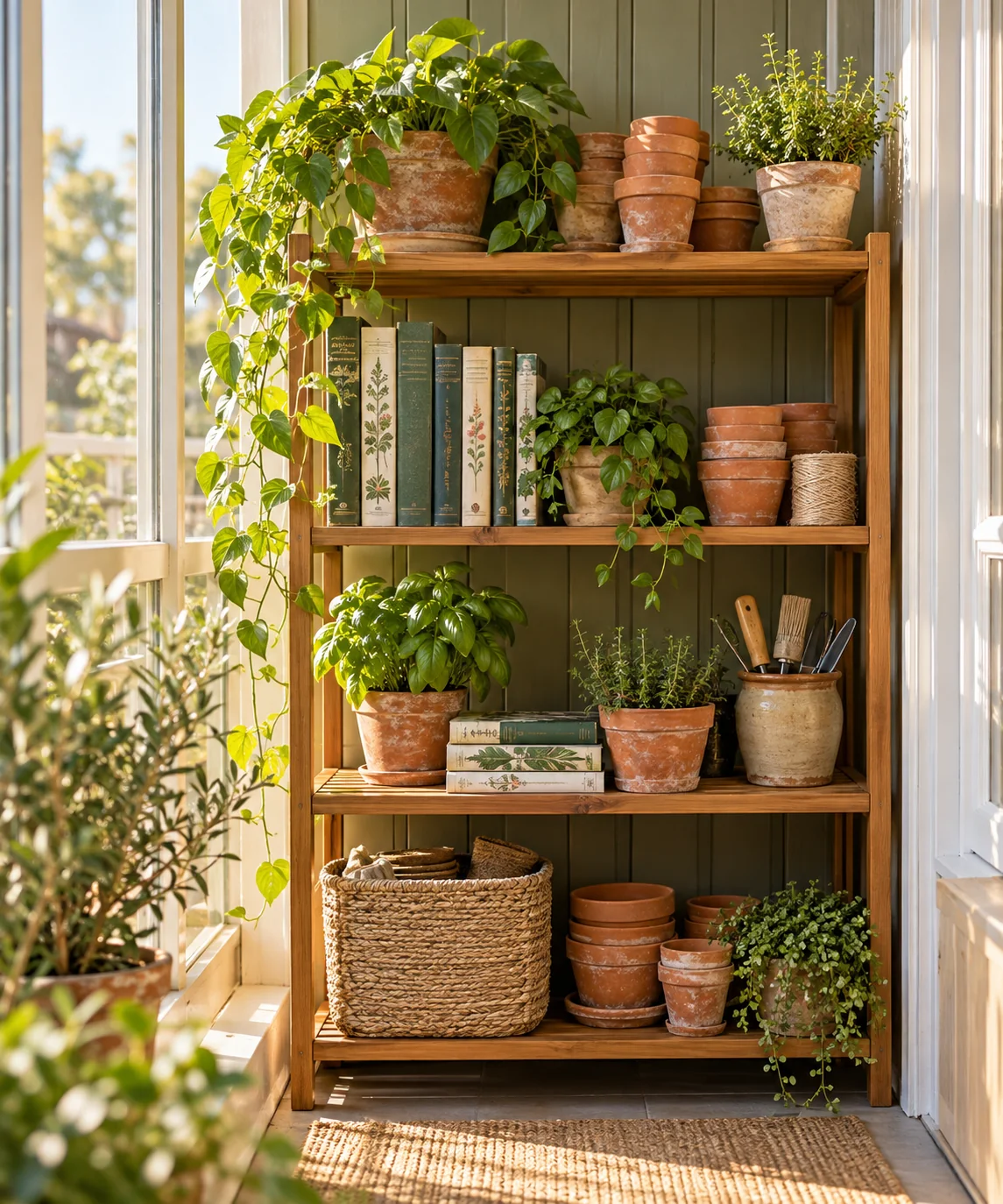
Reviewing Balcony Guidelines and Spatial Clearance
Before introducing furniture to a balcony or enclosed sunroom, review building bylaws, lease rules, and local fire codes regarding clear egress routes. Freestanding shelves must never obstruct doorway thresholds, emergency escape paths, or window access. Check structural load limits with property management or qualified building professionals if planning to store substantial materials. Position the shelving unit on a level, stable surface away from swinging doors and sliding track mechanisms to ensure safe daily movement.
Stacking Dry Terracotta Pots by Proportion
Clean, dry terracotta containers add functional utility and warm texture to sunroom shelving when arranged with care. Group empty seedling pots by diameter and nest them in low columns of three or four to maintain stability. Check that the base of each stack sits securely across the shelf slats without wobbling. To respect furniture weight limits, distribute clay containers evenly across shelves rather than concentrating them on a single tier, and store larger, heavier planters near the bottom.
Protecting Garden Books and Planting Records
Sunrooms experience intense temperature shifts and strong ultraviolet exposure that can fade cover art, dry out adhesives, and warp paper bindings. Store working manuals, regional planting calendars, and notebooks on lower or shaded tiers away from continuous direct sunlight. Stand paperbacks upright between sturdy dividers or lay larger reference guides flat in modest stacks. Keep all printed matter strictly separated from damp utility tasks or misting zones to avoid moisture damage.
Organizing Small Accessories with Reversible Storage
Small gardening sundries such as wooden plant labels, twine, and seed packets stay organized when gathered into portable containers. Use shallow wooden trays, metal caddies, or wide ceramic dishes to keep small items from slipping through slatted shelving. Wrap loose twine around wooden spools to prevent tangling, and store plant markers upright in a dedicated dry pot. This modular, reversible storage keeps workspaces tidy while allowing you to move supplies indoors when seasonal weather shifts.
Seasonal Maintenance and Environmental Checks
Enclosed sunrooms and balconies collect airborne dust, pollen, and humidity fluctuations throughout the year. Clear the shelving unit periodically to inspect the condition of the wood, checking manufacturer maintenance guidelines for appropriate cleaning or oiling. Wipe slats with a lightly dampened cloth and dust dry clay pots before mineral residues form. Regularly review stored materials to ensure seasonal guides remain relevant and excess clutter does not accumulate on the unit.
YOUR STARTING POINT
A little checklist.
Original editorial guidance. Images are AI-generated concepts, not photographs of completed projects. Our sources and approach.
Questions to consider
Can I store active potted plants directly alongside books on this shelving?
It is best to separate active plants from paper materials on open shelving. Routine watering, soil drainage, and natural transpiration create localized humidity that can buckle book bindings and encourage mold. Keep living plants on dedicated waterproof surfaces or plant stands.
How do I secure small pots against drafts when sunroom windows are open?
Keep nested stacks short—typically no more than three or four pots high—and place them inside a shallow wooden tray or rimmed crate. The tray edges provide lateral support and prevent individual containers from shifting or tipping in breezy conditions.
What should I check regarding balcony weight allowances before styling shelves?
Consult your building's property management or condominium rules for specific floor load limits and balcony storage policies. Avoid concentrating multiple heavy ceramic or stone items in one zone, and select furniture and accessory quantities that remain comfortably within verified building limits.