Sage and Cream Interiors · THE GUIDE
Style a Narrow Galley Pantry With Tone-on-Tone Canvas Bins
A narrow galley walk-in pantry demands disciplined planning to avoid visual clutter and blocked walkways. In compact layouts, excessively deep shelves swallow staple ingredients and crowd the corridor, while chaotic packaging quickly overwhelms the space. Adopting a quiet, tone-on-tone palette using cream-painted shelving and soft sage canvas bins establishes a cohesive, orderly storage system. Pairing shallow shelf profiles with structured fabric containers turns a tight utility corridor into an efficient dry-goods station where essentials remain accessible, categorized, and easy to inventory without impeding movement through the room.
Jump to the checklist ↓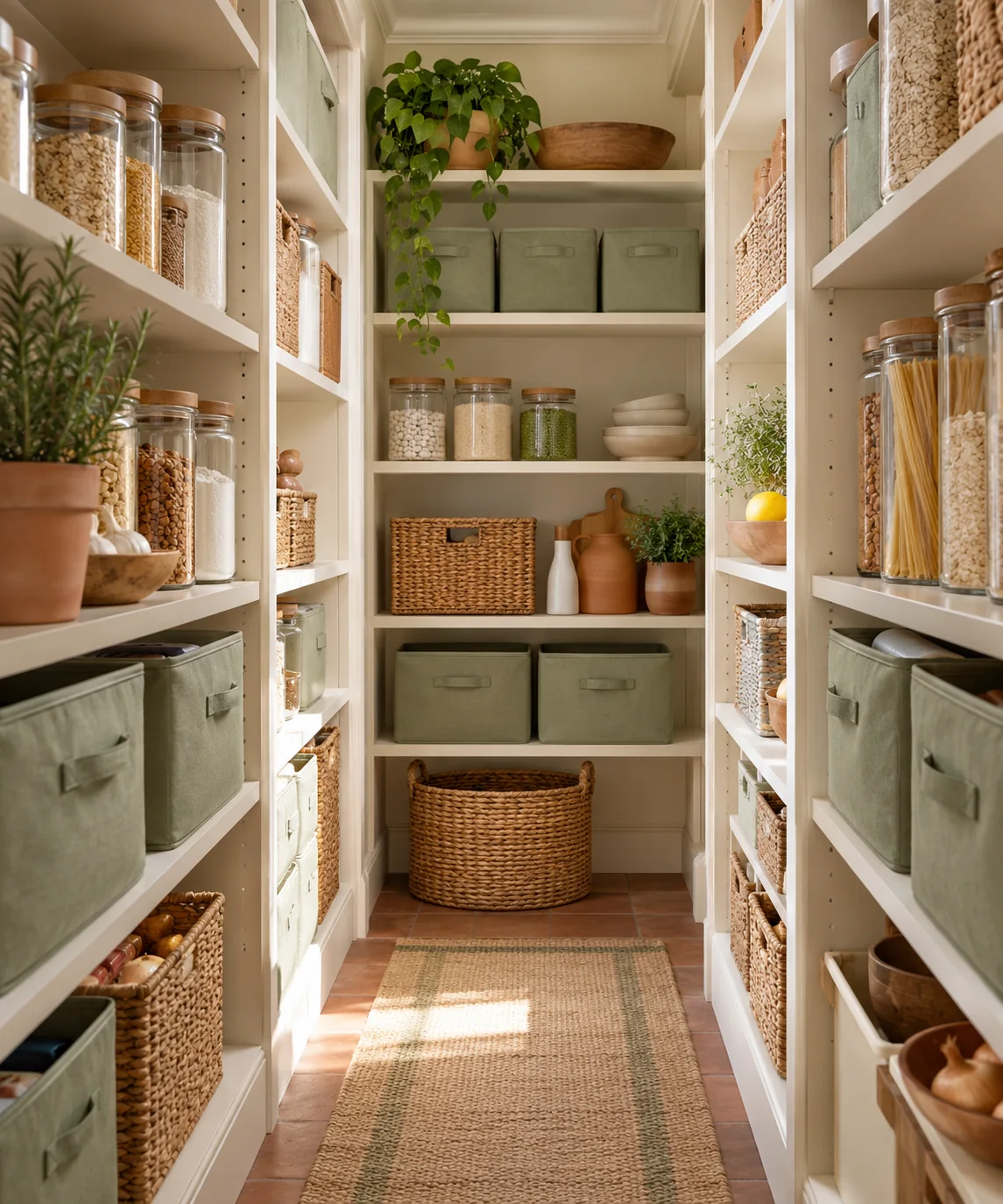
Planning Shelf Depths and Walkway Clearance
In a narrow galley pantry, shelf depth directly determines everyday mobility. Deep shelving reduces usable corridor width and encourages forgotten items to accumulate in back corners. Installing shelves between eight and twelve inches deep along the primary storage wall typically preserves sufficient aisle space for comfortable turning, reaching, and carrying baskets. Before mounting permanent brackets or assembling freestanding shelving units, verify that your pathway accommodates open cabinet doors, step stools, and natural walking clearances. Shallow tiers keep canvas bins and spice jars aligned flush near the front edge, eliminating hidden zones.
Selecting and Arranging Tone-on-Tone Canvas Bins
A tone-on-tone palette softens high-density storage by balancing cream woodwork with muted sage canvas. When sourcing bins, select models with rigid internal base and side panels so the fabric walls do not bow under regular handling. Position medium sage bins across middle eye-level shelves to ground the design, reserving paler cream containers for upper shelves to maintain an airy feel overhead. Fabric bins eliminate the harsh scraping associated with wire or sheet metal baskets on painted finishes. Grouping similar dry goods—such as baking ingredients, bagged snacks, and boxed grains—ensures unified visual rhythm.
Balancing Vertical Tier Spacing and Weight Distribution
Pantry efficiency relies on graduating vertical shelf intervals to match real inventory dimensions. Check manufacturer weight ratings for all shelf spans and bracket supports prior to loading heavy dry goods. Reserve lower shelves for bulky, high-mass staples like bulk rice containers, canned goods, or beverage reserves, leaving twelve to fourteen inches between tiers. Mid-height shelves function best with tighter eight- to ten-inch clearances tailored to daily decanted canisters and modular canvas bins. Place lightweight paper goods or occasional specialty items on high upper shelves, ensuring access remains safely manageable with a stable household step stool.
Labeling Strategies for Rapid Pantry Inventory
Because opaque canvas organizers hide visual clutter, legible exterior labeling is necessary for quick household navigation. Tie matte cardstock tags to bin pull handles using neutral cotton cord, or slide printed labels into built-in clear label windows. Use consistent, clean lettering to make items easy to identify under standard overhead pantry lighting. Removable labels allow containers to be reassigned as dietary routines change without damaging the fabric. Combining labeled canvas bins for packaged goods with transparent airtight glass jars for everyday grains creates a balanced layout that makes inventory levels apparent at a glance.
Hygiene, Airflow, and Fabric Container Maintenance
Pantry storage requires careful moisture and pest management to safeguard food quality. Store whole produce, such as potatoes and onions, in well-ventilated slatted crates rather than solid fabric bins, which can trap humidity and odors. Keep all dry pantry goods in factory-sealed packages or airtight inner containers before placing them in canvas bins to deter pantry pests and prevent grease transfer. Periodically empty bins to vacuum loose crumbs along interior seams and wipe shelf surfaces with a lightly dampened microfiber cloth. Ensure all fabric surfaces and painted shelves dry completely before restocking.
YOUR STARTING POINT
A little checklist.
Original editorial guidance. Images are AI-generated concepts, not photographs of completed projects. Our sources and approach.
Questions to consider
How can I clean food spills or dust from canvas pantry bins?
Empty the bin completely and use a narrow vacuum nozzle to remove loose dust or flour particles from the corners. For light marks, spot-clean using a soft cloth dampened with mild soapy water, taking care not to soak the internal stiffening boards. Allow the container to dry thoroughly in a well-ventilated space before returning it to the pantry.
What items are best kept on lower galley pantry shelves?
Lower shelves should house heavy, stable items such as bulk-stored grains, reserve canned goods, and beverage crates. Keeping heavy inventory on lower tiers preserves shelving stability and eliminates the strain of lifting dense items above shoulder height, while maintaining an open visual profile higher up.
Can open food packages be stored directly inside canvas bins?
Fabric bins do not provide an airtight seal against moisture or pantry pests. Keep open dry goods like pasta, flour, oats, and crackers inside sealed glass, metal, or food-safe plastic containers, which can then be grouped neatly inside or alongside the canvas bins.